Key Moments
Ep. 226: The Productivity Dragon
 Deep Questions with Cal Newport
Key Moments
Cal Newport discusses productivity strategies, managing workload, and finding a natural pace in life.
Key Insights
Confront the 'productivity dragon' by directly assessing workload, not by avoiding it with reactive busyness.
Productivity systems are tools for a deeper life, not hobbies in themselves; focus on your overall life vision.
When facing increased responsibilities, list all tasks, create plans, and then strategically defer, delegate, or delete.
Work at a 'natural pace' involves seasonality and variability, not a constant 10/10 effort; scale matters.
Disruption is not a proxy for depth; focus on building a pragmatic path to a sustainable, meaningful steady-state of life.
Deep procrastination stems from extrinsic motivation and difficulty; address by clarifying life vision and simplifying workload.
FACING THE PRODUCTIVITY DRAGON
Cal Newport begins by emphasizing the importance of confronting the 'productivity dragon,' which means directly assessing and understanding what is on your plate, whether manageable or overwhelming. He advises against hiding behind a facade of reactive busyness, suggesting that true control over one's work life is the first step toward escaping distraction and living a deeper life. This focus on the fundamentals of personal organization and task management is crucial not just for accomplishing more, but for creating a sustainable work existence from which a richer life can be built.
GUIDANCE ON PRODUCTIVITY RESOURCES AND HABITS
Addressing a listener's concern about an overwhelming amount of productivity advice, Newport warns against letting productivity become a leisure interest or a hobby. He advises younger individuals to be wary of internet-based productivity rabbit holes that can lead to obsessive tweaking of tools, paradoxically harming sustainable work. Instead, the focus should be on one's life vision and employing 'good enough' productivity strategies as necessary, rather than obsessing over them. His own work is recommended as a resource because it's tested and aims to help individuals balance work with a rich, well-rounded life.
MANAGING INCREASED RESPONSIBILITIES AND WORKLOAD
For those suddenly facing a significant increase in responsibilities, Newport outlines a strategy for confronting this challenge. The core approach involves listing all one-time and ongoing tasks, creating rough timelines for projects, and establishing processes for recurring duties. This detailed assessment allows for informed decisions about deferring, deleting, or delegating tasks. The key is to face the reality of the workload with clarity and confidence, enabling a strategic approach rather than succumbing to overwhelm, which helps in communicating needs effectively with colleagues and superiors.
OPTIMIZING TASK MANAGEMENT WITH 'WAITING FOR' COLUMNS
Chris from Scotland raises a common issue regarding the 'waiting for' column in task boards: unpredictability of when tasks will be completed by others. Newport offers three solutions: first, communicate that tasks received will be addressed the following week; second, negotiate specific return deadlines with colleagues, potentially using shared calendar events to hold them accountable; and third, loosen the weekly schedule to allow for more flexibility day-to-day to integrate incoming tasks. He stresses that having breathing room and not over-scheduling is crucial for managing unexpected items.
THE PRINCIPLE OF WORKING AT A NATURAL PACE
Stephen, an engineer, questions how the concept of working at a 'natural pace' aligns with intense, focused periods like the race to the South Pole described by Greg McKeown. Newport clarifies that the 'natural pace' principle applies to different time scales (daily, weekly, monthly, seasonally) and doesn't mandate a constant, low-intensity effort. The South Pole race is an example of a short, intensely busy period, which should be followed by a recovery phase. This variability is natural, and the key is to recognize which scales are relevant at any given time and to integrate periods of lower intensity.
DECISION-MAKING: QUITTING A JOB FOR A BUSINESS IDEA
To John, who is considering quitting his stable job to pursue a business idea, Newport cautions against using disruption as a substitute for depth. He stresses that the focus should be on a clear, long-term vision for a meaningful and sustainable lifestyle, with the business idea being a pragmatic path towards that vision. He advises developing a prototype and testing the idea in spare time, using market feedback (money spent, client interest) as a neutral indicator of value before making a full-time transition. The goal is a 'boring,' common-sense transition rather than a risky leap.
SURVIVING OVERBOOKING AND DEEP PROCRASTINATION
For a PhD student overwhelmed by extra jobs for financial reasons, Newport suggests that while short-term survival is possible through simplification, deeper issues might be at play. He emphasizes the need for a clear, resonant vision of a deep life and a pragmatic path to achieve it. He introduces 'deep procrastination,' a motivational defect distinct from depression, where one can't initiate core work despite enjoying other activities. Solutions involve strengthening intrinsic motivation by aligning work with a life vision and reducing task difficulty by adjusting workload and study habits.
CLARIFYING TIME BLOCKING METHODOLOGIES
Newport addresses a misrepresentation of his time-blocking technique, clarifying that he advocates for assigning specific tasks to every minute of the workday, not just dividing it into broad morning, afternoon, and evening blocks. This detailed approach forces a realistic assessment of available time, improves understanding of task duration, and allows for strategic calendar management. He contrasts this rigorous method with broader time segmentation, highlighting that the former provides greater control and efficiency, enabling better planning and execution of work.
NOVEMBER READING RECAP: PHILOSOPHY, AI, AND CINEMA
Cal Newport concludes by discussing the five books he read in November 2022. These include 'Life Is Hard' by Kieran Setia, a philosophical exploration of dealing with adversity, though with some noted 'woke' interjections. He also reviews 'Superintelligence' by Nick Bostrom and 'Life 3.0' by Max Tegmark, discussing their perspectives on artificial intelligence and humanity's future. 'Sacred Nature' by Karen Armstrong offers insights into spiritual traditions and nature, while Quentin Tarantino's 'Cinema Speculation' provides an original, energetic look at 1970s cinema, praised for its unique authorial voice.
Mentioned in This Episode
●Products
●Software & Apps
●Companies
●Organizations
●Books
●People Referenced
Common Questions
Cal Newport warns against treating productivity as a hobby. Focus on your core goals and values, and use 'good enough' productivity tools to support them, rather than getting lost in optimizing the tools themselves. His own work is recommended as a resource that avoids these productivity rabbit holes.
Topics
Mentioned in this video
Host of the Deep Questions podcast, author of influential books on productivity and deep work.
A thriller writer interviewed on a previous episode of Deep Questions.
Creator of Hamilton and In The Heights, discussed as an example of long, ebbing and flowing creative development.
Physicist at MIT and author of Life 3.0, who was instrumental in organizing discussions about AI risks.
Philosopher at Oxford known for his work on AI risks and existential threats.
Filmmaker and author of 'Cinema Speculation', known for his distinctive style and deep knowledge of film.
Renowned physicist whose concerns about AI risks were amplified by Max Tegmark.
Director whose films, like "The Good, the Bad and the Ugly," Cal Newport has been re-watching.
Author of Silent Spring, discussed as an example of long, meticulous work leading to significant impact.
Tech entrepreneur whose views on AI and space exploration are discussed in the context of futurist thinking.
A religious historian praised for her insights into religion and spirituality, author of 'Sacred Nature'.
Podcast host with whom Cal Newport has discussed his philosophy on caveats in communication.
The podcast series hosted by Cal Newport, focusing on cultivating a deep life.
A highly successful musical by Lin-Manuel Miranda, mentioned as a follow-up to 'In the Heights'.
A film by Sergio Leone that Cal Newport showed to his children, discussing its editing and pacing.
A film Cal Newport recently watched, indicating a current mood for Westerns.
One of Cal Newport's books recommended for students seeking advice on study habits and time management.
A book by Greg McEwan that presents a case study of a race to the South Pole, used to discuss work intensity and pace.
Cal Newport's book which discusses using money as a neutral indicator of value, relevant to starting a business.
A book by Max Tegmark exploring the future of AI, found to be more energetic and enjoyable than Bostrom's work.
Karen Armstrong's book cited as a primary source for her philosophy on religion and experiential insight.
Quentin Tarantino's book reflecting on his experience with films in the 1970s, praised for its original tone and approach.
A book by Cal Newport offering time management and note-handling strategies, particularly relevant for college students.
A seminal work by Rachel Carson that influenced the modern environmental movement.
An earlier book by Rachel Carson about the ocean.
A book by Karen Armstrong that explores the spiritual connection to nature and critiques the instrumentalization of nature in Abrahamic religions.
A Broadway play and musical created by Lin-Manuel Miranda, used as a case study for long-term creative development.
A book by Nick Bostrom that analyzes potential scenarios and risks associated with superintelligent AI.
A subscription service offering 15-minute summaries of non-fiction books and podcasts, recommended as an intellectual triage tool.
A Virtual Private Network service recommended for online privacy and security.
A clothing company whose commuter shirt is praised for its breathability, flexibility, and wrinkle-free properties.
An online coaching program focused on health and fitness consistency, recommended for its accountability and personalized approach.
More from Cal Newport
View all 287 summaries 21 min
Can AI “Scheme”? (Nope.) | AI Reality Check
 31 min
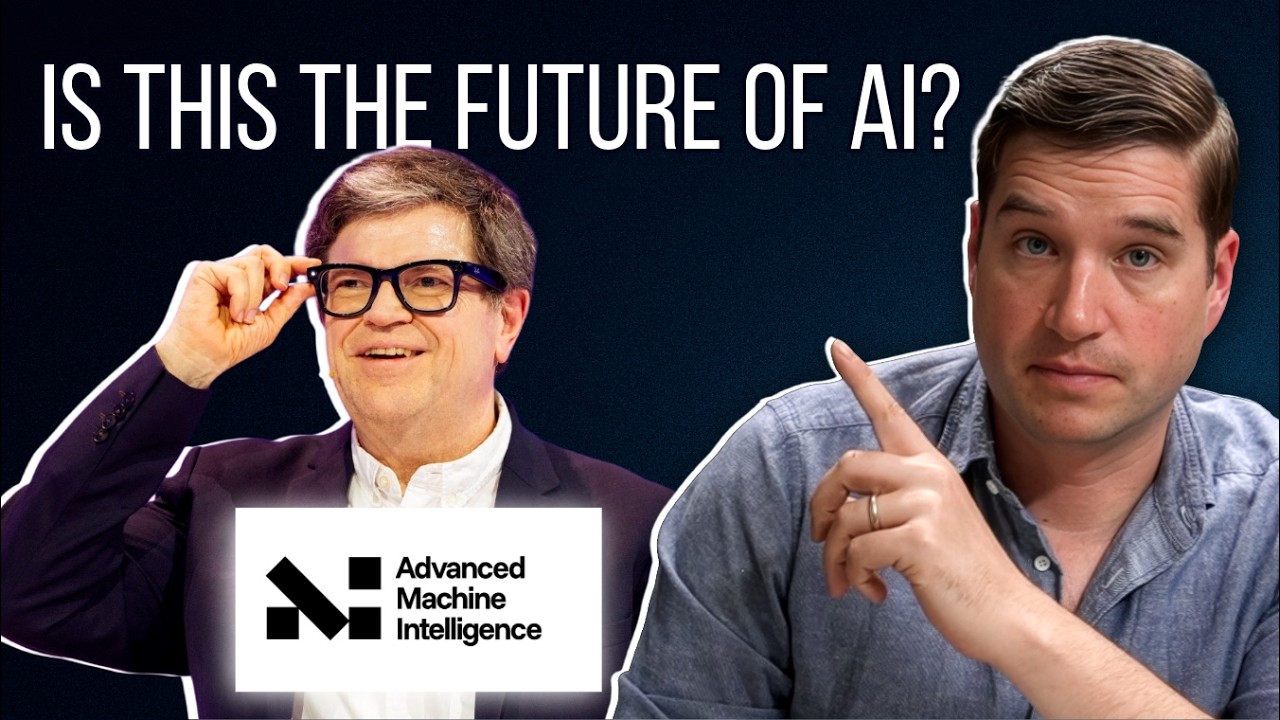
Are LLMs a Dead-End? (Investors Just Bet $1 Billion on “Yes”) | AI Reality Check | Cal Newport
 68 min
Why Is AI Making My Job *Worse*? | Cal Newport
 24 min
Did AI Just Become Sentient? (Not Quite...) | AI Reality Check
Found this useful? Build your knowledge library
Get AI-powered summaries of any YouTube video, podcast, or article in seconds. Save them to your personal pods and access them anytime.
Get Started Free