Key Moments
Ep. 189: Why The Times Dropped Twitter, Good Hive Minds, and Surviving Busy Weeks | Deep Questions
 Deep Questions with Cal Newport
Key Moments
NYT drops Twitter to combat harassment & echo chambers. Advice on busy weeks, writing careers, and complexity.
Key Insights
The New York Times is significantly reducing its reporters' reliance on Twitter due to concerns about harassment, distraction, and the influence of social media echo chambers on reporting.
The "hyperactive hive mind" of constant, unscheduled digital communication is generally counterproductive for deep work and cognitive tasks, especially in larger groups.
For small teams (three or fewer people), the hyperactive hive mind can be an efficient and flexible coordination strategy, mimicking naturalistic human collaboration.
Managing a heavy workload with limited agency requires rigorous time blocking, minimizing context switching, front-loading planning, and calibrating workload expectations to worst-case scenarios.
Aspiring writers should use economic indicators (actual income) to guide career decisions, dedicating significant time (15-20 hours/week) and potentially taking leaves of absence to finalize and publish their work.
Academics can improve their work-life balance by strategically reducing time spent on teaching preparation without sacrificing quality, focusing on reusable lecture materials and efficient grading methods.
THE NEW YORK TIMES' SHIFT AWAY FROM TWITTER
The New York Times has advised its reporters to reduce their use of Twitter, citing three primary reasons: increased online harassment, the detrimental effect of constant social media engagement on focus and writing quality, and the risk of reporting being skewed by "echo chambers" and concern over Twitter's reaction. This move marks a significant cultural shift, moving away from the previous strong encouragement for reporters to be active on the platform, acknowledging the potential negative impacts on journalistic integrity and reporter well-being.
THE LIMITATIONS OF THE HYPERACTIVE HIVE MIND
Cal Newport defines the "hyperactive hive mind" as the default strategy of unscheduled, ad hoc messaging (email, Slack, Teams) for collaboration. He argues this is largely counterproductive for deep work because it necessitates constant channel monitoring and context switching, hindering focused cognitive tasks. While effective for very small groups (three or fewer) in crisis or startup modes where flexibility is key, larger groups find it scales poorly, leading to overwhelmed individuals and a reduction in actual work completion.
STRATEGIES FOR MANAGING BUSY WORKLOADS
For individuals facing heavy workloads with limited control over assignments, Newport suggests strict adherence to single-tasking, minimizing context switching, and front-loading planning for each project. This includes scheduling dedicated work blocks and defining clear execution processes, even establishing specific times for revisions. Reducing dependence on the hyperactive hive mind is crucial, aiming for periods where one doesn't need to constantly check email. Furthermore, calibrating workload expectations to worst-case scenarios, rather than best-case ones, is essential for sustainability.
TRANSITIONING TO A WRITING CAREER
For those whose passion, like fiction writing, shows economic potential, Newport advises treating income as a neutral indicator of value. Instead of planning based on potential earnings, writers should actively generate income from their craft. This means substantially increasing dedicated writing time (e.g., 15-20 hours per week), potentially through early mornings and weekend blocks, and considering strategic leaves of absence to finalize and publish work. Gathering concrete data on sales and agent feedback is vital before making significant career shifts.
BALANCING ACADEMIC TEACHING AND SCHOLARSHIP
Professors in liberal arts colleges face a common trade-off between teaching and scholarship. Newport suggests that reducing time spent on teaching preparation does not necessarily mean failing at teaching; in fact, it may improve it by allowing for more focused delivery and clearer expectations. This involves reusing and refining lecture materials over time, creating assignments that are effective yet efficient to grade, and establishing clear availability protocols for students rather than attempting constant accessibility. Strategic time management can lead to better outcomes in both areas.
APPROACHING COMPLEXITY AND DECISION-MAKING
When faced with complex decisions, particularly in personal life, Newport advises against excessive rationalization and analysis paralysis. For simple choices like purchasing an item, making a reasonable decision based on a few key factors and moving on is recommended. For more complex intellectual work, while rigorous research is necessary, intuition and a "gut feeling" play a significant role. "Marinating" in a topic, listening to what feels right, and identifying friction points can lead to a deeper understanding and more effective tackling of complex ideas.
Mentioned in This Episode
●Software & Apps
●Companies
●Organizations
●Books
●Drugs & Medications
●People Referenced
Common Questions
The New York Times cited three main reasons: increased risk of online harassment for reporters, distraction that negatively impacts writing quality, and the 'echo chamber' effect influencing reporting to focus too much on Twitter's reaction rather than broader public sentiment.
Topics
Mentioned in this video
Mentioned in the context of Barry Weiss's resignation from The New York Times and the editorial decisions surrounding opinion pieces, particularly the Tom Cotton op-ed.
Referenced in the context of Cal Newport's illness, comparing his current state to Jordan's famous 'flu game' in basketball.
A deputy managing editor at The New York Times, involved in sending memos to journalists about reducing Twitter usage.
A sports commentator mentioned as an example of a professional who avoids making broadcasting errors like bumping into a microphone.
The host of the podcast, discussing his own book 'Deep Work' and his past predictions about the downsides of social media for journalists. He also shares personal anecdotes about his health and workload.
The executive editor of The New York Times, who reportedly sent memos to staff urging them to reduce their Twitter usage.
Mentioned as an example of a politician performing for a small subset of constituents on Twitter, with a photo reportedly showing him checking Twitter during Supreme Court confirmation hearings.
Mentioned as an inspiration for using money as a neutral indicator of value when making career decisions, particularly for creative pursuits like writing.
Author of 'Four Thousand Weeks,' whose concept of 'choosing what to fail at' is discussed and reinterpreted by Cal Newport in the context of academic teaching workload.
A White House reporter for The New York Times, engaged in a debate with Taylor Lorenz about personal brands versus focusing solely on reporting.
A former reporter at The New York Times whose resignation in 2018, citing perceived liberalism, highlighted the influence of Twitter on editorial decisions and the rise of reporter personal brands.
A technology reporter who moved to The Washington Post, involved in a public debate with Maggie Haberman about the role of personal brands and social media for writers.
A fantasy author whose name is jokingly used as a potential pseudonym for the listener 'Jeffrey,' and whose writing process is indirectly referenced when discussing dedication to a novel.
Cal Newport's book, where the concept of the 'hyperactive hive mind' is defined and critiqued. He references it when discussing collaboration strategies.
Cal Newport's 2016 book, which the author references as having previously critiqued The New York Times' push for reporters to use Twitter, and which serves as a foundational concept for the episode's discussion on focus and productivity.
A book by Oliver Burkeman, referenced for its concept of 'choosing what to fail at,' which Cal Newport discusses in relation to academic workload management.
The platform where Cal Newport's podcast episodes and individual segments are posted, with a discussion on how they are changing their posting strategy to reduce video volume.
An online coaching program recommended for fitness and health, emphasizing consistency and daily accountability with a personal coach. Cal Newport offers a discount for listeners.
A virtual private network service recommended for online privacy and security, allowing users to encrypt their connection and access geo-restricted content. Cal Newport mentions using it for travel and general browsing.
A hiring software recommended for companies struggling with the current job market, offering tools to post jobs widely, manage candidates, and automate tasks.
A journalism watchdog organization that published an article about The New York Times' new guidelines for journalists regarding Twitter usage. The host references their article as a primary source.
The university where Cal Newport was involved in faculty recruiting committees, contributing to a busy period and a lack of access to his inbox.
More from Cal Newport
View all 287 summaries 21 min
Can AI “Scheme”? (Nope.) | AI Reality Check
 31 min
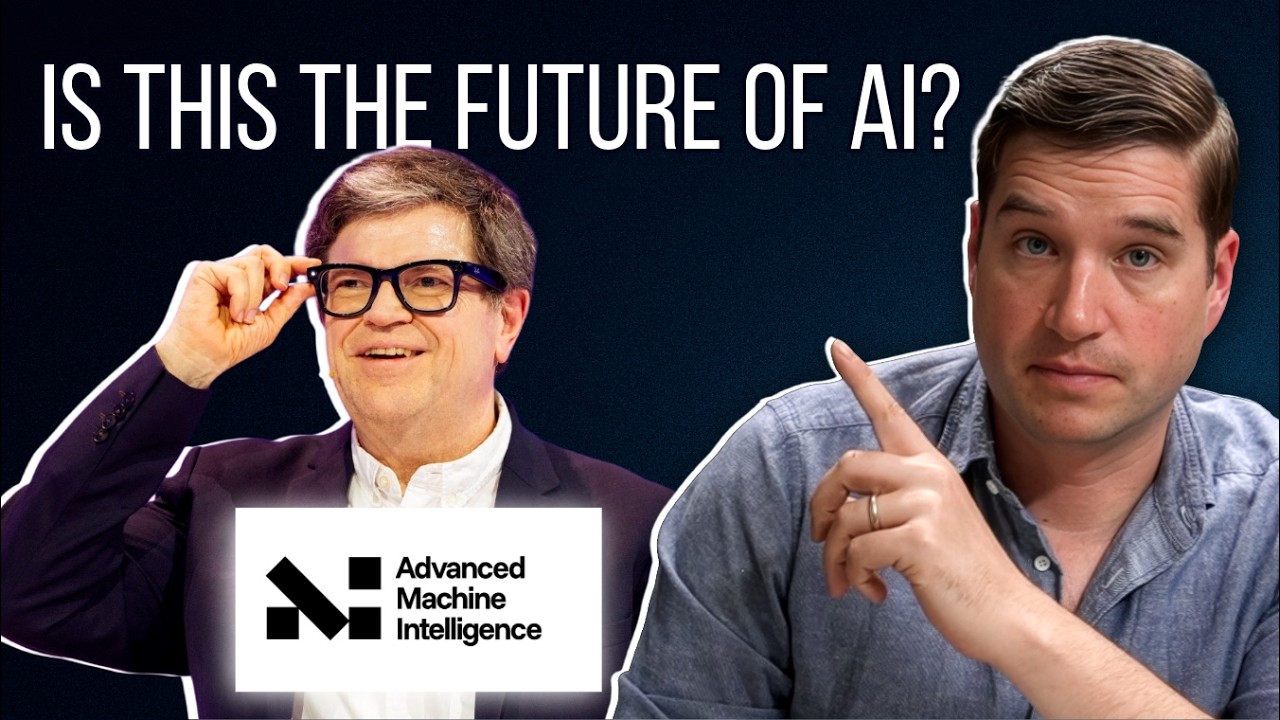
Are LLMs a Dead-End? (Investors Just Bet $1 Billion on “Yes”) | AI Reality Check | Cal Newport
 68 min
Why Is AI Making My Job *Worse*? | Cal Newport
 24 min
Did AI Just Become Sentient? (Not Quite...) | AI Reality Check
Found this useful? Build your knowledge library
Get AI-powered summaries of any YouTube video, podcast, or article in seconds. Save them to your personal pods and access them anytime.
Get Started Free