Key Moments
Dr. Stefi Cohen — 25 World Records, Power Training, and More | The Tim Ferriss Show
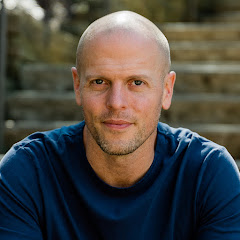 Tim Ferriss
Key Moments
Dr. Stefi Cohen shares insights on powerlifting, overcoming injury, sports psychology, and strategic quitting.
Key Insights
Dedication to powerlifting, including 25 world records, requires overcoming physical and mental challenges.
Genetics and biomechanics play a significant role in elite performance, but intelligent training can bridge gaps.
Rehab and prehab are integral parts of training, focusing on managing load and building tissue tolerance rather than just 'fixing' problems.
Pain is not always a direct indicator of tissue damage; understanding pain science is crucial for effective recovery.
Strategic quitting and embracing 'fresh crises' as opportunities are vital for growth and self-discovery.
Effective time management involves focusing on the task at hand and adapting to changing priorities rather than rigid scheduling.
FROM VENEZUELA TO WORLD RECORDS
Stefi Cohen's journey began in Caracas, Venezuela, a childhood shaped by political unrest and a passion for soccer, which she played for the national youth team. The instability in her home country led her family to encourage her pursuit of opportunities abroad. At 17, she moved to the US, initially with dreams of a soccer scholarship. This move, though difficult and driven by necessity, set the stage for her eventual pivot to powerlifting, a sport where she would achieve unprecedented success, breaking 25 world records and becoming the first woman to deadlift 4.4 times her body weight.
THE SCIENCE AND ART OF POWERLIFTING
Cohen has excelled in powerlifting, setting records across three weight classes in the squat, deadlift, and total. Her personal bests, such as a 510-pound squat at 120 pounds bodyweight, highlight her extraordinary strength. She draws parallels between her achievements and those of legendary figures like Ed Coan, emphasizing the immense mental fortitude and consistent dedication required to push boundaries. The discussion highlights how seeing someone achieve a seemingly impossible feat, like the four-minute mile or a 4x bodyweight deadlift, can inspire others to pursue similar ambitious goals.
UNDERSTANDING THE DEADLIFT AND PERFORMANCE LIMITATIONS
The deadlift, a fundamental test of strength, involves lifting a loaded barbell from the floor to a standing position. Cohen explains that achieving extreme multiples of bodyweight, such as 3x or 4x, is influenced by a combination of genetics, leverages, and proportions. While hard work is essential, individuals with favorable biomechanics for the lift have a distinct advantage. This acknowledges that not all progress is solely about effort; innate physical attributes play a critical role in reaching the pinnacle of a specialized sport like powerlifting.
TRAINING PHILOSOPHIES: BALANCING INTENSITY AND VOLUME
Cohen's training philosophy integrates various approaches, moving away from extreme methodologies like daily maxing or pure high-volume training. Her approach is a balanced hybrid, informed by her background in exercise physiology and physical therapy. She structures training into phases—general physical preparedness (GPP), specialization, and intensification—culminating in a deload period before competition. This periodization allows for accumulating volume, increasing lifting frequency of competition lifts, and peaking in intensity, ensuring optimal performance while managing fatigue and recovery.
NAVIGATING INJURY AND THE COMPLEXITY OF PAIN
Cohen advocates for a nuanced understanding of injury and pain, moving beyond simplistic mechanistic views. She emphasizes that injuries often occur when external load exceeds tissue tolerance, and recovery involves managing those forces and building internal resilience. She challenges the notion that specific corrective exercises are universally effective or that pain directly correlates with demonstrable tissue damage, citing studies where asymptomatic individuals show significant abnormalities on imaging. Her book, 'Back in Motion,' delves into this, advocating for a more comprehensive approach that considers pain perception and individual responses.
THE PSYCHOLOGY OF PERFORMANCE: VISUALIZATION AND ADAPTATION
A key takeaway from Cohen's work is the importance of mental preparation, particularly visualizing negative outcomes. This isn't about expecting failure, but about mentally rehearsing how to react and adapt when things go wrong. This practice helped her overcome performance anxiety after a significant competition failure. She also discusses the power of 'each fresh crisis is an opportunity in disguise,' highlighting how setbacks, like her back injury during the pandemic, can lead to unexpected growth, new ventures (like boxing), and business innovation, ultimately fostering resilience and refining perspective.
STRATEGIC QUITTING AND TIME MANAGEMENT
Cohen challenges the popular 'winners never quit' mentality, advocating for 'strategic quitting' when it's a conscious decision based on identifying upper limits or misalignment of skills, talents, and passions. She also describes her non-traditional approach to time management, focusing on the task at hand and adapting flexibly rather than adhering to rigid schedules. This involved prioritizing during intense periods, like her DPT studies, and doubling down on training or business when demands allowed, demonstrating an ability to achieve diverse goals through adaptable focus.
KEY TAKEAWAYS FOR INJURY MANAGEMENT
Cohen offers a practical, six-step approach for managing injuries: 1. Stop doing what hurts. 2. Don't underestimate simple exercises that provide positive movement experiences. 3. Increase general aerobic activity (motion is lotion). 4. Use pain as a guide (0-3 go, 3-6 warning, over 6 stop). 5. Gradually expose yourself to tolerable movements to turn off the pain alarm. 6. Understand that tissue adaptation takes time and avoid rigid healing timelines. This framework empowers individuals to take an active role in their recovery.
Mentioned in This Episode
●Products
●Software & Apps
●Companies
●Organizations
●Books
●Drugs & Medications
●Concepts
●People Referenced
Injury Management and Recovery: Six Steps
Practical takeaways from this episode
Do This
Avoid This
Common Questions
Stefi Cohen is a 25-time world record holder in powerlifting. Most notably, she was the first woman to deadlift four times her body weight, achieving 500 pounds at 120 pounds body weight, and later 545 pounds at 123 pounds body weight. Her personal bests include a 510-pound squat and a 240-pound bench press, both at 120 pounds body weight.
Topics
Mentioned in this video
A sugar-free electrolyte drink mix formulated to help with electrolyte needs, particularly for those on keto, low-carb, or paleo diets, or engaging in endurance exercise.
An all-in-one nutritional insurance supplement with 75 vitamins, minerals, and whole-foods sourced ingredients, also recommended in 'The 4-Hour Body.'
An intelligent home gym and personal trainer system that delivers up to 200 pounds of digital resistance and offers a wide range of exercises and AI-personalized workouts.
A business co-owned by Stefi Cohen that provides progressive strength training and nutrition programs, articles, and videos to hundreds of thousands of people monthly.
Mentioned in the context of breaking mental barriers, specifically the four-minute mile, similar to how Stefi Cohen's deadlift record inspired other women.
Author of the book 'Mindset: The New Psychology of Success.', whose work on mindset is referenced by Stefi Cohen.
A well-known author and researcher on low back pain, whose 'McGill Big Three' exercises (bird dog, dead bug, side plank) are often put on a pedestal but work due to positive movement experience and exercise-induced analgesia, not 'magical stability.'
The guest on the show, a 25-time world record holding powerlifter, doctor of physical therapy, author, podcast host, and business owner. Co-owner of Hybrid Performance Method.
A sprint coach whose program, focusing on pulls to the knees, was used by Tim Ferriss to reach a deadlift ceiling.
Co-author of 'Extreme Ownership,' a book recommended by Stefi Cohen.
Referenced in a humorous way by Tim Ferriss, comparing his current injury state to an older, broken version of DiCaprio's character in 'The Revenant.'
An Olympic gold medalist in rifle shooting and author of 'With Winning in Mind,' whose mental management system Stefi Cohen greatly admires.
A physical therapist with diverse degrees in chiropractic, biomechanics, and physical therapy, admired for his unconventional, patient-empowering approach to treatment and emphasis on understanding the patient's context of pain.
A former research biochemist and two-time New York Times best-selling author, known for 'The Paleo Solution' and 'Wired to Eat,' who created LMNT electrolytes after discovering their performance benefits.
An incredible athlete known for Highland Games and mountain biking, who initially suggested Stefi Cohen as a guest for the show.
The first Venezuela-born guest Tim Ferriss had on the show.
A deadlift technician admired for his ability to deadlift raw with a rounded back setup, challenging conventional ideas of 'good form.'
Referred to as the 'greatest powerlifter of all time,' known for his consistency, mental fortitude, and ability to continually make progress over 20 years. Mentor to Stefi Cohen.
A powerlifter mentioned for his humorous take on 'fat and skinny phases' and the challenges of extreme specialization, and someone Stefi Cohen called after her injury.
A historical figure mentioned for his approach to knowledge management, preferring to consult experts rather than clutter his mind with details, which Stefi Cohen relates to.
An individual mentioned in passing as a mutual friend with insights on training.
The former president of Venezuela mentioned in the context of civil war and political instability, leading to Stefi Cohen's family deciding to leave the country.
Creator of the Functional Movement Screen, whose methods and exercises like the Turkish Get-Up, single leg deadlift, and chop and lift, were found to be effective by Tim Ferriss for injury prevention.
Author of 'The Dip,' a book Stefi Cohen attributes her understanding of the sunk cost fallacy to.
A book mentioned by Stefi Cohen as a favorite and often gifted, authored by Ryan Holiday, focusing on stoicism and overcoming adversity.
Tim Ferriss's book, mentioned by him as a source for 'chop and lift exercises' that can be performed using the Tonal system.
A book by Lanny Bassham, highly recommended by Stefi Cohen to high-level athletes for its powerful lessons on mental management and maintaining positivity despite obstacles.
A New York Times best-selling book authored by Robb Wolf.
Stefi Cohen's new book, inspired by her severe back injury and quest to understand and address back pain, offering an evidence-based view on injury and recovery.
A book by Jocko Willink and Leif Babin about leadership principles from former Navy SEALs.
A book on productivity and personal effectiveness mentioned by Stefi Cohen as an attempt to find a structured approach, which she ultimately found didn't suit her 'free spirit' style.
Tim Ferriss's book, mentioned by Stefi Cohen as something she read but found didn't align with her work style. Tim Ferriss jokingly calls it 'terrible advice.'
A book by Carol Dweck about the power of belief systems in achieving success.
A New York Times best-selling book authored by Robb Wolf.
A book by Seth Godin that discusses the 'sunk cost fallacy,' explaining why people often hesitate to quit due to past investments, which Stefi Cohen relates to her experience in physical therapy school.
The city where Stefi Cohen initially got into school after moving to the US, and later competed in a powerlifting competition.
Stefi Cohen's birthplace, described as a country with political and economic unrest, high danger, and a sheltered upbringing due to constant fear.
The initial landing location for Stefi Cohen when she first moved to the US from Venezuela.
A set of three exercises (bird dog, dead bug, side plank) popularized by Stuart McGill for low back pain, which Stefi Cohen explains work by providing positive movement experiences and exercise-induced analgesia.
Tim Ferriss's weekly email newsletter sharing cool finds, ponderings, gadgets, articles, and more.
More from Tim Ferriss
View all 690 summaries 184 min
Daredevil Michelle Khare — How to Become a YouTube Superstar
 81 min
Q&A with Tim — The Upcoming AI Tsunami and Building Offline Advantage
 91 min
The Random Show, Couch Edition! — Supplements, Breathing and Balance Training, and Much More!
 76 min
How to Quiet the Ruminative Mind and Avoid The Traps of Self-Help — Tim Ferriss
Found this useful? Build your knowledge library
Get AI-powered summaries of any YouTube video, podcast, or article in seconds. Save them to your personal pods and access them anytime.
Get Started Free