Key Moments
Consciousness and the Physical World: A Conversation with Christof Koch (Episode #374)
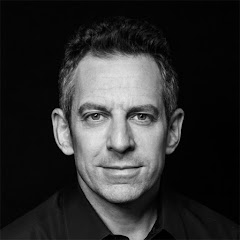 Sam Harris
Key Moments
Neuroscientist Christof Koch discusses consciousness, from early research with Francis Crick to modern theories like IIT.
Key Insights
Consciousness was historically ignored in neuroscience, prompting Koch's focus on its neural correlates.
Early research with Francis Crick aimed to empirically identify the brain's physical basis for consciousness.
Experiments like binocular rivalry and change blindness isolate specific neural processes related to conscious perception.
The cerebellum and spinal cord, despite containing many neurons, are not essential for consciousness, suggesting organization is key.
Quantum mechanics and its implications, like entanglement and non-locality, challenge traditional physicalist explanations of reality.
Current AI and functionalist approaches may fail to capture the subjective 'hard problem' of consciousness.
THE EVOLUTION OF A CONSCIOUSNESS SCIENTIST
Christof Koch's journey into the study of consciousness began with an early exposure to philosophy and physics, influenced by thinkers like Schopenhauer, Kant, and Schrödinger. Despite a background that included physics, he was drawn to neuroscience, only to find consciousness largely absent from the field's discourse. This gap, coupled with his philosophical inclinations from his youth, fueled his determination to scientifically investigate the nature of subjective experience, making it the central puzzle of his career.
COLLABORATION WITH FRANCIS CRICK AND THE NEURAL CORRELATES
Koch's pivotal collaboration with Nobel laureate Francis Crick, renowned for his work on DNA, launched an empirical program to find the neural correlates of consciousness (NCC). Their strategy was pragmatic: set aside philosophical debates about physicalism, dualism, or idealism, and instead focus on identifying which specific brain structures and activities corresponded to conscious experience. The core idea was that by pinpointing these neural patterns, one could understand consciousness causally, regardless of one's metaphysical stance.
EMPIRICAL INVESTIGATIONS: CHANGE BLINDNESS AND BINOCULAR RIVALRY
To elucidate the NCC, Koch and Crick utilized experimental paradigms like change blindness and binocular rivalry. Change blindness involves subtle alterations in visual scenes that go unnoticed until explicitly pointed out, highlighting the difference between sensory input and conscious perception. Binocular rivalry, where different images are presented to each eye, leads to a fluctuating conscious experience of one image or the other, even though the physical input remains constant. These phenomena allow researchers to isolate the neural activity associated with the conscious experience itself.
CHALLENGING THE NEURON COUNT: BEYOND SIMPLE EMERGENCE
Initial hypotheses suggested consciousness might simply emerge from the sheer number of neurons, akin to how wetness emerges from water molecules. However, evidence like the cerebellum's high neuron count but its non-essential role in consciousness refutes this. Similarly, a severed spinal cord, despite losing millions of neurons, doesn't eliminate consciousness. This indicates that the organization and connectivity of neurons, rather than their quantity alone, are crucial for generating conscious experience, a point Crick also acknowledged as a potential limitation of purely materialist explanations.
PHYSICALISM'S LIMITS AND THE QUANTUM REALM
Koch critiques the limitations of strict physicalism, particularly when confronted with the perplexing findings of quantum mechanics. Concepts like entanglement, where particles remain connected across vast distances, and non-locality challenge the classical, intuitive understanding of the physical world. Furthermore, some interpretations of quantum physics suggest reality itself is participatory, influenced by the act of observation. These findings suggest that the bedrock of physicalism—matter and energy—may be more complex and less deterministic than previously understood.
INTEGRATED INFORMATION THEORY (IIT) AND CONSCIOUS AI
Koch remains a proponent of Integrated Information Theory (IIT), which posits that consciousness is a fundamental property related to the amount of integrated information a system possesses. This theory offers a framework for quantifying consciousness. However, Koch expresses skepticism about current AI, often based on computational functionalism, truly achieving consciousness. He predicts that advanced AI might perfectly mimic conscious behavior and evoke a strong sense of consciousness in humans, yet we may still lack a true understanding of subjective experience, raising significant ethical concerns.
THE HARD PROBLEM AND IDEALISM VS. PHYSICALISM
The conversation revisits the 'hard problem' of consciousness—the subjective, qualitative experience of 'what it's like' to be something. Koch argues that eliminative materialists, who dismiss consciousness as an illusion, fail to grasp that the illusion itself is a conscious phenomenon. He contends that physicalism struggles to explain how subjective feelings arise from purely physical processes. While he explores possibilities like panpsychism and idealism, emphasizing that the very definition of 'physical' is being re-examined in modern physics, the explanatory gap persists.
SLEEP, ANESTHESIA, AND THE CONTENTS OF CONSCIOUSNESS
Distinguishing between consciousness itself and its contents, the discussion touches upon sleep and anesthesia. While these states involve a loss of conscious experience, discerning true cessation from memory loss is complex. Research using EEG during sleep shows that even in deep sleep, dream-like experiences, though often fragmented, can occur. The posterior 'hot zone' of the brain is implicated in these reported experiential states, suggesting specific neural networks are associated with the manifest contents of consciousness during sleep.
THE PARTICIPATORY UNIVERSE AND NUCLEAR SPIN EFFECTS
The discussion delves into the strangeness of modern physics, particularly concerning entanglement across vast distances and the idea that observation plays a role in shaping reality. Koch mentions ongoing experiments, including his own, investigating whether quantum phenomena like nuclear spin affect biological systems at room temperature. Specifically, research on xenon as an anesthetic with differing isotopic properties suggests that subtle nuclear properties might influence anesthetic potency, which, if replicated, would have profound implications for understanding the physical basis of consciousness.
THE PROMISE AND PERIL OF CONSCIOUS AI
Looking ahead, Koch foresees a future where highly advanced AI, potentially surpassing the Turing test, will appear undeniably conscious to humans. This could lead to deep emotional bonds and ethical quandaries, such as the Machine's potential to suffer, without our having solved the fundamental mystery of consciousness. He worries that our perception of AI consciousness might outpace our scientific understanding, leading to a potential devaluation of human experience and a future where humanity becomes increasingly irrelevant as we create superior artificial intelligences.
Mentioned in This Episode
●Organizations
●Drugs & Medications
●Concepts
●People Referenced
Common Questions
The hard problem of consciousness refers to the difficulty of explaining subjective experience, or 'what it's like' to be something, from physical processes in the brain.
Topics
Mentioned in this video
Philosopher whose dualism and 'Cogito, ergo sum' concept are foundational to consciousness discussions.
Professor at UCSB collaborating on experiments with organoids and flies.
Host of the Making Sense podcast, discussing consciousness with the guest.
Scientist with whom Christof Koch collaborated on consciousness research.
Well-known consciousness researcher who collaborated with Jerry Adelman.
Philosopher known for articulating the 'hard problem' of consciousness.
Physicist whose writings on consciousness influenced Koch.
Nobel laureate who influenced Koch and Crick's thinking on consciousness.
Philosopher associated with eliminative materialism, a view that consciousness is an illusion.
Author and neuroscientist, interviewed by Sam Harris on consciousness.
Runs the Quantum Google AI lab and is collaborating on experiments related to quantum mechanics in biology.
Neuroscientist and author, guest on the podcast discussing consciousness.
German philosopher whose works Koch read, influencing his early interest in consciousness.
Ran the brain mapping center at UCLA where Koch once gave a seminar.
Collaborator at UCLA who worked with neurosurgical patients for consciousness research.
Philosopher known for his work on the 'hard problem' of consciousness and the concept of 'what it's like to be'.
Philosopher known for his materialist views on consciousness, often considered an eliminative materialist.
Philosopher associated with eliminative materialism, a view that consciousness is an illusion.
Neuroscientist known for his work on emotion and consciousness.
Physicist known for his work on quantum computation and the multiverse.
Artificial intelligence that possesses consciousness.
When different images are presented to each eye, leading to a shifting conscious perception.
Water molecule, used as an analogy for emergent properties in consciousness.
Unusual effects predicted by quantum mechanics, such as entanglement and superposition.
Part of the central nervous system, whose damage affects motor function but not consciousness profoundly.
A stage of sleep characterized by rapid eye movements and vivid dreams.
The species to which modern humans belong, discussed in the context of potential obsolescence by AI.
A natural state of rest studied for its implications on consciousness.
A quantum mechanical phenomenon where entangled particles instantaneously affect each other regardless of distance.
The view that consciousness is a fundamental and ubiquitous feature of the universe.
The idea that the sense of a stable, unified self is a constructed illusion.
Psychoactive substances that can alter consciousness and perception.
Part of the brain containing a large number of neurons, yet not considered the primary seat of consciousness.
The metaphysical view that only physical matter and energy exist.
The system responsible for sight, a focus of early consciousness research by Koch and Crick.
A phenomenon where a person fails to notice significant changes in a visual scene.
The philosophical view that reality is fundamentally mental or consciousness-based.
A theory of consciousness that quantifies the level of consciousness in any system based on its integrated information.
The hypothetical connection of two human brains for a shared experience.
A test of a machine's ability to exhibit intelligent behavior equivalent to, or indistinguishable from, that of a human.
More from Sam Harris
View all 292 summaries 34 min
Is Effective Altruism Blind to the Biggest Problems? – Sam Harris & Will MacAskill
 21 min
What Is Technology Doing to Us?
 42 min
Is the Iran War Already Failing?
 90 min
FULL EPISODE: The Politics of Pragmatism and the Future of California (Ep. 464)
Found this useful? Build your knowledge library
Get AI-powered summaries of any YouTube video, podcast, or article in seconds. Save them to your personal pods and access them anytime.
Get Started Free