Key Moments
It Has Begun: Ray Dalio Just Sounded the Alarm — Most Will Regret Ignoring It
 Impact Theory
Key Moments
Ray Dalio warns of economic breakdown and war due to failing monetary order, impacting global markets.
Key Insights
The global monetary order is breaking down, leading to potential internal and external wars, driven by historical economic cycles.
Declining confidence in paper currencies and debt as a store of wealth is a critical indicator of this breakdown.
The Japanese yen carry trade, a long-standing source of global debt fueling economies, is under pressure as rates rise, forcing asset sell-offs.
The price action in Bitcoin and the Japanese bond market shows synchronous decline, indicating a reaction to Japanese economic instability, not unrelated geopolitical news.
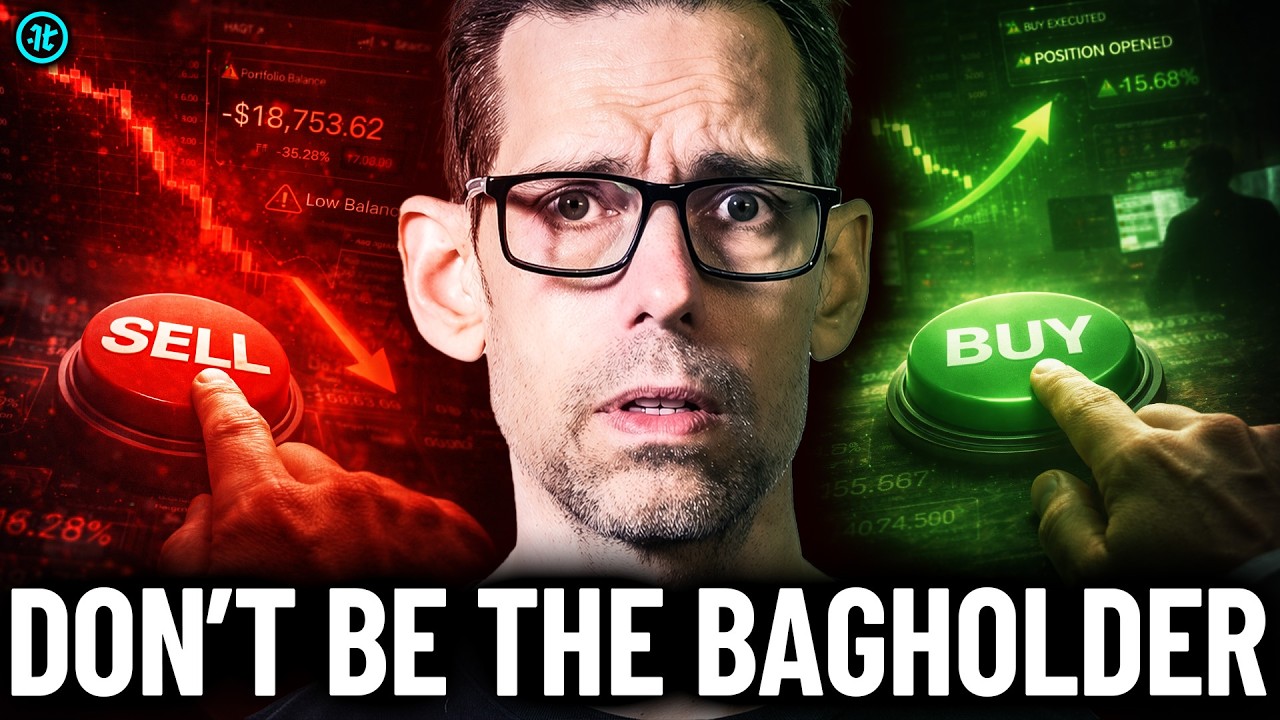
Market crashes are exacerbated by margin calls and automated liquidations, leading to rapid, cascading losses for investors, especially those trading on debt.
In times of massive uncertainty, a diversified portfolio focusing on assets with low counterparty risk and stable value, like gold and potentially Bitcoin, is advised.
Prioritizing debt repayment, especially high-interest debt, offers a guaranteed return and is crucial for financial stability.
THE MONETARY ORDER IS BREAKING DOWN
Ray Dalio is sounding the alarm about a significant breakdown in the global monetary order, predicting an increased likelihood of both internal and external conflicts. This dire forecast is attributed to cyclical economic forces that have historically led to periods of instability. A key symptom of this breakdown is a growing lack of confidence in traditional paper currencies and debt instruments as reliable stores of wealth, signaling a fundamental shift in how assets are perceived.
THE UNRAVELING OF DEBT-FUELED ECONOMIES
For decades, the global economy has been sustained by debt, particularly through mechanisms like the Japanese yen carry trade. Japan, by offering debt at low rates, has inadvertently fueled global economic activity. However, as interest rates begin to climb, this system is faltering. Investors are now forced to divest assets acquired through cheap Japanese debt to cover their obligations, leading to significant sell-offs in various markets.
JAPANESE BOND MARKET INSTABILITY AND BITCOIN'S REACTION
Recent events show Japan's massive government bond market experiencing sharp yield increases, pushing bond prices down significantly. This phenomenon occurs when investors require higher yields to be compensated for perceived risk or instability associated with the debt. Notably, Bitcoin's price movements have mirrored these Japanese market shifts, trading 24/7 and reacting immediately to news out of Japan, rather than unrelated geopolitical events, suggesting a direct correlation between the failing monetary order and digital asset markets.
THE PSYCHOLOGY AND MECHANICS OF MARKET CRASHES
Market downturns are amplified by the psychological reactions of investors and the mechanics of margin trading. When fear sets in, panic selling ensues, driving prices down further. For those trading on margin, falling asset values can trigger automatic liquidations, where brokers are forced to sell assets to cover collateral requirements. This can lead to a cascading effect, wiping out entire portfolios instantaneously as automated systems react at AI speeds, turning paper gains into significant losses or debt.
NAVIGATING UNCERTAINTY: A SHIFT IN INVESTMENT STRATEGY
In an era of unprecedented economic and geopolitical uncertainty, traditional investment strategies may prove inadequate. Dalio emphasizes the need for humility in predicting the future and advocates for a diversified portfolio that accounts for various economic forces. Assets like gold, which historically serve as a hedge against inflation and uncertainty, are gaining importance. While Bitcoin is seen as a potential digital store of value, its current trading behavior resembles that of a tech stock, implying a need for careful consideration and personal conviction.
THE ROLE OF PRODUCTIVE ASSETS AND DEBT REPAYMENT
The conversation highlights the importance of investing in productive assets and commodities that have intrinsic value or serve essential industrial purposes, such as silver, which is crucial for high-tech manufacturing and robotics. Furthermore, paying off high-interest debt is presented as a guaranteed form of return, offering immediate financial relief and strengthening an individual's financial resilience against economic shocks. This approach prioritizes stability and tangible value over speculative gains.
BUILDING RESILIENCE IN A VOLATILE WORLD
For individuals concerned about their financial future, the core message is to build resilience against instability. This involves a shift from seeking quick riches to a long-term strategy focused on wealth preservation and diversification. Even small, consistent savings and investments, especially in assets with low counterparty risk and stable long-term demand, can compound over time. The emphasis is on creating a personal financial framework that acknowledges current global uncertainties and prioritizes protection against inflation and market volatility.
Mentioned in This Episode
●Supplements
●Products
●Software & Apps
●Companies
●People Referenced
Investment Assets for Economic Instability
Data extracted from this episode
| Asset Class | Rationale | Risk Level |
|---|---|---|
| US Short-Term Debt | Expectation of US government printing money to cover it. | Lower (relative) |
| Gold Mining Stocks | Hedge against inflation and uncertainty. | Medium |
| Silver Mining Stocks | Hedge against inflation and uncertainty, also industrial use. | Medium |
| Bitcoin | Decentralized, easier to move than gold, potential digital store of value. | High |
| Ethereum (ETH) | Speaker is 'massively deployed', implying belief in its long-term potential. | High |
| International Exchanges | To stay in 'risk on' markets and diversify. | High |
Common Questions
Ray Dalio is concerned that the monetary order is breaking down, leading to potential internal and external wars. This is driven by long-term economic forces including a decline in confidence in paper currencies and debt as stores of wealth.
Topics
Mentioned in this video
A service recommended for removing personal information from data broker sites, addressing privacy concerns in the digital age.
Its price action is used as an indicator of market sentiment and global economic shifts, trading 24/7, it shows reactions to economic news, like the Japanese yen sell-off, more immediately than traditional markets.
Mentioned as an example of a company providing high returns, attracting investors who borrow Japanese yen at low interest rates to invest in NVIDIA, but this creates risk when rates change.
Mentioned as a discretionary purchase that people might cut back on when access to easy money (like borrowing from parents) diminishes, illustrating reduced consumer spending.
Mentioned as an example of a financial institution that benefits from customers carrying credit card debt, highlighting the high returns associated with paying off such debt.
Similar to Capital One, it's used as an example of a company that receives payments from credit card debt, reinforcing the idea that paying off this debt yields a high guaranteed return.
He is a prominent investor and economic commentator who is warning about the breakdown of the monetary order and the brink of war. He believes long-term economic forces are causing this instability.
Quoted for his perspective that paying off debt is the most guaranteed return on investment, particularly high-interest credit card debt.
More from Tom Bilyeu
View all 48 summaries 118 min
Ray Dalio’s Chilling WW3 Prediction & Claude Mythos Threatens The Entire Internet
 35 min
The Wealth Transfer Has Started — Panic Sellers Are Handing Fortunes to Buyers
 115 min
America's 'Pilot Rescue' Happened 10km From Iran's Hidden Nuclear Weapons Stash
 115 min
Saudi Arabia Just Terminated Its Defense Agreement With the US
Found this useful? Build your knowledge library
Get AI-powered summaries of any YouTube video, podcast, or article in seconds. Save them to your personal pods and access them anytime.
Get Started Free