Key Moments
How to Invest for Beginners (2026)
 Ali Abdaal
Key Moments
Index funds tracking major markets like the S&P 500 are recommended for beginners over stock picking, offering an average 7-9% annual return and significantly mitigating risk compared to individual stocks.
Key Insights
Inflation causes money to lose purchasing power daily, making investing crucial for wealth building.
In 2020, a $1,000 investment in the S&P 500 dropped 34% ($340 loss) during the COVID crash but recovered to pre-crash levels within 5 months and more than doubled to over $2,100 by the end of 2025 if held.
The S&P 500 has historically grown by an average of 7-9% annually over the last 100 years.
Studies and challenges, including one by Warren Buffett, have shown that the S&P 500 index fund outperforms most actively managed stock-picking funds over the long term.
Investing in your own skills or business can yield significantly higher returns than traditional market investments, with some individuals reaching $100k in revenue within the first 12 months of starting a business.
The fundamental purpose of investing: outgrowing inflation
The primary reason to invest is to combat inflation, the gradual decrease in the purchasing power of money over time. Simply holding cash means its value diminishes, as evidenced by how much less a sum like $1,000 can buy today compared to decades ago. Investing aims to generate returns that not only offset inflation but also lead to wealth accumulation through compounding. An 'asset' is defined as something that puts money into your pocket, demonstrated by owning a rental property which generates income and potentially appreciates in value. While real estate is a visual example, it's often inaccessible for beginners. Therefore, the focus shifts to more accessible asset classes.
Stocks and shares as accessible entry points
For most beginners, stocks and shares are the most practical investment. They represent partial ownership in a company and offer two main ways to profit: capital appreciation (the stock price increasing) and dividends (companies distributing profits to shareholders). Unlike real estate, buying stocks requires less capital, involves less risk than speculative assets like crypto, and doesn't necessitate being an accredited investor. Companies like Apple, NVIDIA, and Tesla are examples of stocks that individuals might consider, but the advice from financial experts like J.L. Collins and Warren Buffett is generally to avoid attempting to pick individual stocks.
The power of index funds as a cornerstone strategy
Instead of stock picking, the recommended approach for beginners is to invest in index funds. An index fund tracks a specific stock market index, such as the S&P 500, which comprises the 500 largest U.S. companies. Investing in an S&P 500 index fund means your money is diversified across these companies, weighted by their market capitalization. For instance, a $1,000 investment might be allocated with approximately $71.80 in NVIDIA and $65 in Apple, based on their current index weighting. This strategy aligns with the philosophy of making a long-term bet on the overall stock market's growth, rather than trying to predict the performance of individual companies. Historically, the S&P 500 has averaged annual returns between 7% and 9%. This approach frees up time that would otherwise be spent on extensive research, analysis, and constant monitoring of individual stocks. The 'set it and forget it' nature allows investors to focus on other pursuits.
Why avoiding stock picking is crucial for most investors
The allure of picking individual stocks is strong, fueled by stories of early investors in companies like Bitcoin or NVIDIA experiencing massive gains. However, the reality is that consistently outperforming the market through stock picking is incredibly difficult, even for professional fund managers. Numerous studies and challenges have shown that index funds often outperform actively managed portfolios over time. Furthermore, stock picking demands a significant time investment for research and analysis, time that could be better spent on other activities. Personal anecdotes from friends and the speaker's own observations reinforce that those who attempted stock picking often underperformed index funds, and some even lost money by concentrating too much on a single failing company. The ease with which people can delude themselves into thinking they are good investors based on retrospective 'what ifs' is a common pitfall.
Long-term perspective and diversification mitigate major losses
A common fear is losing all invested money. While market crashes are inevitable, such as the 34% drop in the S&P 500 in March 2020 due to COVID-19, holding onto investments is key. A $1,000 investment that dropped to $660 would have recovered to $1,000 within five months and grown to over $2,100 by late 2025 if the investor had simply held on. Even the 2008 financial crisis, which took longer to recover from, ultimately resulted in gains for those who remained invested. Losing all money in an S&P 500 index fund would require all 500 companies to drop to zero value simultaneously, implying a collapse of the U.S. economy and potentially civilization itself. This unlikely scenario underscores the diversification benefit of index funds. The growth of companies is underpinned by consistent human productivity, increasing global population, and the self-healing nature of indices, which replace failing companies with new ones.
Global diversification as an alternative to a single-country index
For investors concerned about the economic future of a single country, like the U.S., global index funds offer a solution. Funds like the Vanguard FTSE All-World Index expand diversification beyond the top 500 U.S. companies to include approximately 3,700 companies across 49 countries. This approach ensures that investment exposure is spread across various economies, such as South Korea, Taiwan, Japan, and France, in addition to the U.S. These global funds automatically adjust their weightings based on market value, naturally shifting investment towards regions experiencing growth. The core principle remains: betting on humans creating value and demand globally over the long term, rather than on specific companies or nations.
Practical steps to start investing and the 'fast lane' alternative
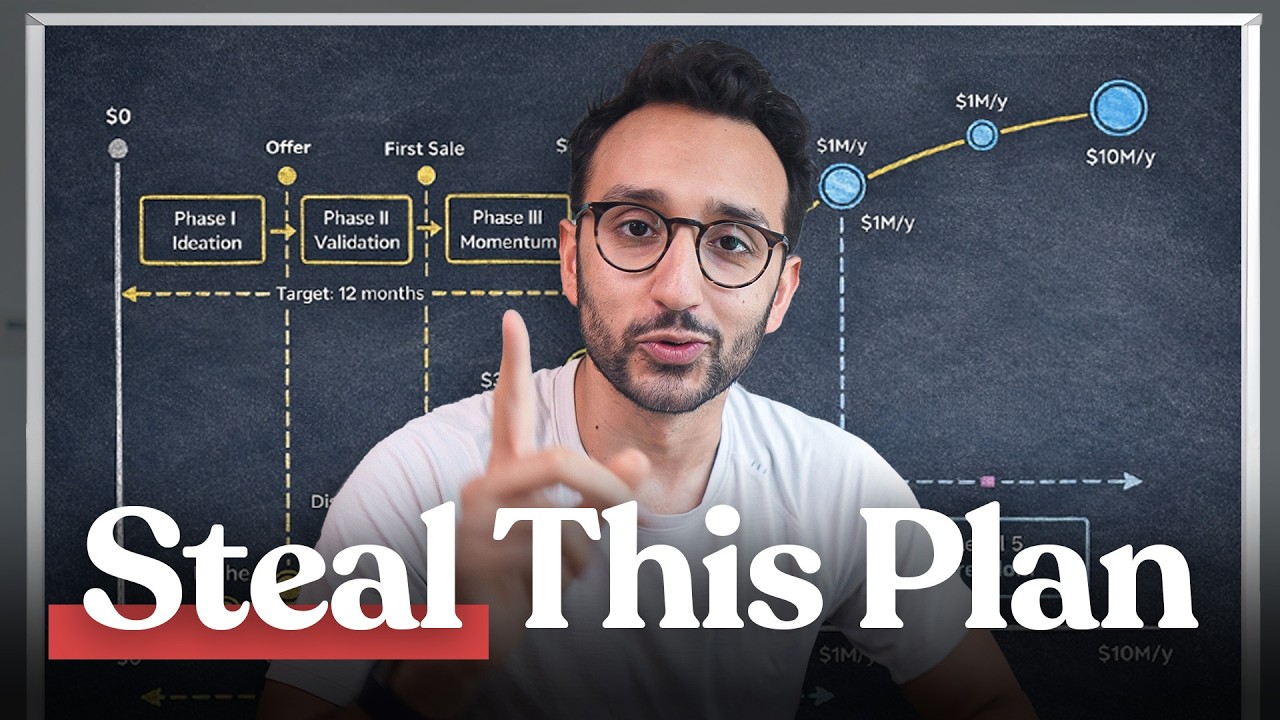
Getting started with index funds is straightforward. Most reputable online platforms, known as stockbrokers, allow individuals to begin investing with small amounts, often as little as $10 or $100, with many offering commission-free trading. Services like Trading 212 and Vanguard are mentioned as accessible options. Beyond traditional investing, the concept of 'fast lane investing' is introduced, which focuses on generating significantly higher returns over a shorter period, typically 5-15 years, rather than the 30-40 years associated with the 'slow lane' of passive index fund investing. This alternative approach emphasizes investing in one's own ability to earn, through education and skill development, or by starting and growing a business. For instance, investing $1,000 in a course that doubles earning capacity can yield returns far exceeding traditional investments. Similarly, starting a business can lead to exponential growth, with some individuals achieving $100,000 in revenue within their first year. The advice is to balance investing in oneself with a diversified portfolio of index funds.
Mentioned in This Episode
●Supplements
●Software & Apps
●Companies
●Books
●Concepts
●People Referenced
Beginner Investing: Key Principles
Practical takeaways from this episode
Do This
Avoid This
Common Questions
The primary reason to invest is to make your money grow over time, which helps counteract the effects of inflation and build wealth. Simply keeping money in a bank account means its purchasing power decreases daily due to rising prices.
Topics
Mentioned in this video
Mentioned as an example of a company that made early investors rich, and then discussed as a significant component of the S&P 500 and a potential stock pick that is not recommended over index funds.
Mentioned as a company that people might consider investing in due to owning its products, and as a top holding in the S&P 500.
Mentioned as a company that people might consider investing in due to affiliation with Elon Musk.
Mentioned as a company that people might consider investing in due to using its service, and historically as a company that replaced Blockbuster.
Mentioned as one of the top companies in the S&P 500 and a component of index funds.
Mentioned as the parent company of Google and a component of the S&P 500.
Mentioned as the parent company of Facebook and Instagram, and a component of the S&P 500.
A global investment company and a provider of index funds, mentioned as a platform for investing.
An online investment platform offering commission-free trading, fractional shares, and tools like auto-invest, mentioned as a platform the speaker uses and sponsors.
A South Korean company mentioned as an example of a global investment included in funds like the Vanguard Footsie Allworld Index Fund.
Taiwan Semiconductor Manufacturing Company, mentioned as a global investment included in funds like the Vanguard Footsie Allworld Index Fund.
A Japanese company mentioned as a global investment included in funds like the Vanguard Footsie Allworld Index Fund.
A French luxury goods conglomerate mentioned as a global investment included in funds like the Vanguard Footsie Allworld Index Fund.
Author of 'The Simple Path to Wealth', recommended for learning about index fund investing.
Renowned investor who recommends investing in index funds rather than actively picking stocks.
Quoted for his saying about compound interest being the eighth wonder of the world.
Mentioned in the context of potential reasons for US economic decline or driving company value, used to illustrate subjective fears investors might have about specific figures.
Author of 'The Millionaire Fastlane', who advocates for a 'fast lane' approach to wealth building.
More from Ali Abdaal
View all 188 summaries


Found this useful? Build your knowledge library
Get AI-powered summaries of any YouTube video, podcast, or article in seconds. Save them to your personal pods and access them anytime.
Get Started Free