Key Moments
Aaron Smith-Levin: Scientology | Lex Fridman Podcast #361
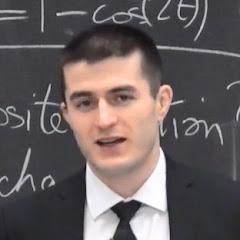 Lex Fridman
Key Moments
Former Scientologist Aaron Smith-Levin discusses Scientology's origins, practices, internal structure, and abuses in a detailed interview.
Key Insights
Scientology's core beliefs involve immortal spiritual beings (thetans) who have lost their innate power and can be restored through Scientology practices.
Dianetics, the precursor to Scientology, focused on clearing the 'reactive mind' of engrams (painful memories), while Scientology expanded this to potentially trillions of years, including past lives and alien encounters.
The Sea Organization is Scientology's elite, highly committed core group that operates on a communist-like lifestyle with minimal pay, signing billion-year contracts.
Auditing, a central practice, uses an 'e-meter' to supposedly detect and resolve painful mental engrams and engrammatic recordings, often involving past-life recall.
Scientology's upper levels reveal controversial narratives like the Xenu and body thetan story, which are kept confidential from most members.
David Miscavige, the current leader, is described as having usurped power and leading Scientology with increasing control and alleged abuses, while former members like Aaron Smith-Levin actively work to expose these issues.
THE FUNDAMENTAL BELIEFS OF SCIENTOLOGY
Scientology posits that humans are immortal spiritual beings called thetans, possessing native god-like potential. Through past decisions, thetans have fallen from this state, becoming unaware of their true nature and trapped in physical bodies and the material universe. Scientology offers a path to restore thetans to their original power, believing it's the only way to achieve this restoration. This core belief system addresses the nature of existence, the limitations of the human mind and spirit, and a method for overcoming these limitations.
DIANETICS AND THE EVOLUTION OF SCIENTOLOGY'S PRACTICES
Dianetics, the precursor to Scientology developed by L. Ron Hubbard, focused on mental health through 'auditing' to remove engrams, which are mental recordings of painful or unconscious moments. Initially, the earliest engram was believed to be birth, with potential prenatal engrams. Scientology expanded this concept dramatically, introducing the idea of thetans and the possibility of engrams dating back trillions of years, even before the origin of the universe or across other universes. This shift transformed the practice from a mental science to a spiritual endeavor.
THE SEA ORGANIZATION AND OPERATIONAL STRUCTURE
The Sea Organization (Sea Org) is Scientology's dedicated core group, often signing billion-year contracts and living a communal, communist-like lifestyle with minimal personal pay ($50/week for most). Members forgo outside lives, property ownership, and often family connections. Sea Org members manage all levels of Scientology's administration, from international to local operations, functioning much like a business with departments for Human Resources, sales, and operations, though their 'operations' involve delivering auditing and courses.
AUDITING AND THE ROLE OF THE E-METER
Auditing is Scientology's central practice, a form of one-on-one counseling designed to address and resolve engrams. It employs an 'e-meter,' a device that measures electrical resistance, which Scientologists believe can direct the auditing process and indicate satisfactory conclusions. The auditor asks questions, and the e-meter's needle response, along with the pre-clear's reactions, guides the session. Auditors are trained to ensure sessions end positively, and the process can delve into past lives, referred to as 'going whole track,' to uncover and resolve issues.
CONTROVERSIAL UPPER LEVELS AND THE XENU STORY
Beyond the state of 'Clear,' which signifies the removal of the reactive mind, come the upper, confidential 'Operating Thetan' (OT) levels. These levels reveal more esoteric and controversial narratives, such as the story of Xenu, a galactic dictator from 75 million years ago who allegedly brought billions of souls to Earth, froze them, and destroyed them with hydrogen bombs. The disembodied spirits, called body thetans (BTs), are said to attach to humans and cause problems. Auditing on these upper levels aims to remove these BTs and exteriorize the thetan from the body.
LEADERSHIP, CONTROL, AND ABUSES
David Miscavige, the current leader, is described as having usurped power after L. Ron Hubbard's death. His leadership is characterized by significant control, alleged physical assaults on members, and severe disconnection policies that break apart families. Scientology's practices are criticized for their authoritarian nature, information control, and exorbitant costs, leading many to question its legitimacy and health. The organization is also accused of using propaganda, surveilling critics, and employing 'soft corruption' through legal and lobbying efforts to influence government agencies.
THE DYNAMICS OF SURVIVAL AND ETHICS
A core principle in Scientology is survival, broken down into eight 'Dynamics' that encompass self-preservation, family, groups, humankind, life forms, the physical universe, spirituality, and infinity. All life is seen as striving for survival. Ethics within Scientology are defined as being pro-survival, while unethical actions are counter-survival. This framework suggests that anything beneficial to Scientology itself is, by extension, beneficial to all Dynamics, which can lead to the 'ends justify the means' mentality seen in its implementation.
THE ROLE OF BELIEF VS. APPLICATION
Scientology emphasizes the application of its technologies rather than blind belief. It's argued that the effectiveness of auditing is empirically verifiable through the participant's experience of improvement. However, this is often framed as unfalsifiable, as any failure is attributed to incorrect application of the 'Standard Tech.' This creates a closed loop where doubt is dismissed as a failure of the individual to apply the doctrines correctly, preventing genuine crises of faith for many within the organization.
CHALLENGES IN ACHIEVING SUPREME BEING STATUS
While Scientology acknowledges the concept of a Supreme Being as the Eighth Dynamic, it technically doesn't dictate beliefs. However, the system's core tenets, focusing on thetans as creators and the physical universe as a construct, inherently conflict with traditional monotheistic understandings of God. Scientologists are often told they can be Christian and Scientologist, but this is seen as a PR tactic, as the beliefs—like past lives and multiple universes—are incompatible with Christianity. The idea of a single Supreme Being creating all 'Thetas' is not how most understand God.
THE STATUS OF DAVID MISCAVIGE AND L. RON HUBBARD'S LEGACY
David Miscavige, now the de facto leader, is believed by many former high-ranking members to have usurped power. While possibly a 'true believer' in Scientology's core principles, he is also seen as aware that L. Ron Hubbard never completed the highest OT levels, meaning the ultimate promise of Scientology may be a lie. Miscavige's leadership is marked by alleged cruelty and a consolidation of power, especially after Scientology regained tax-exempt status in 1993, leading to scrutiny about his motivations and the organization's practices.
THE MYSTERY SURROUNDING SHELLEY MISCAVIGE
Shelley Miscavige, David Miscavige's wife and former assistant, has been largely absent from public view since around 2006-2007. While her disappearance has fueled speculation and concern, it's understood within Scientology that she was reassigned to a confidential base and no longer holds her previous post. This absence is interpreted by some as evidence of her being 'missing' in a troubling way, while others maintain she is still active within the organization, simply not in her former role, highlighting the intense secrecy and control within Scientology.
THE FIGHT AGAINST INFORMATION CONTROL
Historically, Scientology has actively tried to control information about itself, including editing Wikipedia and creating websites to discredit critics. However, with the rise of the internet and platforms like YouTube, this control has become increasingly difficult. Aaron Smith-Levin's prolific YouTube channel, posting daily, aims to provide a non-stop flow of fair and balanced information, countering Scientology's narrative. This transparency is seen as a powerful tool against the organization's historical secrecy and attempts to shape public perception.
PERSONAL INTERVENTIONS AND THE AFTERMATH FOUNDATION
Aaron Smith-Levin, a former Scientologist, now runs the 'Growing Up In Scientology' YouTube channel and is Vice President of the Aftermath Foundation. This organization, inspired by public support following the 'Leah Remini: Scientology and the Aftermath' show, helps people escape Scientology and rebuild their lives. The foundation has been highly successful in assisting individuals from all levels of the organization, demonstrating a tangible effort to counteract the negative impacts of Scientology.
THE IMPACT OF DISCONNECTION AND FAMILY SEPARATION
A deeply destructive policy of Scientology is 'disconnection,' which requires members to sever ties with anyone declared 'Suppressive Person' (SP), including family members. Aaron Smith-Levin experienced this firsthand, leading to tragic outcomes including estrangement from family and the loss of his twin brother, which he attributes directly to the Scientology environment. This practice of deliberately breaking family bonds is highlighted as a key reason why Scientology is classified as a destructive cult.
WHAT IT MEANS TO BECOME SCIENTOLOGY PROOF
For individuals who have left Scientology, particularly those who have been severely impacted, recovery is a profound process. Aaron Smith-Levin describes a lack of fear towards Scientology's threats, attributing it to seeing behind the curtain and realizing the organization's limitations. The extensive efforts by the Church of Scientology to target and discredit former members, like Aaron, Mike Rinder, and Mark Headley, have inadvertently created individuals who are 'Scientology-proof' – deeply aware of the organization's tactics and resilient to its pressures.
Mentioned in This Episode
●Software & Apps
●Organizations
●Books
●Drugs & Medications
●Concepts
●People Referenced
Common Questions
Scientology is a belief system created by L. Ron Hubbard that posits individuals are immortal spiritual beings called thetans, possessing god-like potential. Through various decisions, thetans have 'fallen' from this native state and are trapped in physical bodies and the physical universe, unaware of their true power. Scientology claims to restore a thetan to its native state through its practices.
Topics
Mentioned in this video
The founder of Scientology and Dianetics, who Scientologists believe laid out the path to spiritual freedom.
German dictator mentioned as a charismatic leader who influenced millions and caused immense suffering, despite caricatures.
Podcast host mentioned as an example of someone who cannot be 'canceled' due to the vast amount of authentic content he puts out, making misrepresentation difficult.
A BBC journalist who questioned Mike Rinder about David Miscavige's alleged assaults, which led to Rinder's realization about his loyalty.
The main character from the TV show 'Ozark', admired for his emotional detachment and ability to make rational decisions amidst crumbling circumstances.
A paid lobbyist for Scientology and a best friend of former Clearwater Mayor Frank Hibbard, contributing to Scientology's influence.
A psychologist credited by L. Ron Hubbard in the early days of Dianetics for some of the foundational ideas.
The current leader of the Church of Scientology, who rose to power after L. Ron Hubbard's death, known for his authoritarian style.
Author of 'Animal Farm', used in comparison to the rhetoric and reality within Scientology.
An American essayist and poet whose words on overcoming the past are quoted at the end of the podcast.
A former Scientologist who escaped the international base on a motorcycle, co-host of 'Three Amigos' with Aaron Smith-Levin and Mike Rinder.
The current supreme leader of North Korea, used as an example of a leader who receives deep, manipulated love from his citizens.
A prominent celebrity Scientologist, whose life and staff are largely controlled by David Miscavige and Scientology.
A former Scientologist and actress known for her activism and critical documentary series on Scientology.
Wife of David Miscavige, who was reassigned to a confidential Scientology base around 2006-2007 and hasn't been seen publicly with him since, leading to speculation about her disappearance.
The former mayor of Clearwater, Florida, whose ties to Scientology-funded non-profits create a 'chilling effect'.
Soviet dictator whose rise to power and control of information is compared to David Miscavige's actions in Scientology.
A former high-ranking executive in Scientology and Sea Org member, co-host of 'Scientology and the Aftermath' with Leah Remini. He was assaulted multiple times by David Miscavige and eventually left Scientology.
A high-level, long-term Scientologist and American television news anchor and legal analyst, mentioned for her influence.
A Scientologist who died under controversial circumstances while in the care of the Church of Scientology, a key case for critics.
An online encyclopedia that Scientology middle management attempted to edit and control the narrative on, leading to IP address blocks.
An organization co-run by Aaron Smith-Levin, dedicated to helping people escape from Scientology and rebuild their lives.
A specific Jiu Jitsu gym whose community is praised for its loving and helpful environment.
A secretive Scientology base in Twin Peaks, California, where Shelly Miscavige is reportedly working.
In Scientology, this refers to achieving one's original god-like potential, also known as reaching a 'full Operating Thetan' state.
Disembodied spirits, resulting from Xenu's massacre 75 million years ago, that attach to human bodies and their own reactive minds are believed to cause problems.
A martial art mentioned as an example of a close-knit tribe or community that lacks the negative toxicity found in cults like Scientology.
A concept by L. Ron Hubbard describing a collection of mental recordings of painful and unconscious moments in a person's life, believed to negatively influence behavior.
Referenced to illustrate how manipulation and fear can lead people to deeply love a leader, even when their objective reality is grim.
Mental recordings of moments of pain and unconsciousness, according to L. Ron Hubbard, that Dianetics auditing aims to erase.
A state in Scientology where an individual is said to have gotten rid of their Reactive Mind, a prerequisite for advancing to OT levels.
The upper, confidential levels of Scientology's Bridge to Total Freedom, where Scientologists learn about Xenu and body thetans and engage in self-auditing to resolve these issues.
Location of a confidential Scientology base where Shelly Miscavige was reportedly reassigned.
A city where Scientology hires local police for off-duty work and has deep community integration, leading to 'soft corruption'.
Mentioned as an example of an authoritarian regime where citizens are manipulated to love their leader through fear and propaganda.
A film referenced to explain how Scientologists view the world outside their organization as a 'slave-state' from which they have been 'unplugged'.
A television show that led to an outpouring of support for former Scientologists, prompting the creation of the Aftermath Foundation.
A television show about a family involved in money laundering, whose main character's stoicism in the face of impossible options is compared to Smith-Levin's own coping mechanism.
L. Ron Hubbard's 1950 work on mental health, proposing the concept of the Reactive Mind and engrams. It predated Scientology's spiritual endeavor.
A book by George Orwell which describes a communist experiment where the lives of animals worsen while the ruling pigs claim things are getting better, compared to aspects of Scientology.
Mike Rinder's memoir detailing his life within Scientology and his eventual departure.
Mark Headley's book detailing his escape from the international base of Scientology.
More from Lex Fridman
View all 548 summaries 124 min
Vikings, Ragnar, Berserkers, Valhalla & the Warriors of the Viking Age | Lex Fridman Podcast #495
 146 min
Jensen Huang: NVIDIA - The $4 Trillion Company & the AI Revolution | Lex Fridman Podcast #494
 311 min
Jeff Kaplan: World of Warcraft, Overwatch, Blizzard, and Future of Gaming | Lex Fridman Podcast #493
 154 min
Rick Beato: Greatest Guitarists of All Time, History & Future of Music | Lex Fridman Podcast #492
Found this useful? Build your knowledge library
Get AI-powered summaries of any YouTube video, podcast, or article in seconds. Save them to your personal pods and access them anytime.
Get Started Free