Key Moments
A Masterclass in Riding the Waves of Life — “The School for Good and Evil” Creator Soman Chainani
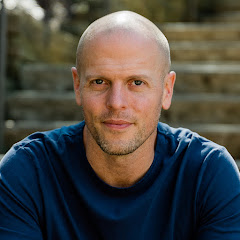 Tim Ferriss
Want to know something specific about what's covered?
We've already dissected every moment. Ask and we will deliver (with timestamps).
Key Moments
Soman Chainani on embracing life's flow, giving away ideas, and embracing discomfort.
Key Insights
Embrace the 'flow' by allowing creative decisions to come to you naturally rather than forcing them.
Giving away ideas can paradoxically lead to their inspiration and successful execution, either by oneself or others.
Worst-case scenario thinking, like the 'gay bull' analogy, highlights differing approaches to risk management and preparation.
Embracing discomfort through activities like performing or exploring new therapeutic methods can lead to personal growth and reinvigoration.
The 'double' or better version of oneself can emerge during moments of extreme pressure or discomfort, offering a path to deeper self-understanding.
Finding a partner with a complementary 'energy' (e.g., earth vs. sky) is crucial for a balanced and supportive relationship.
EMBRACING THE NATURAL FLOW OF CREATIVITY
Soman Chainani introduces the concept of "follow the flow," emphasizing that major creative decisions and the direction of one's work often reveal themselves organically rather than through conscious planning. He likens himself to a "manager" of creativity, waiting for ideas to emerge from a deeper source. This approach, while requiring patience, ensures that the work undertaken is truly resonant and not merely driven by external pressures or perceived easier paths, like writing a commercially safe fairy tale.
THE STRATEGIC POWER OF GIVING IDEAS AWAY
Chainani discusses the counterintuitive strategy of "giving stories away." He believes that incubating an idea for at least three years and then sharing it with others can be a form of filtering. If an idea is strong enough and no one else acts on it, it may indicate that he is uniquely positioned to bring it to life. This method also serves to inspire others and allow him to witness his concepts manifest, even if not directly by his own hand, aligning with a less zero-sum view of creative output.
NAVIGATING RISK AND PERSONAL ANXIETIES
Through the anecdote of "your bull might be gay," Chainani explores differing perspectives on worst-case scenario planning. While his partner focuses on statistical probability, Chainani admits to a tendency to catastrophize and prepare for every unlikely event. This highlights a core difference in their operational styles but also underscores the importance of recognizing and managing personal anxieties, whether through individual preparation or by outsourcing worry to an assistant.
SEEKING GROWTH THROUGH DISCOMFORT AND THERAPY
Chainani shares his experience with ketamine treatments and Internal Family Systems (IFS) therapy, which have profoundly impacted his life. He initially avoided drugs but found clinical ketamine to be a catalyst for accessing deeper parts of his brain, improving his emotional range, and enhancing his creativity. He views these practices, along with pushing his comfort zone through elaborate stage shows, as essential for reinvigoration and staying aligned with his creative path.
THE 'DOUBLE' AND THE QUEST FOR AUTHENTICITY
A significant personal discovery for Chainani is the concept of the "double" or a better, more capable version of oneself. He posits that instead of controlling a "Shadow Self," one might need to let this alternate self take the helm, especially in high-pressure situations. This idea, inspired by moments like being on the Kelly Clarkson show and observing athletes like Tiger Woods, suggests that true self-mastery comes from accessing and integrating these different internal aspects.
MODELS FOR SUSTAINED CREATIVITY AND RELATIONSHIPS
Chainani draws parallels between his career approach, Madonna's reinvention strategy, and the success of authors like Donna Tart and Sally Rooney. He advocates for artists to avoid staying in a "box" and to embrace new directions. In relationships, he champions "cross-collar dating," seeking partners with complementary "energies" (earth vs. sky) and different professional fields, fostering mutual support without competition, a principle he sees exemplified in figures like Taylor Swift and Travis Kelce.
INTERGENERATIONAL SUPPORT AND MENTAL WELL-BEING
Chainani expresses a deep interest in supporting the "Generation Alpha" (today's teenagers) through a "Coach Alpha" initiative. Drawing on his past as a tutor, he aims to help young people navigate their existential dread and mental health challenges by identifying their true desires and providing outlets for healthy expression, such as martial arts or creative pursuits. He believes this third-party support is vital, as children often respond differently to outsiders than to their parents.
THE POWER OF IMMERSIVE STORYTELLING AND CONNECTION
The conversation touches upon authors like Donna Tart and Yana Gara, whose meticulous, years-long writing processes create deeply immersive experiences that resonate powerfully with audiences, particularly on platforms like TikTok. Chainani admires this level of commitment, seeing it as a path to creating undeniable, lasting work. He also explores the development of "couples' language" and the importance of genuine connection over superficial "hookups," emphasizing the value of authentic relationships.
Mentioned in This Episode
●Software & Apps
●Companies
●Organizations
●Books
●Drugs & Medications
●Concepts
●People Referenced
Creative Flow & Personal Growth Playbook
Practical takeaways from this episode
Do This
Avoid This
Common Questions
Soman Chainani believes that major creative decisions should come naturally rather than being forced by the conscious mind. He sees himself as a manager of creativity, with the creative forces (the 'elves') guiding the next project.
Topics
Mentioned in this video
A popular TV series mentioned as an inspiration for a darker, reinvented version of Neverland that Soman Chainani considered writing.
A popular fantasy book series mentioned as a benchmark in the magic school genre, which Soman Chainani's 'School for Good and Evil' entered ten years later.
A comic book company that hired Soman Chainani to write a short story, which ultimately fell through before publication.
A TV show Soman Chainani watched growing up, starring David Duchovny.
A TV series created by Brian Koppelman, a friend of the host.
A film referenced by the speaker regarding unexpected plot twists, implying a future reveal about his new book.
The host's second successful book, which, despite being in a different category, was seen as an extension of his 'life hack' approach.
A book Soman Chainani read during COVID-19 that prompted him to seek ketamine treatment for anxiety and emotional numbness.
A book by AJ Jacobs, mentioned by the host as a personal favorite.
The host's first successful book, which created pressure and optionality for his later career decisions.
The television network that aired a documentary about Tiger Woods.
The streaming service that produced a movie adaptation of Soman Chainani's 'The School for Good and Evil'.
A social media platform where authors like Donna Tart and Hanya Yanagihara, known for infrequent releases, find significant popularity.
An e-commerce platform where 'A Little Life' by Hanya Yanagihara is noted to be a top seller years after its release.
A toy company that released a book called 'Ever After High' around the same time as 'School for Good and Evil'.
A social media platform where Christopher Marley showcases his art, and where Soman Chainani maintains a presence.
An author known for his experimental books, whose work 'Outsourcing Your Life' included the idea of asking an assistant to worry on one's behalf.
A legendary golfer whose documentary revealed his father taught him self-hypnosis techniques to dominate his sport by getting his conscious mind out of the way.
A tennis legend mentioned for his ability to stay relaxed while hitting the ball, giving him more options than tensing competitors.
A friend of the host, described as an accurate futurist who tries to give away all of his ideas, similar to Soman Chainani's approach.
A talented comedian and writer Soman Chainani mentions, who once said that money being 'so good' is a red flag when making career decisions.
Host of the Huberman Lab podcast, mentioned for an episode related to ketamine.
A famous Brazilian Jiu-Jitsu competitor, referred to as the greatest of all time, who would share his training footage online for others to see.
An NFL quarterback featured in the 'Quarterback' series, described as a physical freak of nature who improvises on the fly and is pliable in his play.
An astrophysicist who articulates the 'yes, and' philosophy in parenting, emphasizing encouraging child-initiated exploration over fear of mess.
A friend of the host, cited as someone who understood the logical progression from 'The 4-Hour Workweek' to 'The 4-Hour Body' due to their shared focus on maximizing output.
Co-founder of Intel and author of 'Only the Paranoid Survive,' whose philosophy of anticipating worst-case scenarios is mentioned.
Author of the Harry Potter series, mentioned as someone against whom other authors were perceived to be competing in the magic school genre.
A pop star whose career trajectory, reinvention, and current relationship with Travis Kelce parallel Soman Chainani's creative and personal life and are often used as a point of reference.
The creator of 'Billions' and a friend of the host, who introduced Soman Chainani to the host and whose daughter, Anna, is highlighted as a rising talent.
A doctor from Yale who was the primary investigator for seminal work and early protocols on ketamine as an antidepressant in humans.
A prolific writer and performer, mentioned as an artistic parallel for Anna Koppelman's versatile talent.
A therapeutic approach that helped Soman Chainani explore his 'parts' and become more comfortable letting go and integrating his 'double' self.
A Japanese concept referring to the practice of doing something completely out of one's comfort zone, an extended journey to find reinvigoration for life.
More from Tim Ferriss
View all 700 summaries 88 min
The Legendary Hollywood Power Broker — Guy Oseary on 36 Years of Managing Madonna, 26 IPOs, and More
 77 min
The Many Benefits of Coca — The “Divine Leaf” with 8,000+ Years of Use
 100 min
Inside The AI Race: DeepMind, OpenAI, Anthropic, China, and The Race to Superintelligence
 108 min
The Path from The Soviet Union to Building Multi-Billion Dollar Companies — Max Levchin
Ask anything from this episode.
Save it, chat with it, and connect it to Claude or ChatGPT. Get cited answers from the actual content — and build your own knowledge base of every podcast and video you care about.
Get Started Free