Key Moments
348 ‒ Women’s sexual health, menopause, and hormone replacement therapy (HRT)
 Peter Attia MD
Want to know something specific about what's covered?
We've already dissected every moment. Ask and we will deliver (with timestamps).
Key Moments
Women's sexual health, menopause, and HRT are neglected, with outdated fears and lack of doctor education harming health outcomes.
Key Insights
The medical field has significantly neglected women's sexual health and menopause, leading to a lack of education and effective treatment.
Misinterpretation of the Women's Health Initiative (WHI) study created widespread fear and has prevented many women from accessing beneficial hormone replacement therapy (HRT).
Testosterone plays a crucial role in women's health, impacting libido, energy, and potentially mood, yet it is often overlooked.
Vaginal estrogen and DHEA are safe and effective for treating genitourinary symptoms of menopause, reducing UTI risk, and improving quality of life, with significant economic benefits.
The lack of standardized education on menopause and HRT for healthcare providers is a major barrier to proper patient care, creating a 'lost generation' of doctors.
Fear and outdated information often lead to suboptimal or even harmful 'fringe' practices in hormone therapy, underscoring the need for evidence-based, accessible care.
THE NEGLECT OF WOMEN'S SEXUAL HEALTH AND MENOPAUSE
The conversation highlights a significant gap in medical education and practice regarding women's sexual health and menopause. Dr. Rachel Rubin, a urologist specializing in sexual health, emphasizes that this area is severely underrepresented, leading to a lack of information and effective treatment options for women. This neglect results in a population suffering from preventable issues, while the medical community lacks the knowledge to adequately address them. Rubin points out that societal and medical biases have created a situation where men's sexual health is far better understood and treated.
THE MISINTERPRETATION OF THE WOMEN'S HEALTH INITIATIVE (WHI) STUDY
A major focus is the profound negative impact of the misinterpretation of the WHI study results. The study, intended to provide critical data on hormone therapy (HT), was sensationalized and led to widespread fear, causing a drastic decline in HRT prescriptions. The speaker argues that the data was drastically misinterpreted, leading an entire generation of doctors to fear prescribing hormones. This has resulted in significant harm to women's health, as the benefits of HRT, such as reduced risk of fractures, diabetes, and certain cancers, were overlooked due to this fear-based approach.
HORMONAL CHANGES DURING PERIMENOPAUSE AND MENOPAUSE
The discussion explains the complex hormonal shifts women experience. Perimenopause is characterized by erratic fluctuations in estrogen, progesterone, and testosterone, likened to an unstable gas tank that overfills and then empties unpredictably. Menopause, in contrast, represents an 'empty gas tank' with a significant loss of these hormones. This transition is contrasted with men's more gradual hormonal decline. The physiological process of the menstrual cycle, driven by hormones like FSH and LH, is detailed, illustrating how these fluctuations lead to the symptoms experienced during perimenopause and menopause.
THE CRITICAL ROLE OF TESTOSTERONE IN WOMEN'S HEALTH
Testosterone, often overlooked in women's health, is highlighted as a critical hormone essential for libido, energy, and overall well-being. Contrary to the misconception that women primarily need estrogen, they possess significant amounts of testosterone, which also declines with age. The conversation stresses that this decline can lead to issues beyond low libido, affecting the urinary tract, mood, and cognitive function. The lack of FDA-approved testosterone formulations for women and the general lack of education on its use contribute to its underutilization, despite global consensus on its benefits for low libido.
SYSTEMIC AND LOCALIZED HORMONE THERAPY OPTIONS
Various methods for administering hormone therapy are explored, including patches, gels, oral medications, and vaginal rings for systemic effects, and localized treatments like vaginal estrogen and DHEA. The importance of personalized treatment is emphasized, as different individuals respond differently to various formulations and doses. The discussion differentiates systemic therapy for whole-body benefits from local vaginal treatments, which are primarily for genitourinary symptoms and are considered extremely safe for nearly all women, regardless of medical history, offering significant improvements in quality of life and infection prevention.
ADDRESSING GENITOURINARY SYMPTOMS AND PREVALENCE OF UTIS
The genitourinary syndrome of menopause (GSM), including urinary frequency, urgency, incontinence, and recurrent urinary tract infections (UTIs), is presented as a major health issue, particularly for older women. Vaginal estrogen and DHEA are identified as highly effective treatments, significantly reducing UTI risk (by over 50%) and improving urinary and sexual health. The immense economic burden of UTIs on healthcare systems, including hospitalizations and ICU stays for sepsis, is highlighted, with estimates suggesting billions in savings for Medicare if vaginal estrogen were widely used. This underscores a critical public health problem rooted in a lack of awareness and appropriate treatment.
THE CHALLENGES AND FUTURE OF MENOPAUSE CARE
The conversation identifies a 'humility problem' and resistance to change within the medical community as major obstacles. There's a critical shortage of healthcare providers trained in menopause management, leading to a 'brain drain' and a 'lost generation' of practitioners. The discussion also warns against exploitative 'fringe' practices, such as pellet clinics and compounding pharmacies, that may lack scientific rigor or overcharge patients. The need for evidence-based education, self-advocacy by patients, and a broader understanding of menopause as a whole-body issue, not just hot flashes, is crucial for improving women's long-term health and quality of life.
Mentioned in This Episode
●Products
●Companies
●Organizations
●Books
●Studies Cited
●Concepts
●People Referenced
Common Questions
The 'gas tank' analogy describes menopause as a sudden and complete emptying of a woman's hormone tank, in contrast to men's gradual decline. Perimenopause, the transition phase, is characterized by erratic fluctuations, where the tank can be overflowing or rapidly emptying.
Topics
Mentioned in this video
Supported Lis Mosconi's research on estrogen receptors in the brain with significant funding.
Author of 'Pick Your Menopause Type', a recommended book on menopause.
Mentioned in the context of the WHI press conference, implying the sensational media coverage of the study's initial findings.
A reporter who wrote a book about menopause, recommended as a resource.
A cognitive bias where people with low ability at a task overestimate their own ability; used as an analogy for social media 'experts' in hormone therapy.
Receptors in the brain that may explain varying degrees of sensitivity to progesterone and its metabolites, influencing mood and sleep.
A book by oncologist Avrum Bluming, questioning research on HRT and breast cancer, recommended for those doing their own research.
Another great book on menopause, providing educational resources for women.
A book by Heather Hirsch, offering different approaches to menopause, recommended for self-education.
More from Peter Attia MD
View all 337 summaries 118 min
Building strength and muscle mass: optimize training & nutrition for longevity (AMA #71 rebroadcast)
 121 min
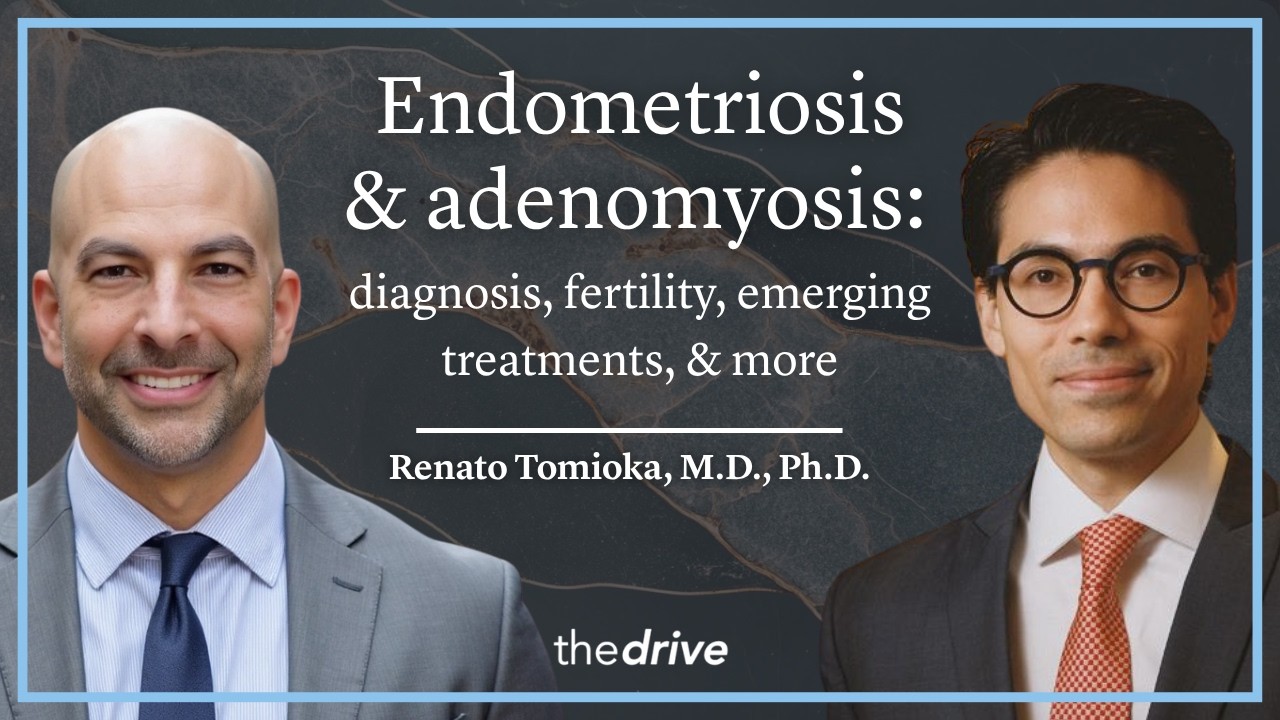
397 - Endometriosis and adenomyosis: diagnosis, fertility, reproductive aging, & emerging treatments
 51 min
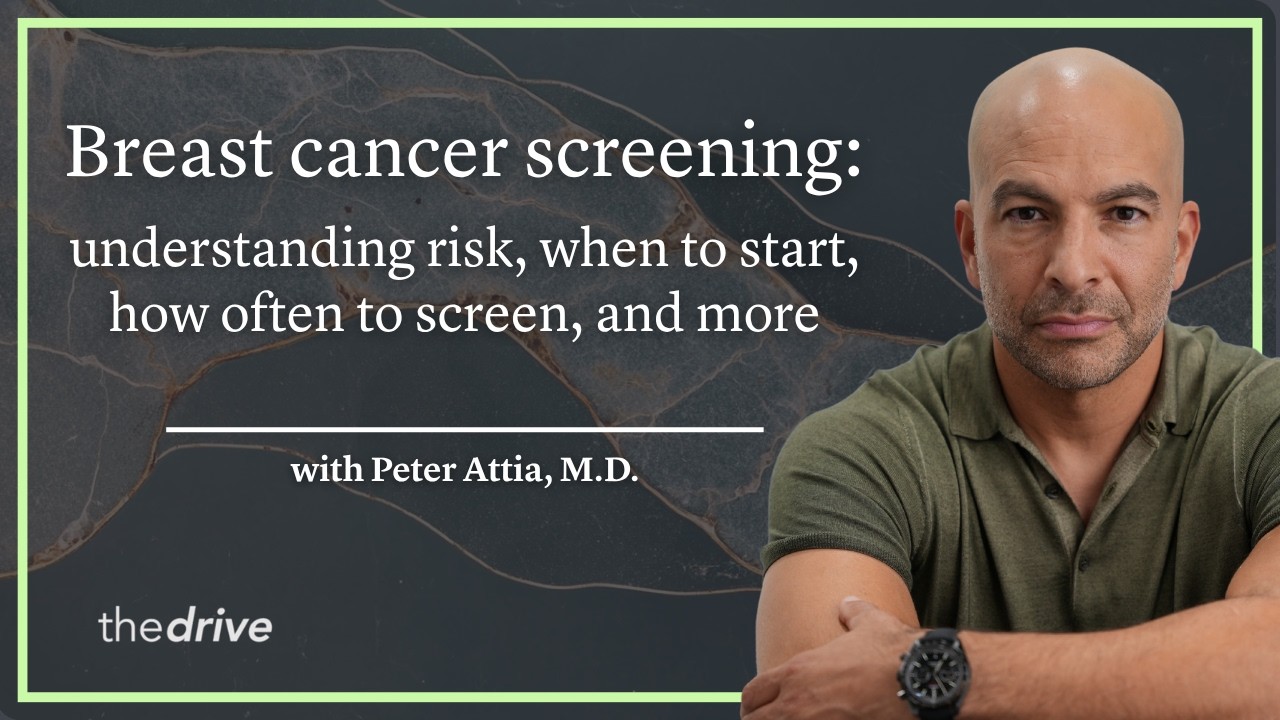
396 – Breast cancer screening: understanding risk, deciding when to start, and more
 105 min
395 – Brain lipidology: understanding APOE, cholesterol homeostasis, Alzheimer’s disease, & more
Ask anything from this episode.
Save it, chat with it, and connect it to Claude or ChatGPT. Get cited answers from the actual content — and build your own knowledge base of every podcast and video you care about.
Get Started Free