Key Moments
213 ‒ Liquid biopsies and cancer detection | Max Diehn, M.D. Ph.D.
 Peter Attia MD
Want to know something specific about what's covered?
We've already dissected every moment. Ask and we will deliver (with timestamps).
Key Moments
Liquid biopsies using cell-free DNA show promise for early cancer detection and monitoring, but challenges remain.
Key Insights
Liquid biopsies detect circulating tumor DNA (ctDNA) in blood, offering a less invasive alternative to tissue biopsies.
Early research focused on protein biomarkers (like PSA) showed limited specificity, hindering clinical utility.
Circulating tumor cells (CTCs) were explored but faced challenges with abundance, specificity, and technical complexity.
Cell-free DNA (cfDNA) analysis, particularly by looking for cancer-specific mutations, shows significant potential for detection.
Next-generation sequencing (NGS) enables highly sensitive detection of cfDNA mutations, advancing liquid biopsy capabilities.
While promising, current liquid biopsy tests for early-stage cancer detection or screening have limitations in sensitivity and specificity compared to established methods.
FROM ACADEMIC ROOTS TO CLINICAL ASPIRATIONS
Dr. Max Diehn's journey into liquid biopsies began during his MD-PhD at Stanford, influenced by groundbreaking technologies like DNA microarrays from Pat Brown's lab. Initially exploring immunology and oncology, his dissertation work highlighted the challenges of RNA stability and the potential of cataloging gene expression. This foundational research, coupled with his later clinical focus on lung cancer, fueled a desire to address unmet clinical needs, particularly the inability to predict recurrence in early-stage lung cancer patients.
ADDRESSING THE DETECTION BLIND SPOT
A significant clinical frustration for Dr. Diehn was the limitation of traditional imaging (like CT scans) in detecting tumors smaller than 1 cm, representing billions of cells. This 'detection blind spot' extends to micrometastatic disease, which is undetectable yet can lead to recurrence and patient death. This gap motivated the exploration of blood-based biomarkers that could capture signals from widespread microscopic disease, providing a more sensitive and comprehensive view of cancer presence.
THE EVOLUTION OF LIQUID BIOPSY APPROACHES
The pursuit of liquid biopsies evolved through several stages. Early attempts focused on protein biomarkers like PSA, which suffered from low specificity due to normal cells also producing these proteins. Subsequently, circulating tumor cells (CTCs) were investigated but proved difficult to isolate in sufficient numbers and specificity, with healthy individuals sometimes yielding false-positive signals. These challenges paved the way for exploring cell-free DNA (cfDNA).
CELL-FREE DNA: A PROMISING NEW FRONTIER
Cell-free DNA (cfDNA), small DNA fragments found in blood plasma, emerged as a compelling biomarker. Inspired by its use in prenatal diagnostics, researchers hypothesized that cfDNA could carry tumor-derived DNA carrying cancer-specific mutations. This DNA, often around 170 base pairs and protected by histones, originates from various tissues, with a significant portion in healthy individuals derived from white blood cells. The key is identifying the subset of cfDNA that originates from cancer cells.
LEVERAGING GENETIC MUTATIONS FOR DETECTION
The core advantage of cfDNA in cancer detection lies in its mutations. Cancer arises and progresses through accumulated DNA mutations, which are generally absent in a patient's normal cells. By using highly sensitive next-generation sequencing (NGS), researchers can detect these specific tumor mutations within the cfDNA pool. Early strategies involved sequencing known tumor mutations, significantly increasing sensitivity and specificity compared to previous methods, addressing the challenge of low tumor DNA fractions.
ADVANCEMENTS AND FUTURE DIRECTIONS IN cfDNA ANALYSIS
The field has seen dramatic improvements, with techniques now achieving sensitivities of one in a million cfDNA molecules. Approaches are expanding beyond just mutations to include cfRNA and DNA methylation patterns, offering complementary information. While challenges remain in achieving high sensitivity and specificity for early-stage cancer screening, particularly for cancers like breast and prostate with lower cfDNA shedding, ongoing research into multi-analyte approaches and machine learning holds promise for improved diagnostic capabilities and eventual clinical utility, especially in guiding adjuvant therapy decisions and monitoring for minimal residual disease.
Mentioned in This Episode
●Software & Apps
●Companies
●Organizations
●Studies Cited
●Concepts
●People Referenced
Common Questions
Max Diehn started in the MD PhD program at Stanford, doing his dissertation with Patrick Brown, inventor of DNA microarrays, focusing on immunology and oncology. His father's lymphoma diagnosis during college strongly influenced his decision to become a physician-scientist in oncology to improve treatments.
Topics
Mentioned in this video
A program for aspiring physician-scientists to combine medical and doctoral training.
A tumor suppressor gene, often mutated in various cancers, but not always a 'driver' mutation.
A marker expressed in tumor cells that can hide cancer from the immune system, important for immunotherapy, measurable via RNA expression not DNA mutation.
A mutation-based lung cancer screening method developed by Max Diehn's lab using ctDNA, integrating features like mutation type, fragment length, and smoking status with machine learning.
A type of white blood cell, lymphocyte, critical for the adaptive immune system, studied by Diehn for gene expression changes upon activation.
An organelle inside cells where RNAs for secreted and surface proteins go, which Max Diehn developed a method to isolate.
A medical specialty focused on the systemic treatment of cancer with drugs, initially considered by Max Diehn due to his father's experience.
Max Diehn's wife's name is Jenny.
A protein biomarker historically used for prostate cancer screening and follow-up, but with limitations in specificity.
A protein biomarker historically used in cancer, sometimes elevated in lung cancer but with specificity issues.
A protein biomarker historically used in cancer, noted for limitations in specificity.
Intact cancer cells that circulate in the blood, an early focus of liquid biopsy, but difficult to measure reliably due to low abundance and processing challenges.
A screening technique for lung cancer that has been shown to reduce mortality, but has limitations in resolution and potential for false positives.
A revolutionary technology invented by Patrick Brown for measuring the expression of thousands of genes simultaneously.
An enzymatic method used to amplify and quantify DNA, more complex than simple dye-based methods but used in specific situations.
High-throughput molecular methods for sequencing DNA, used to identify exact base sequences of millions of molecules in parallel.
A company with Medicare-approved ctDNA tests for colorectal cancer, used for minimal residual disease detection.
A company founded by Patrick Brown, Max Diehn's former PhD advisor.
One of the first companies in the liquid biopsy field, with an FDA-approved test used for genotyping advanced metastatic cancer patients to guide treatment decisions.
Max Diehn and Peter Attia attended medical school at Stanford University, and Diehn also did his PhD and residency training there, eventually joining the faculty.
The US agency that approves diagnostic tests and drugs, with a more rigorous approval process than CLIA compliance.
A component of the NIH, showing significant interest and increased funding for liquid biopsy research.
The primary federal agency for biomedical research, funding a significant and increasing amount of liquid biopsy research.
Max Diehn's PhD advisor at Stanford, known for inventing DNA microarrays. He later founded Impossible Foods.
A former postdoc in Pat Brown's lab who led early work on long non-coding RNAs, now a professor at Stanford.
The first chairman of radiation oncology at Stanford, a famous radiation oncologist and physician-scientist who cured Hodgkin's disease with radiotherapy.
A researcher in Hong Kong who led early work on prenatal diagnostics using cell-free DNA.
A researcher at Stanford who led early work on prenatal diagnostics using cell-free DNA.
A landmark study that proved low-dose CT scans could significantly reduce lung cancer deaths in high-risk individuals.
A chemical modification of DNA molecules that can influence gene expression and serve as exquisite marks of tissue origin, used in some liquid biopsies.
More from Peter Attia MD
View all 337 summaries 118 min
Building strength and muscle mass: optimize training & nutrition for longevity (AMA #71 rebroadcast)
 121 min
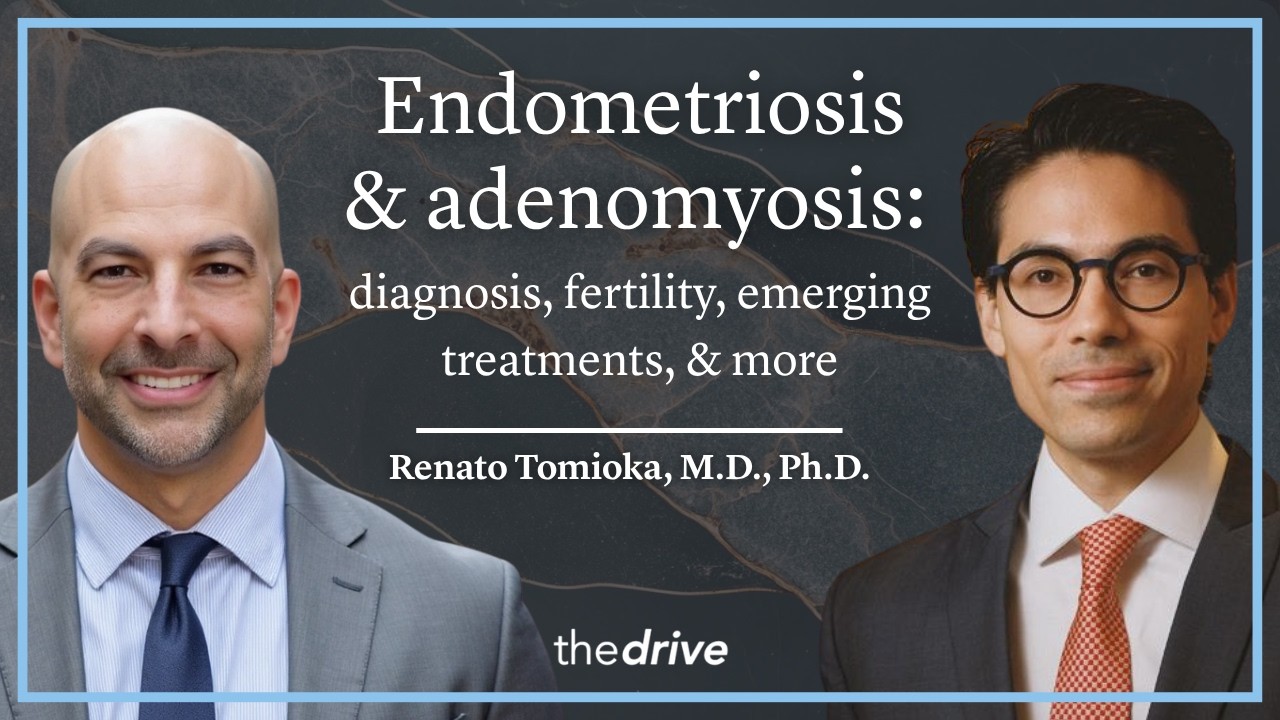
397 - Endometriosis and adenomyosis: diagnosis, fertility, reproductive aging, & emerging treatments
 51 min
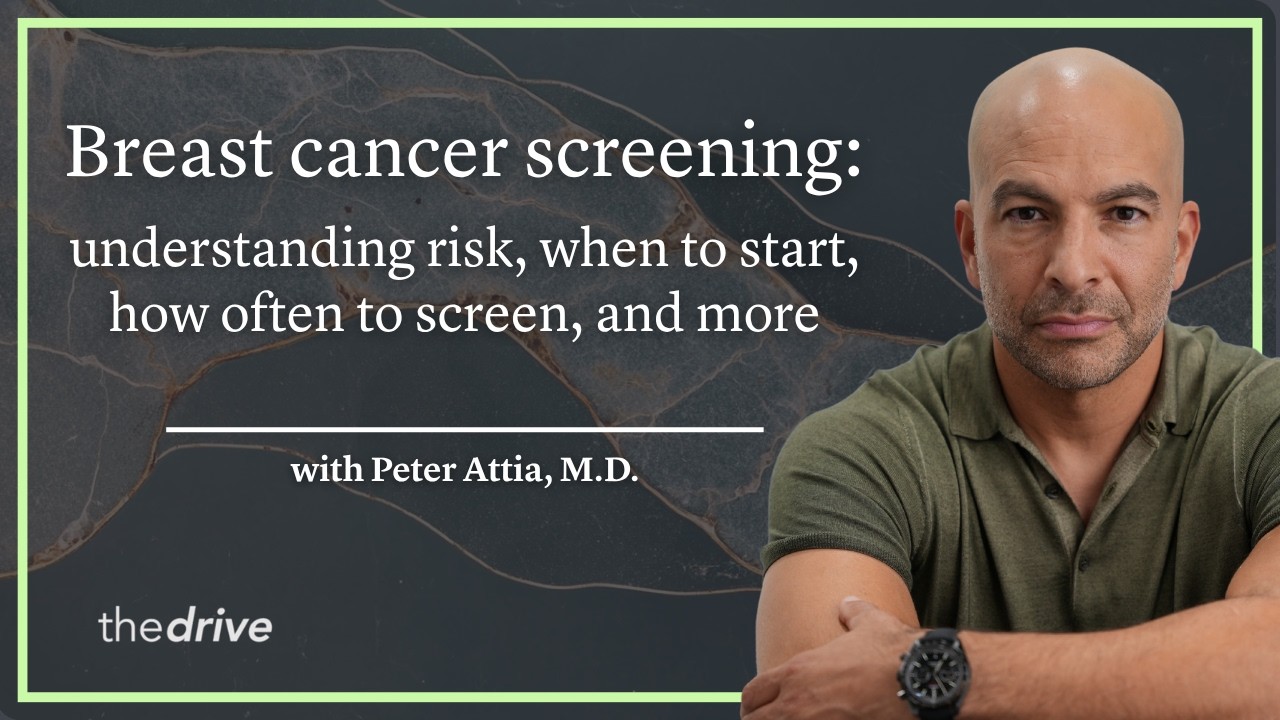
396 – Breast cancer screening: understanding risk, deciding when to start, and more
 105 min
395 – Brain lipidology: understanding APOE, cholesterol homeostasis, Alzheimer’s disease, & more
Ask anything from this episode.
Save it, chat with it, and connect it to Claude or ChatGPT. Get cited answers from the actual content — and build your own knowledge base of every podcast and video you care about.
Get Started Free