Key Moments
Why half of product managers are in trouble | Nikhyl Singhal (Meta, Google)
 Lenny's Podcast
Key Moments
Half of product managers risk becoming "dinosaurs" as AI automates information moving, while builders with judgment and pace will thrive. The industry faces chaos and staff shedding before a potential renaissance.
Key Insights
The next 12 to 24 months are predicted to be highly chaotic, with massive staff shedding and rehiring, where new hires will be "AI first."
Product managers who are "information movers" are at risk of becoming "dinosaurs" as AI takes over their traditional tasks.
Compensation for top product builders is at an all-time high, with many receiving more offers than ever before.
Companies might shed 30,000 employees but hire only 8,000, with the new hires being exclusively "AI first."
The demand for product managers is at a three-year global high, but this is driven by those who are "builders" rather than "information movers."
In the next 12 months, companies could obsolete all mechanical parts of building products, leading to 10-100 times more changes presented to products.
The coming chaos and the "dinosaur" product manager
The product management field is entering its most chaotic period in history over the next two years. The skills that were once highly valued, such as moving information between teams and managing processes, are becoming obsolete. This is largely due to the rapid advancements in AI, which can now perform these functions more efficiently. Product leaders from three years ago often describe their day as primarily moving information, a role that is now becoming a "dinosaur" in the industry. This shift is creating significant stress and a state of constant alert for many professionals. Paradoxically, despite the sense of impending disruption, there are more open product manager roles globally than in the past three years. However, this renaissance comes with a critical caveat: the nature of the product manager role is fundamentally changing.
The "builder" renaissance and a divide in product roles
Amidst the predicted chaos, there's a growing "renaissance" for product management, particularly for those who love to build. Compensation for these "builders" is at an all-time high, and they are receiving more job offers than ever. This new era emphasizes hands-on creation, direct customer connection, and the ability to test ideas rapidly. The cost of testing and implementing changes has dramatically decreased, allowing for faster iteration and innovation. This environment is incredibly exciting for individuals who enjoy the process of creation and problem-solving. Many in this group see their next step as founding their own companies or taking on even more senior leadership roles, indicating a significant upswing in opportunity and demand for their core skills.
The risk for 'information movers' and the impending staff changes
The core of the disruption lies in the distinction between "builders" and "information movers." While builders are in high demand, those whose primary function was moving information – acting as intermediaries, translating messages, and managing processes – are at significant risk. It's estimated that about half of current product managers fall into this category. This divergence is expected to lead to massive staff shedding followed by a targeted rehiring of "AI-first" talent. Companies might lay off tens of thousands of employees, only to rehire a smaller number, all possessing skills suited for the new AI-driven landscape. This creates a challenging period, especially for mid-career professionals who may be navigating personal life changes alongside professional upheaval.
Redefining "judgment" in the age of AI
As AI takes over more mechanical tasks, the emphasis in product management is shifting towards "judgment." This isn't just about making simple decisions; it involves evaluating whether a change is good or bad, choosing between product variations to maintain brand integrity and system sustainability, and assessing if a product meets customer needs and market criteria. It's about understanding the broader system and platform, not just isolated features. Companies are increasingly seeking product leaders who can drive strategic judgment and spearhead the obsolescence of existing processes through AI and software. The ability to discern valuable innovations amidst a flood of possibilities becomes paramount, as AI lowers the barrier to creating and testing new ideas.
The future of product development and overcoming inertia
The next few years will see profound changes in how products are built and delivered. Companies will obsolete many of the traditional, mechanical aspects of product development. This will lead to an unprecedented volume of changes and tests, making judgment the most critical skill. The implication is that bad software will become increasingly unacceptable, as AI tools like Claude and Codex can address bugs and improve user experiences efficiently. This is a shift from relying on large teams and management ethos to leveraging technology for efficiency. The core challenge for product professionals is to embrace this change. Human nature resists change, especially for those who have mastered existing systems, creating a "shadow superpower" inertia. Overcoming this mental block and prioritizing staying current is crucial.
Navigating personal and professional reinvention
The rapid pace of change requires significant personal and professional reinvention. This is particularly challenging during one's "power years," when family, health, and career demands compete for limited time. The advice is to find joy in using new tools, even through unconventional means like building personal apps or automating daily tasks. This joy acts as an antidote to burnout and can reframe work from a chore to a passion project. Embracing these changes requires courage and a willingness to potentially take on smaller roles or pivot into new functions, as past brand recognition may become less relevant. The goal is to stay "modern" and be on the "boat leaving the station" for the new world of product development.
Evolving roles and the importance of 'builders' across functions
The definition of a product manager is evolving, with roles blurring across disciplines. Builders, engineers, designers, and even HR professionals increasingly need the core "builder" and "judgment" skills. Forward-thinking companies are looking for product management mindsets in roles like Chief Human Resources Officer (CHRO) because of their ability to drive change and obsolescence. Similarly, engineers are becoming more product-minded as coding becomes more democratized by AI. Designers, too, are shifting from pure production to taste-making and strategic product direction. The industry is seeing an influx of talent from various backgrounds into product roles, and established product managers are expanding their influence into other functions, acting as "agents of change."
The "skip" philosophy and optimistic outlook
The overarching advice is to adopt a "skip" mentality – thinking not just about the next move, but the one after that. This involves staying current to ensure future opportunities, particularly in a job market that will see significant shifts. While the transition period is demanding and requires increased pace and "fire in the belly," there's a strong sense of optimism. For those who embrace building and judgment, the future is bright, filled with joy and opportunity. The key is to cross the threshold into reinvention, finding moments of joy in the process. This active engagement with new tools and methodologies can transform the perception of product management from a stressful job to a fulfilling endeavor, even amidst relentless change.
Mentioned in This Episode
●Products
●Software & Apps
●Companies
●Books
●Concepts
●People Referenced
Thriving as a Product Manager in the AI Era
Practical takeaways from this episode
Do This
Avoid This
Common Questions
The PM role has shifted from primarily information moving and managing responsibility without authority ('ZERP era' stress) to a 'renaissance' where PMs are more hands-on builders, directly connecting ideas to customer impact and finding joy in creation, despite increased stress.
Topics
Mentioned in this video
A company powered by WorkOS.
A company powered by WorkOS.
A technology conglomerate where Nikhyl Singhal was a longtime executive. Mentioned as a large employer where making incremental algorithm changes could have a huge impact but was hard to navigate.
A technology conglomerate where Nikhyl Singhal was a longtime executive. Mentioned as a company where staff numbers were disproportionately high compared to actual core business needs in the past.
A season sponsor that provides APIs for enterprise features like single sign-on, SCIM, and RBAC, described as 'Stripe for enterprise features'.
Mentioned as a company building AI products. Its head, Sam Altman, was asked about slowing down AI development.
An AI safety and research company. Its head, Dario Amodei, was asked about slowing down AI development, and its head of growth, Amol, shared insights on PM roles.
One of the 15,000+ companies that Vanta helps earn and prove trust with their customers.
A technology company whose mainframe sales remain significant, indicating companies still rely on older, complex systems.
A streaming service that hosts the TV show 'Lioness'.
An airline whose Mileage Plus program is used as an example of a legacy software system.
One of the 15,000+ companies that Vanta helps earn and prove trust with their customers.
Mentioned as an example of older companies with long engineering cycles that birthed traditional product management.
Mentioned alongside Meta and Google as big employers that created new versions of product management.
Used as an analogy for how a product's reputation can overcome initial skepticism through word-of-mouth.
A season sponsor that helps companies automate compliance and risk management across various security and privacy frameworks.
One of the 15,000+ companies that Vanta helps earn and prove trust with their customers.
Mentioned as an example of older companies with long engineering cycles that birthed traditional product management.
One of the 15,000+ companies that Vanta helps earn and prove trust with their customers.
Hewlett-Packard, mentioned as an example of older companies with long engineering cycles that birthed traditional product management.
A social news aggregation, content rating, and discussion website where Nikhyl gets current information.
A car brand whose self-driving features have significantly improved, reducing Nikhyl's driving anxiety. Faces a challenge in getting past early negative perceptions of self-driving.
A company powered by WorkOS.
A company powered by WorkOS.
Nikhyl Singhal's mailing list and broader platform where wisdom is shared to a wider audience outside the curated community.
A company powered by WorkOS, also mentioned as one of Vanta's clients.
An AI model, similar to Codex, that can be used to fix bad software, generate ideas, and automate tasks. Nikhyl actively uses it for various building projects.
An AI model, similar to Claude, that can be used to generate code and ideas. Nikhyl actively used it intensely before switching to Claude more recently.
A streaming service whose shows based on books are good for 'vibe coding' (watching somewhat passively while working).
The domain name for Nikhyl Singhal's podcast and newsletter, serving as a hub for his content.
A new platform launching from Nikhyl Singhal's communities, featuring AI agents trained on community leaders' wisdom to answer career and product-related questions.
Guest and expert on product management and tech careers, former executive at Meta and Google, CPO at Credit Karma, four-time founder, and leader of the Skip community.
Head of OpenAI, mentioned as someone who would agree to slow down AI development if others did.
Head of Anthropic, mentioned as someone who would agree to slow down AI development if others did.
Physicist famously quoted by Nikhyl: 'Genius is 1% inspiration, 99% perspiration.'
Author of 'Adventures of Huckleberry Finn', noted for his forward thinking.
Head of an AI lab (likely DeepMind/Google AI), mentioned as someone who would agree to slow down AI development if others did.
A show from Amazon Prime Video that Nikhyl recommends for 'vibe coding'.
A well-written TV show on Paramount Plus about a covert CIA group, focusing on security for America and commitment to a bigger cause.
A show from Amazon Prime Video that Nikhyl recommends for 'vibe coding'.
Nikhyl Singhal's podcast and newsletter, focused on providing tactical, non-sugar-coated career advice for product professionals, often drawing from operator wisdom.
A book mentioned by Nikhyl, which tells the story of Huckleberry Finn from Jim's point of view, exploring an unnatural perspective on a classic.
A classic novel by Mark Twain, whose story is re-examined in the book 'James' from a different character's perspective.
A TV show recommended by Nikhyl, described as an apocalyptic character drama exploring motivations in challenging times.
A security and privacy framework that Vanta automates compliance for.
Google's program that trained a new breed of product managers, distinct from older, traditional product management models.
United Airlines' loyalty program, mentioned as an example of an older, complicated system built on mainframes that is hard to maintain.
A security and privacy framework that Vanta automates compliance for.
More from Lenny's Podcast
View all 24 summaries 83 min
Hard truths about building in the AI era | Keith Rabois (Khosla Ventures)
 113 min
Anthropic’s $1B to $19B growth run: how Claude became the fastest-growing AI product in history
 100 min
An AI state of the union: We’ve passed the inflection point & dark factories are coming
 107 min
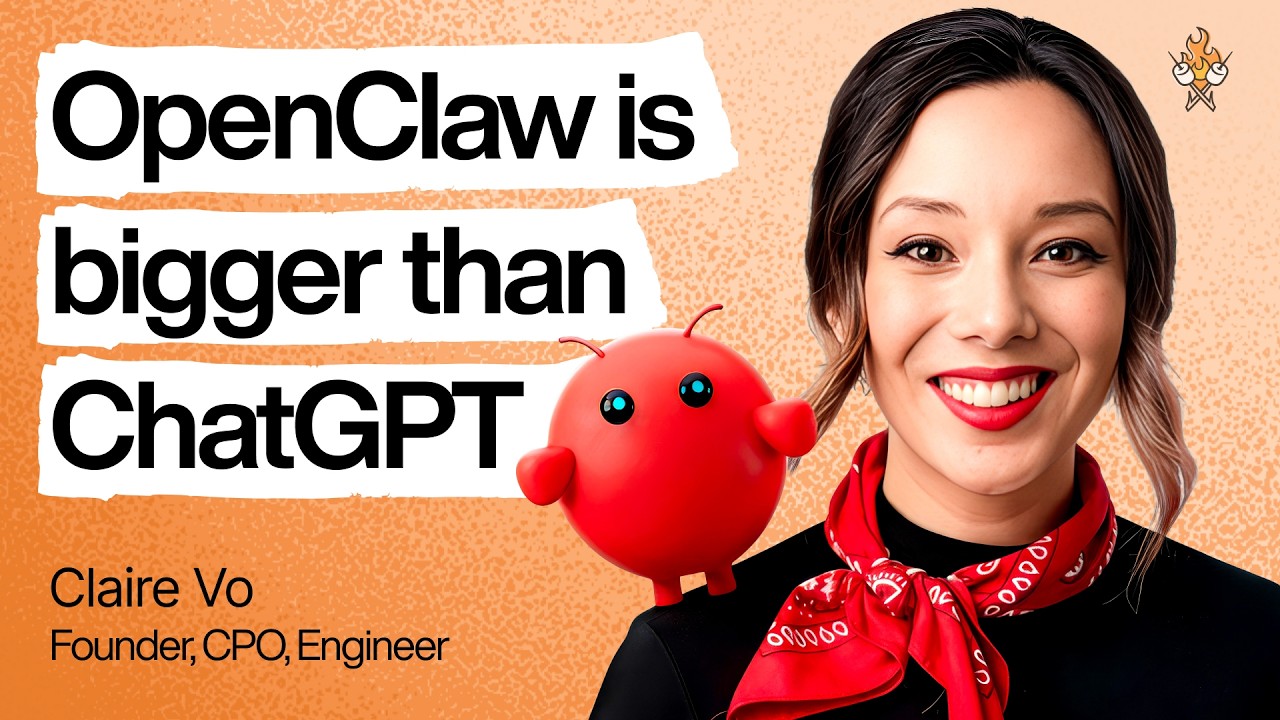
From skeptic to true believer: How OpenClaw changed my life | Claire Vo
Found this useful? Build your knowledge library
Get AI-powered summaries of any YouTube video, podcast, or article in seconds. Save them to your personal pods and access them anytime.
Get Started Free