Key Moments
Why Working Fast Makes You Less Productive: Work Slowly But Relentlessly Instead | Cal Newport
 Deep Questions with Cal Newport
Key Moments
Work slowly but relentlessly on what matters to achieve long-term results.
Key Insights
The ancient principle of 'Festina Lente' (Make Haste Slowly) advocates for deliberate, focused effort rather than rushed activity.
Slow productivity involves working slowly, relentlessly, and on tasks that truly matter.
Rushing leads to increased overhead, reduced cognitive capacity, and ultimately, slower progress and lower quality.
Effective time allocation for open-ended tasks requires setting reasonable time blocks and using negative feedback to adjust processes, not just increase time.
Care work, often seen as a detractor from productivity, can actually enhance focus, provide a unique perspective, and foster a more robust identity.
The tools we use, like digital tablets and text files, can act as extensions of our working memory, but their effectiveness depends on integration into a consistent organizational system.
THE ANCIENT WISDOM OF FESTINA LENTE
The concept of 'Festina Lente,' Latin for 'Make Haste Slowly,' originated in ancient Greece and was adopted by Roman Emperor Augustus. It signifies a principle of deliberate action, urging individuals to avoid rashness and haste in decision-making and execution. Augustus himself demoted precipitancy in his generals, advocating for a more cautious yet effective approach. This ancient oxymoron, symbolized by images like a crab and a butterfly or a dolphin and an anchor, suggests that true progress comes from a blend of speed and careful consideration, a notion remarkably relevant even today.
REDEFINING SLOW PRODUCTIVITY
Cal Newport reinterprets 'Festina Lente' as 'work slowly but relentlessly on what matters.' This interpretive translation breaks down into three key components. 'Slowly' means avoiding frenetic activity and busyness that distracts from core tasks, encouraging focus on one's craft. 'Relentlessly' counters procrastination and over-analysis, advocating for consistent, intentional progress on the most important initiatives once identified. Finally, 'on what matters' emphasizes the crucial need for clear prioritization and focus on high-impact activities, ensuring that deliberate effort is not misplaced.
THE PITFALLS OF FAST PRODUCTIVITY
Working too quickly, in the modern context, doesn't lead to higher output but rather increased inefficiency. Juggling multiple tasks simultaneously introduces significant cognitive and logistical overhead. This fragmentation reduces the time and mental energy available for actual deep work, consequently slowing down the completion of individual tasks and potentially lowering their quality. Trent's team, experiencing burnout from a 'fast productivity bias' within a Scrum framework, exemplifies this by overloading their 'working on' columns, demonstrating that limiting work-in-progress is key to efficiency.
STRATEGIES FOR IMPLEMENTING SLOW PRODUCTIVITY
Transitioning to slow productivity requires both internal adjustments and external transparency. For teams using agile methodologies like Scrum, the solution often lies in reducing the number of tasks in progress and allowing individuals more focused time on each task. Clients can be managed through clear communication and visibility into the workflow, demonstrating that deliberate progress, even if seemingly slower in the short term, leads to consistent results. For open-ended tasks, time blocking with a commitment to analyze feedback and refine processes, rather than just guessing time allocations, is crucial for effective management.
THE ROLE OF MINDSET AND ENVIRONMENT
Individual differences in productivity can stem from both inherent task-specific inefficiencies and, more significantly, mindset. While some tasks may genuinely take certain individuals longer, a reluctance to engage with responsibilities, termed 'adulting,' can also create perceived slowness. This mindset, often seen in younger adults, requires a shift towards accepting obligations and prioritizing efficiency. Furthermore, tools like the Remarkable tablet can extend working memory, but their effectiveness hinges on integrating them into a structured system, such as a daily shutdown review, to ensure captured information is processed and utilized.
CARE WORK AND DEEP WORK: A BALANCED PERSPECTIVE
Contrary to the narrative that care work, such as motherhood, is antithetical to deep work, some individuals find it can enhance their productivity. Joni's experience highlights how the constraints of caregiving can foster deep work through enforced blocks of focused time, while the perspective gained from these responsibilities can add depth and meaning to research and identity. This perspective challenges the zero-sum view of time, suggesting that a life solely dedicated to intellectual pursuits may lack the richness and human connection found in other commitments, leading to a more sophisticated and durable self-identity.
BOOK REVIEWS AND PERSONAL REFLECTIONS
Cal Newport shares his July reading list, including 'Shadow Divers' for its gripping narrative non-fiction, 'Power and Progress' for its insightful take on technology's social construction, and 'River of the Gods' for its vivid portrayal of 19th-century exploration. He also discusses 'The Last Action Heroes,' noting how larger-than-life stars once provided spectacle before the advent of advanced CGI. These reviews, interspersed with personal anecdotes about his use of digital tools and weekend planning, reinforce the episode's themes of deliberate progress and thoughtful engagement with one's work and life.
Mentioned in This Episode
●Products
●Software & Apps
●Companies
●Organizations
●Books
●Concepts
●People Referenced
Festina Lente: Working Slowly But Relentlessly
Practical takeaways from this episode
Do This
Avoid This
Common Questions
'Festina Lente' is an ancient Roman principle, originating from Greek, that translates to 'make haste slowly'. Cal Newport offers an interpretive translation: 'work slowly but relentlessly on what matters'.
Topics
Mentioned in this video
A period of relative peace and stability in the Roman Empire, initiated by Caesar Augustus.
A workflow management method, often used in conjunction with Scrum, that visualizes work through columns like 'To Do', 'In Progress', and 'Done'.
A project management methodology, particularly used in software development, that involves working in short iterative sprints.
An ancient Roman principle, often translated as 'make haste slowly', which Cal Newport interprets as 'work slowly but relentlessly on what matters.'
Mentioned in relation to the themes of 'Power and Progress', highlighting the choices society faces regarding its development and use.
Author of adventure novels, mentioned as a comparison for the narrative style of 'Shadow Divers'.
Co-author of 'Power and Progress'.
Mentioned in the context of 'inboxes' for capturing thoughts and ideas, referencing his productivity system.
A figure from the Renaissance who illustrated the principle of 'Festina Lente' with artwork featuring a turtle with a sail.
A Renaissance humanist and publisher who adopted 'Festina Lente' as his business ethos, using a dolphin and anchor as his imprint.
One of the prominent 1980s action movie stars discussed in 'The Last Action Heroes'.
Co-author of 'Power and Progress'.
A thriller writer mentioned for a book that takes place in the Nile swamps.
One of the prominent 1980s action movie stars discussed in 'The Last Action Heroes'.
The Roman emperor whose principle of 'Festina Lente' is the central theme of the episode. He was known for his effectiveness in completing projects and improving Rome.
Co-author of thrillers with Lincoln Child and head of the Author's Guild.
One of the prominent 1980s action movie stars discussed in 'The Last Action Heroes'.
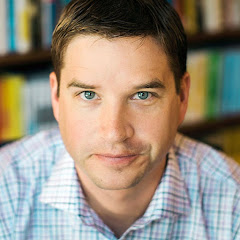
Host of the podcast, discussing his book 'Slow Productivity' and the concept of 'Festina Lente'.
Author of 'Shadow Divers'.
Author of 'River of the Gods' and 'River of Doubt'.
Author of the thriller 'The Island'.
A sponsor of the podcast, offering an online coaching program for health and fitness with daily check-ins.
A sponsor of the podcast, selling precision-milled razors made with aerospace-grade manufacturing techniques.
A sponsor of the podcast, an app providing 15-minute summaries of non-fiction books and podcasts.
A sponsor of the podcast, an app that helps users find and book appointments with doctors and specialists.
A book by Daron Acemoglu and Simon Johnson that explores how societal and political choices shape the impact of new technologies, including AI.
A film by Christopher Nolan mentioned as an example of a movie that successfully maintains a climax throughout its entire runtime.
A non-fiction book by Robert Kurson about deep-sea divers discovering and exploring a WWII Nazi U-boat off the coast of New Jersey.
Another book by Candice Millard about Theodore Roosevelt's post-presidency expedition in South America.
A thriller by Adrian McKinty about a family trapped on an island with a dangerous group of Australian 'hillbillies'.
A book by Candice Millard detailing the 19th-century European quest to find the source of the Nile River.
A book by Nick de Semlyen about the 1980s action movie stars like Schwarzenegger, Seagal, and Van Damme, and the end of that era due to CGI advancements like those in Jurassic Park.
Cal Newport's philosophy and upcoming book, which aligns with the ancient principle of 'Festina Lente' by emphasizing deliberate, focused work.
More from Cal Newport
View all 287 summaries 21 min
Can AI “Scheme”? (Nope.) | AI Reality Check
 31 min
Are LLMs a Dead-End? (Investors Just Bet $1 Billion on “Yes”) | AI Reality Check | Cal Newport
 68 min
Why Is AI Making My Job *Worse*? | Cal Newport
 24 min
Did AI Just Become Sentient? (Not Quite...) | AI Reality Check
Found this useful? Build your knowledge library
Get AI-powered summaries of any YouTube video, podcast, or article in seconds. Save them to your personal pods and access them anytime.
Get Started Free