Key Moments
Why Wealth Matters: A Conversation with Morgan Housel (Episode #287)
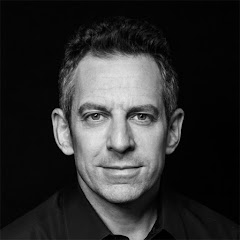 Sam Harris
Want to know something specific about what's covered?
We've already dissected every moment. Ask and we will deliver (with timestamps).
Key Moments
Morgan Housel discusses the psychology of money, stressing wealth over richness and the influence of personal history on financial decisions.
Key Insights
Personal history and individual experiences profoundly shape our financial beliefs and risk tolerance.
Wealth is defined as unspent money saved and invested, offering independence, contrasting with 'richness' which is visible spending.
Social comparison, amplified by media, inflates expectations and diminishes satisfaction despite real economic progress.
The future is inherently uncertain; relying on past events to predict future surprises is a flawed strategy.
Rational decisions about money are complex, often secondary to emotional and psychological biases.
Saving and investing, particularly through compounding, is crucial for building long-term wealth and financial security.
THE ROLE OF PERSONAL HISTORY IN FINANCIAL MINDSETS
Morgan Housel emphasizes that individual experiences, shaped by factors like generational background, socioeconomic status, and significant life events, create unique lenses through which people view money and economic risk. These deeply ingrained perspectives are difficult to change and explain why financial and economic debates are often passionate. For instance, growing up during an economic downturn versus a period of sustained growth leads to vastly different attitudes towards risk and saving, illustrating that financial behavior is less about objective data and more about subjective, lived experience.
RICH VS. WEALTHY: DEFINING FINANCIAL SUCCESS
Housel distinguishes between being 'rich' and 'wealthy.' Richness, he explains, is visible: the cars, houses, and flashy possessions that signify current spending power. Wealth, conversely, is invisible – it's the money saved, invested, and not spent, providing a buffer, independence, and room for error. This distinction is critical because society often judges richness based on outward appearances, leading individuals, particularly young men, to pursue visible signs of wealth while neglecting the foundational security and autonomy that true wealth provides.
THE DANGERS OF SOCIAL COMPARISON AND INFLATED EXPECTATIONS
The pervasive habit of social comparison, especially exacerbated by modern media and social platforms, significantly distorts our perception of financial well-being. Even as objective economic conditions improve, rising expectations driven by curated online portrayals of extreme wealth diminish personal satisfaction. Housel argues that while Americans might nostalgically recall the 1950s as an economic golden age, current economic metrics show significant improvements. The feeling of falling behind stems not from a lack of progress, but from an unmanageable gap between reality and exponentially inflated expectations.
NAVIGATING UNCERTAINTY AND THE UNPREDICTABLE FUTURE
A core theme is the inherent unpredictability of the future. History is replete with major events – pandemics, geopolitical crises – that were unforeseen until they occurred. Housel uses examples like The Economist's yearly forecasts, which often miss the biggest upcoming events, to illustrate this point. He posits that individuals and institutions often misinterpret surprising past events, believing they can prepare for similar future surprises. However, the key insight is not to predict specific future events, but to accept and plan for the inevitability of unexpected occurrences.
THE PSYCHOLOGY BEHIND FINANCIAL DECISIONS
Housel contends that financial and economic decisions are less about pure logic and mathematics, and more about human psychology, including greed, fear, and biases. These decisions are frequently anchored in personal history, making them subjective and varied. He critiques the notion of purely rational decision-making in finance, highlighting how emotional responses and psychological factors often override objective analysis. Understanding these behavioral aspects is crucial for effectively managing money and navigating economic landscapes.
THE POWER OF SAVING, INVESTING, AND COMPOUNDING
The conversation touches upon the fundamental principles of saving and investing, with a particular nod to Warren Buffett and the concept of compounding. Housel underscores that wealth accumulation is not solely about high income, but about disciplined saving and consistent, long-term investing. The power of compounding, where returns generate further returns, is presented as a quiet but potent force in building substantial wealth over time. This approach, focused on unspent money growing, aligns with the definition of true wealth and provides long-term security.
Mentioned in This Episode
●Software & Apps
●Companies
●Organizations
●Books
●People Referenced
Common Questions
Housel defines 'rich' as having enough money to cover monthly expenses and desired lifestyle. 'Wealthy,' however, is defined as unspent money that is saved and invested, providing independence and room for error.
Topics
Mentioned in this video
Discussed as appearing unfit for office due to communication issues.
Mentioned as a compelling witness whose testimony was damaging to Trump, facing threats.
Used as an extreme example of an abnormal person to illustrate the potential degradation of journalistic standards if placed in a lead anchor role.
Mentioned as one of the richest billionaires, illustrating extreme wealth figures in comparison to time scales.
Host of the Making Sense podcast, discussing current events and financial topics.
Mentioned as potentially neurologically fine but speaking in 'word salad' and conveying disingenuousness.
Mentioned as a baseline for political genuineness, implying Kamala Harris is less genuine.
Described as a conservative Republican and an 'American hero' for her role in defending the constitution.
Used as a point of comparison for political disingenuousness, with Kamala Harris being perceived as more so.
Mentioned as a journalistic figure at CNN, contrasted with Alex Jones.
Discussed extensively as a significant political figure whose impact and 'abnormality' are central to the political discourse.
Nobel Prize-winning psychologist discussed for his work on behavioral economics and the impact of personal experience on risk assessment.
His biography is cited for a point about how wealth can remove hope for improving one's situation if already rich and depressed.
Mentioned as one of the richest billionaires, illustrating extreme wealth figures in comparison to time scales.
Used as an example of a large corporation that might hire an investment bank for mergers.
Mentioned in the context of Kamala Harris's speech patterns, described as being trained on 'woke Twitter'.
Used as an example of a company that experienced stratospheric gains but also significant losses, illustrating market volatility and the unreliability of past performance.
Mentioned as Morgan Housel's aspiration during his early career in finance.
Used as a dystopian reference to describe the potential negative societal consequences of outlawing abortion, particularly for women in red states.
Morgan Housel's influential book, which is the primary focus of the conversation, covering topics like wealth, greed, and happiness.
More from Sam Harris
View all 302 summaries 27 min
Is America Heading for a Debt Crisis? An Economist Explains
 27 min
Is America Heading for a Debt Crisis? An Economist Explains
 34 min
Is Psychedelic Therapy Ready for FDA Approval?
 26 min
You Lose Interest the Moment You Realize It's AI
Ask anything from this episode.
Save it, chat with it, and connect it to Claude or ChatGPT. Get cited answers from the actual content — and build your own knowledge base of every podcast and video you care about.
Get Started Free