Key Moments
Why I Left Medicine (And Why I'm Going Back)
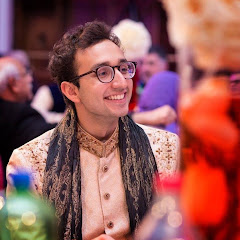 Ali Abdaal
Key Moments
Doctor Ali Abdaal left medicine for YouTube/business and is now returning part-time.
Key Insights
The decision to leave medicine was a logistical step for a planned career break, not an immediate rejection of the profession.
Early career decisions, like choosing medicine at 16, can be limiting without broader life experience.
Fulfillment can be found in activities outside of core professional work, such as teaching, business, and content creation.
Empirical testing of assumptions about desired lifestyles (e.g., part-time work) is crucial for long-term satisfaction.
Focusing on systemic impact and personal fulfillment, rather than solely on perceived individual contribution, can guide career choices.
Real-world experiences and direct interaction offer a richer, more interesting life than passive consumption of information.
THE LOGISTICAL DECISION TO TAKE A BREAK
Ali Abdaal explains that his departure from medicine in August 2020 was pre-planned and largely logistical. As is common in the UK's medical training system, junior doctors often take a break after their initial two years to decide on a specialty. This decision is usually made a year in advance, meaning Abdaal's choice to take time off was made in August 2019, long before the COVID-19 pandemic became a significant factor. This gap allowed for exploration of other interests, such as travel or further experience in different medical fields.
REASSESSING EARLY CAREER CHOICES
A significant reason for Abdaal's departure was his uncertainty about staying in medicine altogether. He reflects that deciding on medicine at age 16, influenced by family and academic expectations, might have been too early. The UK system necessitates choosing a specialty at this age, which Abdaal found restrictive compared to the American model of choosing postgraduate studies after more life experience. He realized that his true passions lay in teaching, building businesses, and coding, activities he pursued alongside his medical studies and work.
DISCOVERING FULFILLMENT BEYOND MEDICINE
During his medical training and early career, Abdaal found that the core aspects bringing him joy and meaning were not the medical tasks themselves, but rather teaching, entrepreneurship, and content creation, such as his YouTube channel. He notes that even his two years as a junior doctor were more bearable because of the anticipation of returning to his side projects. This realization led him to question whether dedicating his life to medicine, a decision made in his mid-teens, was the right path for his long-term happiness and fulfillment.
UNCERTAINTY ABOUT MEDICAL SPECIALTY
Beyond questioning his commitment to medicine, Abdaal was also unsure about which specialty to pursue. After eight months in Obstetrics and Gynecology, he realized it wasn't the right fit. While he enjoyed aspects of Emergency Medicine, committing to its extensive training program felt premature without direct experience. Having explored various fields like cardiology, elderly care, surgery, and psychiatry, he found himself unable to commit to any specific path, reinforcing his desire for a break to explore other possibilities.
UTILITARIAN REASONS FOR LEAVING
Objectively, Abdaal believes his marginal impact on the world is greater through his online ventures than as a junior doctor. He argues that medicine relies on systemic processes, making individual contributions less unique, and that any gap he leaves would be filled by another qualified doctor. In contrast, his YouTube channel and other online activities reach a wider audience, providing educational value and potentially inspiring others. Furthermore, his commitment to donating 10% of his income to charity means his financial success online can have a greater life-saving impact, comparatively, than working as a doctor.
THE APPEAL OF HUMAN CONNECTION AND REAL-WORLD EXPERIENCE
Despite the utilitarian arguments, Abdaal acknowledges a qualitative difference and genuine enjoyment derived from being a doctor. He misses the in-person interactions, helping patients, and the camaraderie with colleagues, elements absent in his current isolated setup. He feels his creativity and life experience have been stifled by the pandemic, leading to a loop of consuming information and creating content about it. He desires to return to doing rather than just talking about things, believing direct experience, like practicing medicine, makes for more interesting and valuable insights.
TESTING THE ASSUMPTION OF PART-TIME PRACTICE
A key driver for his return is to test the assumption that he would enjoy working as a doctor part-time, perhaps two or three days a week. While he knows full-time medicine isn't for him, he hasn't experienced a reduced schedule. Drawing parallels with insights from Tim Ferriss's 'The 4-Hour Workweek,' Abdaal advocates for empirically testing desired future scenarios rather than deferring happiness. This practical approach informs his decision to re-enter medicine, specifically exploring Emergency Medicine, to see if this idealized part-time role aligns with his long-term vision.
THE PRESENT SITUATION AND FUTURE EXPLORATION
Currently, Abdaal is in a transitional phase, awaiting the completion of administrative processes, like a criminal record check, to resume medical practice part-time. He plans to work a few days a week, potentially more initially to gain experience in Emergency Medicine. This return is driven by a desire to validate his assumptions about part-time medical work, gain real-world experience, contribute to the pandemic effort, and foster a more engaging and dynamic life path. The outcome remains uncertain, but the process of testing these ideas is paramount to his evolving career and life goals.
Mentioned in This Episode
●Tools
●Organizations
●Books
●People Referenced
Common Questions
The speaker left medicine primarily because they were unsure about which specialty to pursue and whether medicine was the right long-term career path for them. They also wanted to take a break to travel and explore other interests.
Topics
Mentioned in this video
A charity analysis platform used by the speaker to compare the impact of being a doctor versus donating to charities.
A charity supported by Givewell, used by the speaker for a utilitarian analysis comparing lives saved by doctors versus donations.
A pledge the speaker has taken to donate 10% of their income annually to charity, factored into their utilitarian analysis.
More from Ali Abdaal
View all 185 summaries 22 min
The psychology of making money
 34 min
If I Started YouTube from Scratch in 2026, I’d do THIS
 18 min
Brutally Honest Truth On How To Get Rich
 25 min
If I Started A Business in 2026, I'd Do This
Found this useful? Build your knowledge library
Get AI-powered summaries of any YouTube video, podcast, or article in seconds. Save them to your personal pods and access them anytime.
Get Started Free