Key Moments
What If Consciousness Is Fundamental?: A Conversation with Annaka Harris (Episode #404)
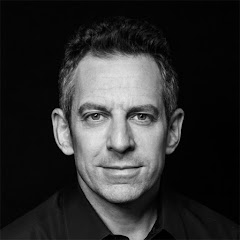 Sam Harris
Want to know something specific about what's covered?
We've already dissected every moment. Ask and we will deliver (with timestamps).
Key Moments
Consciousness may be fundamental, challenging physics and our understanding of reality.
Key Insights
The 'hard problem' of consciousness is difficult because it is intrinsically defined, unlike other phenomena explained by extrinsic properties.
The 'strong assumption' that consciousness arises only from complex processing in brains lacks strong evidence and may be a misleading starting point.
Exploring the possibility of consciousness being fundamental has implications for physics, suggesting space and potentially time might be emergent rather than fundamental.
The holographic principle offers a framework where a 2D surface can contain the information of a 3D volume, suggesting space might be an emergent property.
The concept of a unified self is challenged by neuroscience and considerations of consciousness, while concepts like memory and perception play key roles.
Relationalism, where reality is understood through connections and perspectives rather than isolated objects, is a concept gaining traction in physics.
UNDERSTANDING THE HARD PROBLEM OF CONSCIOUSNESS
The conversation begins by revisiting the 'hard problem' of consciousness, which is the mystery of how subjective experience arises from non-conscious matter. Annaka Harris explains that unlike phenomena like life or intelligence, consciousness cannot be defined by its external behavior or observable functions. Its very essence is subjective and internally defined, making it difficult to study through traditional scientific methods that rely on external observation. This intrinsic nature is what makes consciousness so perplexing compared to other scientific mysteries that have been solved by understanding their observable inputs and outputs.
CHALLENGING THE STRONG ASSUMPTION ABOUT CONSCIOUSNESS
Harris introduces the 'strong assumption' that consciousness arises from complex processing, likely within brains, and is not distributed elsewhere in the universe. This assumption is based on our limited evidence, as we primarily gain information about consciousness through communication with systems similar to ourselves. She argues that there's no empirical reason to support this assumption and proposes that starting with the alternative – that consciousness might be fundamental – could lead to new scientific discoveries. This reframing encourages a re-examination of our most basic beliefs about where and how consciousness exists.
CONSCIOUSNESS AND ITS POTENTIAL IMPLICATIONS FOR PHYSICS
The discussion shifts to how treating consciousness as fundamental could impact physics. Harris explores whether this perspective could resolve issues in current physical theories or if existing physics rules out such a possibility. The science of the fundamental is physics, making it the natural domain to investigate the nature of consciousness. This line of inquiry requires input from neuroscience but is ultimately a question for physics. The exploration suggests that established scientific frameworks might need to accommodate a more central role for consciousness.
THE HOLOGRAPHIC PRINCIPLE AND THE NATURE OF REALITY
The holographic principle is further explored through analogies, likening the universe to a projection on a 2D surface. This principle suggests that what we perceive as spatial distance might be a manifestation of differences in energy or information. The analogy of a hologram, where a 2D film conjures a 3D image, illustrates how a lower-dimensional surface can encode the information of a higher-dimensional volume. This perspective implies that our perceived space could be an emergent illusion, with the true fundamental reality lying in underlying quantum information.
RE-EVALUATING SELVES, causality, AND TIME
The conversation touches upon the deconstruction of the self, with neuroscience suggesting no physical location for a self in the brain and introspection revealing no such entity within conscious experience. Similarly, physics discoveries question the fundamental nature of space and time. Experiences described in meditation and through psychedelics, where senses of self, space, and time can diminish or disappear, are discussed. This phenomenological data, coupled with scientific findings, suggests that our perceived reality, including our sense of a stable self, may be constructed from more fundamental, dynamic processes.
RELATIONALISM, CAUSALITY, AND THE FLOW OF TIME
Physicists Carlo Rovelli and Lee Smolin offer perspectives on time. Rovelli argues that time, as we experience it, is emergent, not fundamental, suggesting it arises from memory, expectations, and the brain's processes. Smolin's 'causal theory of views' proposes a universe made of 'skies' or perspectives, potentially allowing for consciousness at a fundamental level. Both perspectives lean towards relationalism, where reality is understood through connections and interactions rather than discrete objects. The idea of 'traces' – past events leaving more information than future events – is proposed to explain our perception of time's unidirectional flow and causality.
Mentioned in This Episode
●Software & Apps
●Companies
●Books
●People Referenced
Common Questions
Annaka Harris explains that the 'hard problem' refers to the mystery of how non-conscious matter can configure itself to produce subjective, felt experience. Unlike other scientific phenomena, consciousness cannot be directly observed from the outside, only experienced intrinsically, making its physical origins difficult to situate.
Topics
Mentioned in this video
Physicist interviewed for the series.
Researcher who conducted a study on magnetic north perception, mentioned in the context of shared felt experiences.
Neuroscientist and physicist who Annaka Harris spoke with; he refers to our perceptions as 'controlled hallucinations'.
Consciousness expert interviewed for the series.
Astrophysicist who agreed with the idea of countless conscious experiences happening in the brain that don't enter memory. Author of 'The Ascent of Information'.
Science journalist and author who guided Annaka Harris through quantum physics concepts. Author of 'Spooky Action at a Distance' and 'Putting Ourselves Back in the Equation'.
Theoretical physicist at The Institute for Advanced Study at Princeton, whose lecture on ads CFT correspondence helped illustrate the holographic principle.
Book by George Musser about quantum mechanics.
Founding document of relationalism by Leibniz, cited by Lee Smolin.
Book by George Musser that addresses how consciousness relates to fundamental physics.
Book by Annaka Harris that covers the hard problem of consciousness.
Brilliant book by Lee Smolin, influencing Annaka Harris's understanding of physics.
A book mentioned as an analogy to understand higher dimensions, where a 2D being perceives a 3D world as mysterious.
More from Sam Harris
View all 302 summaries 27 min
Is America Heading for a Debt Crisis? An Economist Explains
 27 min
Is America Heading for a Debt Crisis? An Economist Explains
 34 min
Is Psychedelic Therapy Ready for FDA Approval?
 26 min
You Lose Interest the Moment You Realize It's AI
Ask anything from this episode.
Save it, chat with it, and connect it to Claude or ChatGPT. Get cited answers from the actual content — and build your own knowledge base of every podcast and video you care about.
Get Started Free