Key Moments
We're Already Living Under Authoritarianism (feat. George Packer)
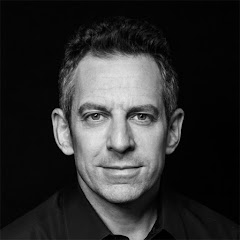 Sam Harris
Want to know something specific about what's covered?
We've already dissected every moment. Ask and we will deliver (with timestamps).
Key Moments
US democracy is eroding into authoritarianism, losing checks and balances, and normalizing corruption.
Key Insights
The US is exhibiting authoritarian characteristics, not through overt force, but through subtle institutional decay.
Key institutions like the Justice Department, Congress, and the military are failing to provide checks on executive power.
Corruption has reached unprecedented levels and is normalized due to shamelessness and a lack of public alarm.
Hypocrisy, once a political failing, has been replaced by brazen corruption, which some find more palatable.
The public's apathy towards democratic collapse is partly due to the persistent facade of normality in daily life.
Apologies in the public sphere are often perceived as weakness, leading to further attacks rather than redemption.
THE SUBTLE SLIDE INTO AUTHORITARIANISM
George Packer argues that the United States is already living under a form of authoritarianism, diverging from traditional 20th-century models. This shift isn't marked by overt military takeovers or mass repression, but by the insidious erosion of democratic norms and institutions from within. The article highlights that in the 21st century, the decay of democracy manifests differently, often masked by a persistent veneer of normalcy that makes widespread public recognition of the collapse difficult.
THE CRUMBLING PILLARS OF ACCOUNTABILITY
Packer identifies critical institutions that are failing to check unchecked power. The Justice Department, once independent, is increasingly used as a political weapon by the executive branch to target opponents, a stark departure from post-Watergate norms. Congress has ceased to function effectively, abdicating its constitutional powers of taxation and spending to the president, particularly evident in the Republican party's passive acceptance of executive overreach. The Defense Department is also at risk, with potential for the president to wield it as a partisan tool, exemplified by politically motivated firings of military leaders.
UNPRECEDENTED CORRUPTION AND PUBLIC INDIFFERENCE
A striking element of this authoritarian drift is the normalization of corruption. Unlike past scandals that generated significant public outcry, current levels of corruption, involving direct financial gains for political figures and their families through questionable deals and foreign payments, are met with relative apathy. This stands in stark contrast to the intense scrutiny applied to lesser transgressions by previous administrations, suggesting a profound desensitization to serious ethical breaches in public life.
THE POWER OF SHAMELESSNESS OVER HYPOCRISY
The discussion explores how the political landscape has shifted from a concern with hypocrisy to an acceptance of blatant corruption, primarily due to the superpower of shamelessness. Trump, by refusing to acknowledge norms or ethical standards, avoids the charge of hypocrisy, which was once a significant political liability. This brazenness, rather than being a disqualifier, becomes a shield, making his actions seem more acceptable to some because they are openly displayed, unlike the perceived sneakiness of hypocrisy.
THE PHANTOM OF NORMALCY
A core reason for the public's apparent lack of alarm is the persistence of daily life's outward normality. Despite the profound institutional decay, citizens can still access information, commute to work, and engage in their routines largely unimpeded. This eerie stability creates a disconnect, making it difficult for many to grasp the abstract nature of the democratic collapse or to perceive the magnitude of the changes unfolding, leading to a state of cognitive dissonance where alarming events are downplayed or ignored.
APOLOGY AS WEAKNESS IN THE MODERN ARENA
The public sphere, especially influenced by social media, has transformed the act of apology from a path to atonement into a confession of weakness. When public figures apologize, it often triggers intensified outrage rather than redemption, leading to a 'cultural revolution' style of public shaming. Politicians who survive scandals tend to be those who deny wrongdoing or ignore criticism, highlighting that in contemporary politics, shame and self-reproach are seen as liabilities, while shamelessness offers a strategic advantage for retaining power.
DEFIANCE IN THE FACE OF TRANSPARENCY
The Jeffrey Epstein case is identified as a potential sticking point, an issue that even the MAGA movement struggles to dismiss or reframe. This suggests that certain revelations, even within a climate of widespread apathy and institutional decay, can still resonate and potentially serve as a catalyst for greater public awareness or accountability, though the extent of this impact remains uncertain in the current political environment.
Mentioned in This Episode
●Products
●Companies
●Books
●Concepts
●People Referenced
Common Questions
The speaker points to the use of the Justice Department as a personal police force by the president, the erosion of Congress's power to tax and spend, and instances of the defense department being used for partisan purposes. These are seen as qualitative breaks from previous norms.
Topics
Mentioned in this video
The events of January 6th serve as a case study for the slow pace of legal proceedings against Trump, which the speaker contrasts with the speed of prosecutions against political enemies under Trump's administration.
The political movement associated with Trump, discussed in the context of its response to criticisms and its potential push towards authoritarianism.
His resignation from political life is cited as an example of a politician who apologized and was subsequently removed, contrasting with those who ignore criticism and retain power.
Mentioned in the context of the defense department, accused of firing senior military leaders based on political dislike.
Former FBI Director against whom the Justice Department filed charges, which the speaker views as a politically motivated prosecution under Trump.
More from Sam Harris
View all 307 summaries 48 min
When Should You Trust Your Intuition?
 92 min
Is AI Already Conscious? (FULL EPISODE)
 25 min
Why Sam Harris Is Still Angry at Ezra Klein
 30 min
Can AI Cure Loneliness?
Ask anything from this episode.
Save it, chat with it, and connect it to Claude or ChatGPT. Get cited answers from the actual content — and build your own knowledge base of every podcast and video you care about.
Get Started Free