Key Moments
Can Downgrading Your Tech Upgrade Your Results? | Cal Newport
 Deep Questions with Cal Newport
Key Moments
Embracing 'slow technology' like mechanical typewriters can enhance creativity and satisfaction by reducing digital distractions, even if it means a slower output. This approach contrasts with the tech industry's relentless focus on speed and efficiency.
Key Insights
Children's book author Amy Timberlake found that embracing a mechanical typewriter for her drafting process significantly reduced distractions and helped her enter a more focused writing state, akin to 'dropping down into the well.'
The perceived 'slow' technology of mechanical typewriters, despite the manual effort of retyping revisions, forces a writer to re-engage with the text, leading to deeper internalization of the material and a clearer understanding of the writing process.
According to a 2026 survey, 88% of Americans experienced financial stress, highlighting the need for mental health support alongside financial advice, as discussed in relation to BetterHelp.
The resurgence of physical media like Blu-rays and DVDs, exemplified by the sales of 'Oppenheimer,' suggests a desire for tangible ownership and a potentially superior viewing experience compared to compressed streaming services.
The author argues that speed is rarely the most important factor in work quality, and a focused cognitive context with 'friction' can lead to better results, contrasting with the digital tool industry's emphasis on eliminating friction.
Yuval Noah Harari's commentary on AI as an 'agent' that learns and manipulates is critiqued for overhyping current AI capabilities, which are primarily story-telling language models rather than independent agents with a will to survive.
The paradox of speed: Modern tools offer efficiency but bring exhaustion
Modern digital tools are characterized by their speed, designed to reduce friction and offer a multitude of options to expedite tasks. From workplace communication to AI agents and food delivery apps, the focus is on rapid completion. However, this relentless pace has a significant downside: it's exhausting. It transforms life into a frantic blur of clicks and swipes, a constant battle to keep up with an unending stream of information. This raises the question: does this speed truly lead to greater productivity? A growing subculture, termed 'slow technology,' suggests otherwise, embracing simpler, less feature-rich, and more friction-laden tools for better work and a more livable life.
A children's author's journey to a mechanical typewriter
Amy Timberlake, an acclaimed children's book author, shares her experience with slow technology, specifically her shift to using a mechanical typewriter for writing and revision. Initially, her writing process involved extensive drafting, followed by rigorous cutting and reading aloud to refine language and rhythm. She discovered that complex ideas and nuanced character development, crucial for children's literature where 'every word matters,' required significant textual output followed by reduction. This meticulous process, though not quick, was essential for her craft. The transition to a typewriter was driven by a desire to escape the constant distractions and interruptions of her laptop, a struggle she and many others face with modern digital interfaces.
The typewriter as a tool for focus and process revelation
Timberlake's experience with the typewriter highlights its unique ability to foster deep focus. By eliminating digital distractions, notifications, and the temptation of email, the typewriter allows writers to 'drop down into the well' of their work. The physical act of typing and the necessity of retyping revisions, though seemingly inefficient, forces a deeper engagement with the text, embedding the story more thoroughly in the writer's mind. This manual friction, far from being a hindrance, reveals the underlying structure and creative process more clearly. Timberlake, observing her own workflow, realized she was engaging in a layered approach, akin to a painter adding elements, a process obscured by the multi-tasking capabilities of a laptop. This manual process, while slower in execution, leads to a more profound understanding of her craft.
Slow technology extends beyond writing tools
The principles of slow technology are not limited to writing. The resurgence of MP3 players, like the iPod, demonstrates a desire for dedicated devices that offer a more intentional and meaningful experience with music, free from the constant interruptions of a smartphone. Similarly, analog to-do list systems, such as the 'Analog' wooden box and index cards, provide a tangible, distraction-free focus on priorities, enhancing concentration compared to digital apps with endless features. Even the renewed interest in Blu-rays and DVDs, exemplified by the sales of 'Oppenheimer,' points to a preference for physical media, offering a potentially superior viewing experience and a sense of ownership distinct from the ephemeral nature of streaming content.
Four principles for embracing slow technology
Cal Newport distills these observations into four key principles for adopting slow technology: 1. Speed is rarely the most important factor in work quality; focus on the output. 2. A pure, focused cognitive context often yields better results, even if individual steps take longer, as the quality of the cognitive state is paramount. 3. Friction itself isn't inherently bad; it's distraction and mental exhaustion that cause problems. Embrace friction that aids focus, not that which derails it. 4. When evaluating tools, zoom out to assess the quality of results over the long term, rather than focusing on the efficiency of individual tasks. Prioritizing the overall experience and cumulative quality over short-term speed can lead to more meaningful productivity.
AI commentary: Distinguishing hype from reality
The discussion touches on the discourse surrounding Artificial Intelligence, particularly the commentary by Yuval Noah Harari. Harari's portrayal of AI as an 'agent' capable of learning, making decisions, and manipulating is contrasted with a more technical understanding. Newport clarifies that current LLM-based systems are primarily complex language models that predict the next word, not sentient agents with a will to survive. While 'agents' are being developed to execute plans, their effectiveness is limited, especially outside of structured domains like computer programming. The tendency for LLMs to generate 'stories' or plausible-sounding text, which can be misinterpreted as intent or deception, is highlighted as a key area of public confusion. The real danger, Newport suggests, lies not in AI's immediate sentience or manipulative capacity, but in the overhyped and often inaccurate narratives that fuel public anxiety, obscuring the actual capabilities and limitations of the technology.
Mentioned in This Episode
●Products
●Software & Apps
●Companies
●Organizations
●Books
●People Referenced
Common Questions
Slow technology is a movement where individuals embrace simpler tools with fewer features and more friction, not out of nostalgia, but because they believe these minimal technologies lead to better work and a more livable life. The philosophy suggests that faster isn't always more productive, and focused cognitive contexts often yield better results, even if individual steps take longer.
Topics
Mentioned in this video
An acclaimed best-selling author of children's and middle-grade books, known for winning a Newberry Honor and an Edgar Award. She has recently shifted to using a vintage mechanical typewriter for her writing and revision process.
A writer for BBC known for shows like 'Riot Women,' whose dialogue is meticulously thought through.
The illustrator responsible for the 'beautiful sweaters' on the animal characters in Amy Timberlake's books.
An author mentioned in relation to two writing styles: 'excavator' (writing long and cutting) and 'outlining' (planning before writing).
A renowned author who wrote about the importance of 'a room of one's own' for women, a concept Amy Timberlake relates to having her own office space.
An actor who contributed to the resurgence of interest in typewriters, influencing Amy Timberlake's decision to try one.
A film director known for pushing the boundaries of physical media, particularly Blu-ray releases, to ensure optimal viewing experiences for his films.
A computer scientist known for his work in AI, whose modular architecture ideas are presented as a potential alternative to LLM-based agents.
Former CEO of The Walt Disney Company, mentioned as someone Imagineers would pitch their creative ideas to.
CEO of NVIDIA, mentioned as an example of a CEO who is driven and good at business, though perhaps neurodivergent, in contrast to Sam Altman.
An author of a recent article about Sam Altman in The New Yorker.
Co-founder and former CEO of Netflix, whose interview on 'How I Built This' was listened to by Cal Newport.
A science fiction writer whose work is implicitly referenced when discussing a 'bad Azimoff fanfiction style story' in the context of AI scenarios.
An author of a recent article about Sam Altman in The New Yorker.
A celebrated biographer known for his in-depth research, whom Cal Newport likens his desired Disney book series to.
A previous podcast guest whose interview prompted a listener to recommend a book on 'acedia.'
A historian whose views on AI, particularly expressed in his Davos speech, are critiqued for being overhyped and inaccurately describing AI's capabilities.
CEO of OpenAI, described as a 'weird guy' whose recent article in The New Yorker and pronouncements on AI are critiqued by Cal Newport.
Co-founder of Microsoft, mentioned as an example of a CEO who is driven and good at business, though perhaps neurodivergent, in contrast to Sam Altman.
A Disney Imagineer and author of 'Magic Journey,' whose book Cal Newport read.
Co-founder of Apple, mentioned as an example of a CEO who is driven and good at business, though perhaps neurodivergent, in contrast to Sam Altman.
One of Amy Timberlake's latest middle-grade novels, designed as a read-aloud and her first attempt at writing humor.
A children's book by Amy Timberlake, part of the 'Skunk and Badger' series.
A children's book by Amy Timberlake, part of the 'Skunk and Badger' series.
Amy Timberlake's first novel, about a 12-year-old activist, which was complex and underwent significant editorial revision.
A Christopher Nolan film that the host purchased on 4K Ultra HD Blu-ray for its aesthetic quality.
A book about 'acedia,' or spiritual sloth, which can manifest as busyness and a lack of purpose, recommended by a listener for its insights into modern issues.
A book by Kevin Rafferty about his experiences as a Disney Imagineer, which Cal Newport read hoping for more technical details.
A company that makes high-performance skincare designed specifically for men's skin, boasting clean, clinically tested ingredients.
The world's largest online therapy platform, providing support for mental health, especially in times of financial stress.
A brand of electric typewriter Amy Timberlake's mother owned, which she used in her past writing experiences.
A 100% online coaching program for health and fitness that focuses on consistency through daily check-ins with a coach for nutrition and exercise programs.
The technology company that discontinued its iPod product line in 2022, yet its older music players are seeing renewed interest.
An online auction and shopping website where searches for older iPod models have jumped by 25%.
A digital productivity app offering more features and less friction than analog systems, but potentially leading to less intentionality.
An e-commerce retailer where the 4K Ultra HD Blu-ray of Oppenheimer sold out in its first week.
The film studio that released Christopher Nolan's Oppenheimer, which issued a statement about replenishing stock for the sold-out Blu-ray.
A Jesuit press that published 'The Noonday Devil,' suggesting a Catholic theological perspective.
An AI safety and research company that produces large language models; one of their chatbot scenarios was cited as an example of misinterpreting AI behavior.
A streaming service and former DVD-by-mail service. The host mentions being a 'long hold out' on their DVD service.
An AI research and deployment company, mentioned as producing large language models that attract recent attention.
An animation studio, presumably where an author of a favored technical book about the Disney Tiki Room worked.
A writing software favored by creative writers, mentioned as a tool Amy Timberlake has used in her process.
A word processing program that Amy Timberlake primarily used for writing before experimenting with a typewriter, often leading to distractions and interruptions.
An AI-powered writing assistant that helps users communicate clearly and adjust the tone of their messages, working across 500,000 sites and apps.
A popular typing tutorial software used on Apple II computers, mentioned as the host's method of learning to type.
A website by Google that analyzes the popularity of top search queries in Google Search across various regions and languages.
A physical productivity system consisting of a wooden box and pre-formatted index cards for writing to-do lists, promoting focus by offering a tangible, distraction-free view of tasks.
A programming language mentioned as possibly being used to create programs that call LLMs for auto-regression text generation.
An early personal computer owned by Amy Timberlake's father, on which she learned to write papers in high school.
An early microcomputer from Radio Shack, owned by Amy Timberlake's father, which she used to learn computing.
A simple word processor with a keyboard and small screen that allows typing drafts without copying/pasting or viewing the whole document at once. It can export written content as if a user is typing it quickly to any software.
Apple's classic portable music player, which saw a recent spike in search interest, representing a return to dedicated music playback.
A compact version of Apple's iPod music player, which saw increased search interest despite being discontinued.
An older model of Apple's iPod music player, experiencing a 25% jump in eBay searches.
A popular video game series, mentioned as an example of modern games contrasted with older educational software.
A popular online video game, mentioned as an example of modern games contrasted with older educational software.
A 2023 Christopher Nolan film whose 4K Ultra HD Blu-ray release caused a buying frenzy due to its superior viewing experience compared to streaming.
A Christopher Nolan film that the host purchased on 4K Ultra HD Blu-ray for its aesthetic quality.
A classic Disney attraction mentioned for having a self-published book that delves into its technology and audio-animatronics.
A classic Disney attraction, mentioned when discussing the underlying engineering and animatronics, which Cal Newport finds more interesting than the creative ideation.
A news organization that published an article about the resurgence of MP3 players, cited as a source for examples of slow technology.
A news organization that published an article on the resurgence of Blu-rays and DVDs, cited as another example of slow technology.
A publication that interviewed Yuval Noah Harari on AI, though this specific interview was not the primary source for the host's critique.
A magazine for which Cal Newport wrote an article debunking the effectiveness of AI agents outside computer programming.
More from Cal Newport
View all 289 summaries 64 min
Rules For Deep Work — Updated for 2026 | Cal Newport
 21 min
Can AI “Scheme”? (Nope.) | AI Reality Check
 31 min
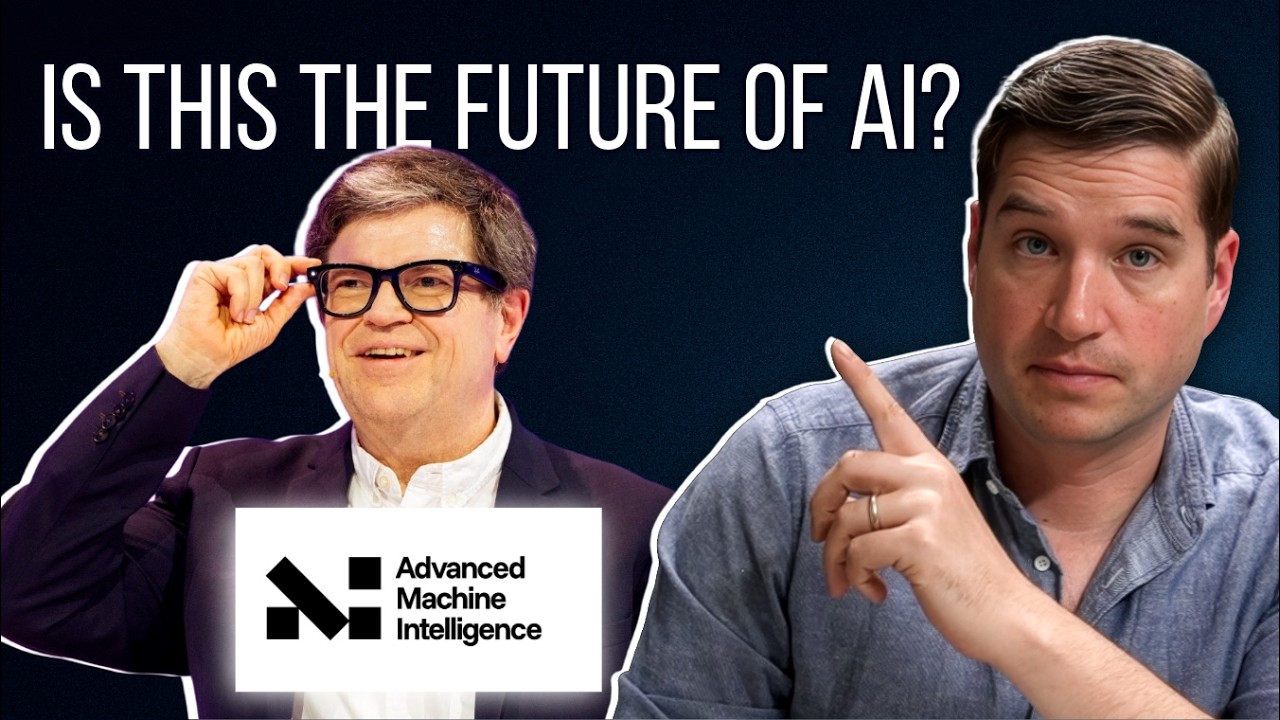
Are LLMs a Dead-End? (Investors Just Bet $1 Billion on “Yes”) | AI Reality Check | Cal Newport
 68 min
Why Is AI Making My Job *Worse*? | Cal Newport
Found this useful? Build your knowledge library
Get AI-powered summaries of any YouTube video, podcast, or article in seconds. Save them to your personal pods and access them anytime.
Get Started Free