Key Moments
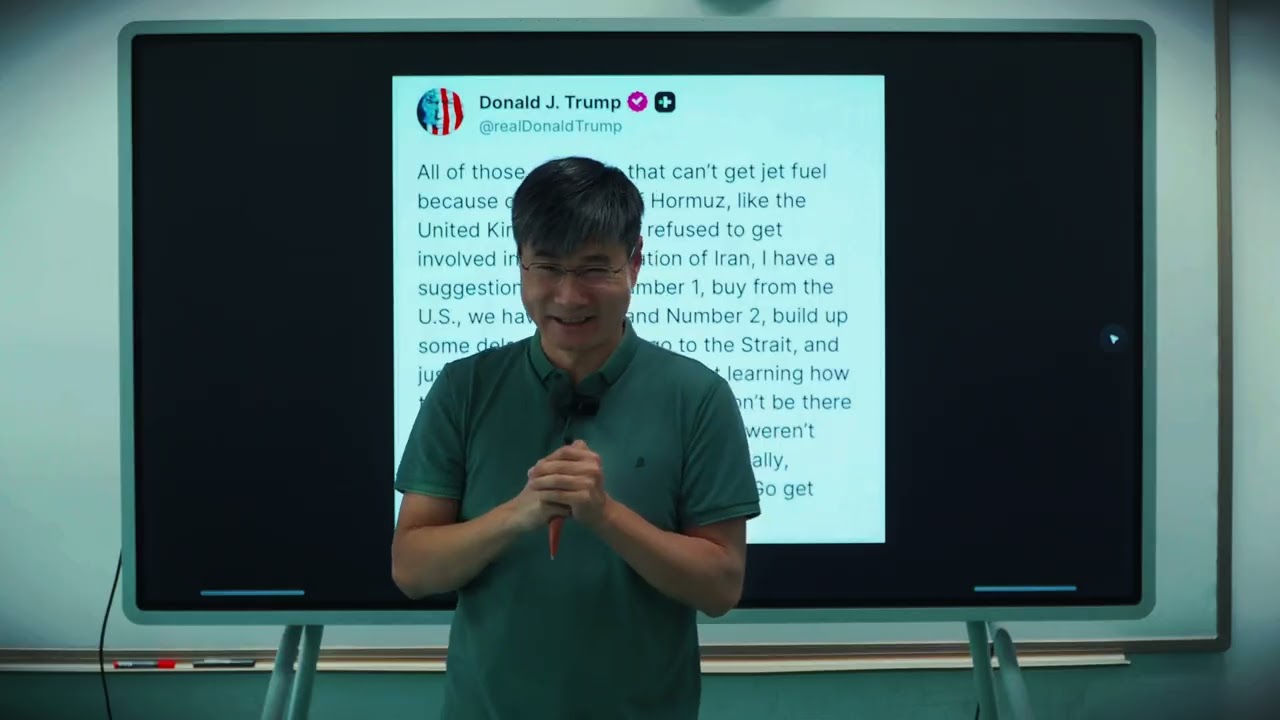
Game Theory #20: Mid-Term Examination
 Predictive History
Key Moments
A temporary US-Iran ceasefire is a public relations stunt, not a genuine de-escalation, as military movements and geopolitical loopholes suggest the conflict is far from over and may escalate unexpectedly.
Key Insights
The 10-point Iranian plan presented as a ceasefire framework is described as a near-complete US surrender, including Iran's right to enrich uranium and removal of all sanctions.
Iran's 'Mosaic Defense' strategy, decentralizing command across 31 provinces, makes it nearly impossible for the leadership to enforce a ceasefire, potentially requiring a civil war to control units.
The US continues to send military assets, like aircraft carriers, to the Middle East, raising questions about the sincerity of a ceasefire and suggesting a potential strategy to buy time for ground troop deployment.
The concept of 'esquetology' describes how occultists interpret historical patterns to create narratives and prophecies, which are then promoted by secret societies composed of the wealthy and powerful who appoint 'agents' like Trump and Putin to enact these visions.
Transnational capital is seen as a 'parasite' that can shift its investments to different 'hosts' like Israel or other nations, irrespective of the fate of any specific empire, prioritizing short-term investment opportunities.
A civil war in the US is predicted to result in Texas emerging as a clear winner due to its cohesion, energy, and openness, potentially aligning with Christian nationalists and AI.
The US-Iran ceasefire as a strategic maneuver
The announced two-week ceasefire between the United States and Iran, with negotiations planned in Pakistan based on a 10-point Iranian plan, is critically assessed as a 'complete US surrender' and a 'PR stunt.' The plan's points, including the US guaranteeing no further attacks on Iran, Iran's control over disputed territories, the right to uranium enrichment, removal of all sanctions, and an end to hostilities against Iran's proxies like Hezbollah and the Houthis, are presented as terms overwhelmingly favorable to Iran. This extreme asymmetry leads to the conclusion that the ceasefire is not genuine and is unlikely to hold, with early reports of its violation already emerging. The ongoing movement of US forces, such as the USS George Bush to the Middle East, further fuels skepticism, suggesting a possible tactic to consolidate ground forces near the Strait of Hormuz, potentially in preparation for an attack, possibly triggered by a false flag operation attributed to Israel.
Iran's 'Mosaic Defense' and its implications for conflict
A significant challenge to any potential ceasefire lies in Iran's 'Mosaic Defense' strategy. This decentralized approach divides the country into 31 self-responsible provinces, operating as independent units with their own strategies for attack and defense. The speaker argues that this effectively eliminates a centralized command structure, meaning that any agreement made with the leadership in Tehran may not be enforceable by the elements on the ground, particularly the IRGC, who distrust the Americans and Israelis. To implement a ceasefire, Iran would theoretically need to assert control over these provincial units, a move that could trigger internal civil war. This inherent difficulty in enforcing agreements makes achieving a lasting peace deal extremely problematic, as the conflict's resolution seems contingent on either the complete defeat of Iran or the US, rather than a negotiated settlement.
The concept of 'esquetology' and its role in shaping history
The interviewer introduces the concept of 'esquetology,' defined as the interpretation of historical patterns and movements to form a narrative or story about how history unfolds and eventually concludes. This practice is attributed to 'occultists' who attempt to read historical currents akin to how astrologers read stars. Crucially, esquetology is presented as both a prophecy and a plan, where adherents not only predict an outcome but also feel compelled to make it happen. These occultists then form secret societies, attracting the wealthy and powerful who seek to leverage knowledge of historical trajectories for personal gain, power, and wealth preservation. They recruit 'agents,' such as Donald Trump and Vladimir Putin, to act as vectors, moving history towards the desired conclusion. The system is complex, characterized by competing societies, shifting loyalties of the elites, and agents who may believe they are acting independently or on divine instruction. This framework is offered as a tool to understand geopolitical events, focusing on the 'story' that occultists wish to tell and enact.
China as an extension of the global system, not a competitor
Contrary to the perception of China as a geopolitical competitor, the speaker posits that China is, in fact, a 'construct of empire' and an extension of the existing global system. The system, according to this theory, embeds itself into societies, replicating its elements like universities, media ecosystems, and culture to create 'vassal states' or 'mirages' – examples being the GCC and China itself. These constructs are presented as unsustainable and prone to collapse when the overarching system is strained, as they lack an intrinsic civilization or 'soul.' China's participation in the WTO and the influx of Chinese students abroad are viewed as means to create this illusion of a modern, flourishing economy. Therefore, China's anxiety about peace in the Middle East stems not from a desire to protect its own sovereignty but from the vulnerability of its nature as a system-created entity; a strain on the global economy directly threatens China's existence.
The limitations of technology in conflict
The discussion addresses the over-reliance on technology, particularly drones, in modern warfare. While sophisticated technology and air defense systems are employed to reduce U.S. casualties and achieve quick victories, the speaker argues that this approach is fundamentally flawed because it overlooks the superior creativity, resilience, and determination of humans. Technology is seen as static and predictable, whereas human beings are dynamic and adaptable. The analogy of a robot facing a human in a dark forest illustrates how even the most advanced technology can be outmaneuvered by human ingenuity and willingness to adapt. The speaker concludes that relying solely on technological superiority, especially drones, will lead to defeat unless accompanied by total commitment and the willingness of people to fight for their beliefs—something the American public might currently lack regarding the conflict in Iran.
The future of global order and individual survival
The future is envisioned as a move towards a multipolar world, potentially short-lived, with competing empires like a 'technate' (America retreating inward), Russia controlling its territory, and Israel aiming for 'Pax Judica.' This multipolar system itself is not expected to last long, perhaps only 10-20 years. In this context of increasing chaos, resource scarcity, and potential economic collapse, individual survival is framed not through self-reliance but through community and family. The speaker strongly advises against trying to survive alone, emphasizing that preparedness alone is insufficient. Instead, building strong communal bonds, being generous, and focusing on relationships are key. Furthermore, the transformative power of having children is highlighted, providing energy, purpose, and meaning that drives individuals to greater endeavors, shifting focus from personal gain to ensuring the well-being of the next generation.
The role of elites and the illusion of nation-states
The notion of nation-states as real entities is challenged, with the speaker asserting they are merely 'made-up concepts' and 'collections of elite interests.' True power lies with these elites, whose allegiances are often not to their populace but to their families and wealth, frequently located in Western countries. This dynamic explains why elites in East Asia and the Middle East may not act in their nations' best interests, being 'carbon copies' loyal to external powers. This also suggests that nations heavily integrated with the West, like the GCC, are more vulnerable to collapse, while isolated nations like Iran can be more cohesive. The concept of the 'professional managerial elite' living on the coasts is critiqued as increasingly irrelevant and costly, contributing little to society.
Geopolitical actions driven by imagination, public opinion is irrelevant
Geopolitical actions are ultimately driven by 'occultists'—those who imagine the world and create the narratives that guide thought and action, rather than solely by the wealthy and powerful. While elites control resources, they lack the foundational imagination. The speaker asserts that public opinion holds no sway in geopolitics, citing historical examples like Rome, the Aztecs, and the British Empire, whose destructive actions did not prevent their rise or lasting influence. Despite potentially being viewed as evil, these powers endured because they wielded power effectively. Therefore, individual opinions or global sentiment are largely inconsequential; power dynamics are the sole determinants of geopolitical outcomes.
Mentioned in This Episode
●Products
●Software & Apps
●Organizations
●Concepts
●People Referenced
Common Questions
The 10-point Iranian plan is being used as a framework for peace treaty discussions. However, the speaker views it as a near-complete US surrender, outlining terms such as the US guaranteeing no further attacks, Iran's control over the Strait of Hormuz, enrichment capabilities, removal of sanctions, and withdrawal of US forces.
Topics
Mentioned in this video
Announced a two-week pause in the US-Iran war and will use the 10-point Iranian plan as a framework for peace talks. Discussed as an 'agent' and a powerful, unpredictable figure in geopolitics.
Mentioned as a historical figure who, despite support from secret societies, could betray them and veer in a different direction.
Mentioned as an agent, like Donald Trump, who appears to be a puppet but may believe he is using secret societies for his own vision.
Mentioned as one of the 'AI overlords' close to Trump who would see AI bailed out in a potential economic restructuring.
Mentioned as one of the 'AI overlords' close to Trump who would see AI bailed out in a potential economic restructuring.
Mentioned as one of the negotiators of the ceasefire, alongside someone from CIO, who previously screwed up negotiations that led to the Iran war.
Mentioned as Vice President, stating that the misunderstanding about Hezbollah not being part of the deal was 'legitimate'.
The speaker suggests that the nation-state is a made-up concept, and what matters are elite interests. Many elites in Asia and the Middle East are loyal to the West due to their wealth and families being located there.
Agreed to a two-week pause in the war with the US and will meet in Pakistan. The speaker suggests Iran's military structure makes implementing a peace deal difficult. Iran is seen as a pivot of the world, crucial for China's Belt Road Initiative.
Mentioned as one of Iran's proxies, and Iran is obligated to defend them, which became a point of contention in the peace treaty discussions after Israel launched strikes in Lebanon.
Accused of launching strikes in Lebanon after the US-Iran ceasefire announcement, creating a loophole. Discussed as wanting to build a 'Pax Judaica' in the Middle East.
The Iranian Revolutionary Guard Corps, who the speaker suggests would not agree to a ceasefire due to distrust of Americans and Israelis.
The speaker challenges the notion that NATO simply provoked Russia into attacking Ukraine, emphasizing the need for a long-term strategy in warfare.
The speaker questions why Chinese students still study in the US, given the end of globalization, and critiques their motivation as extrinsic (grades, degrees) rather than genuine learning.
Resolutions against Iran are mentioned as needing to be removed in the proposed peace treaty framework.
Resolutions against Iran are mentioned as needing to be removed in the proposed peace treaty framework.
The World Trade Organization, which China was allowed to join to create a mirage of a modern economy.
Mentioned as one of the universities brought into the GCC by the empire system.
Mentioned as one of the universities brought into the GCC by the empire system.
Alleged to co-opt nations like Japan, South Korea, Malaysia, Indonesia, and the Philippines, making them American vassal states.
Mentioned as involved in ceasefire negotiations alongside Jared Kushner, with a history of failed negotiations that led to the Iran war.
Used as an example of a power that engaged in wars, enslavement, and opium addiction, yet is still widely admired, highlighting the lack of impact of public opinion on geopolitical power.
Used as an example where civil war rarely ends, suggesting a similar fate for American society if a civil war breaks out.
The enforcement mechanism for the US dollar's role as a global reserve currency, required to fight wars worldwide to uphold the contract system.
The speaker predicts that Shia Iran will become more religious and fanatical as the war continues, potentially due to the destruction of urban centers.
Not explicitly mentioned, but the concept of 'The Third Rome' is brought up in relation to geopolitical powers.
Mentioned as one of Iran's proxies that the peace treaty is expected to cover.
Its collapse is cited as a historical precedent for imperial system changes, leading to the rise of new empires like the British.
Replaced the British Empire after WWII, continuing the historical pattern of imperial succession.
Caused wars, enslaved populations, and addicted people to opium, yet the British Empire is still revered, showcasing the disconnect between actions and historical perception.
The speaker questions the idea of China as a competitor, instead viewing it as an extension of the empire/system. China's anxiety for peace in the Middle East stems from this connection.
Not explicitly mentioned, but the 'Democratic party' is discussed as having no strategy and hoping for Republican losses in the midterms.
Formed by occultists to understand and promote esquetology. Powerful and wealthy individuals join them for access to insights on investments and political power.
The Democratic party hopes the Republican party gets 'wiped out' in the midterms, as they currently lack a strategy for opposing Trump and the war.
Used as an example where civil war rarely ends, suggesting a similar fate for American society if a civil war breaks out.
Known for human sacrifice, they still became the empire of Mexico, illustrating that public opinion does not dictate geopolitical outcomes.
The speaker asserts that the US military enforces the US dollar as the global reserve currency and no other nation is willing to bear the cost and risk to replace it.
Alleged to have been influenced by transnational capital coming into America through Wall Street and manufacturing at the end of the 19th century.
The traditional path of conforming to rules and working hard no longer guarantees success in America, which has become an oligarchy controlled by a few.
Referred to as 'GCC,' these are described as unstable countries and vassal states of America that are more likely to collapse than cohesive nations like Iran.
The Hollywood-Pentagon complex is discussed as an example of how individuals operate within their own bubble or fantasy without seeing the bigger picture.
A Twitter account that analyzed over 8,000 questions for the midterm examination, breaking them down into major categories.
Mentioned as a component of the empire's system and as a rising power alongside Christian nationalists in a potential US civil war, with its own interests potentially bailed out by the government.
A project of transnational capital, envisioned for the Middle East, distinct from Israel itself. Discussed as a parasite to Israel's host.
Identified as a coherent philosophy with purpose and strategy, predicted to win out in a potential American civil war, supported by AI technology.
Not explicitly mentioned, but contrasted with the predicted rise in Iranian religiosity and fanaticism.
China's initiative, which would be difficult to access if Iran is destroyed, highlighting Iran's strategic importance.
Resource manufacturing (oil, food, water, fertilizer) is seen as a potential dominant sector in the American economy during a restructuring.
In times of chaos and conflict, capital held by the old (oligarchy) triumphs, while the young are forced to give up their money and fight.
Starting a family is recommended as a way to navigate future changes, providing energy, purpose, and meaning.
The speaker advises focusing on personal transformation through learning and self-development, rather than worrying about external factors like secret societies or the end of the world.
The war and global chaos are predicted to worsen generational inequality, with capital triumphing and the young losing money and being asked to fight.
Capital, especially in large amounts, is seen as capable of foreseeing and exploiting risk, triumphing in times of chaos and conflict.
The speaker predicts that the framework of Shia Islam will energize Iranians, making them more cohesive and religious as the war progresses.
The Hollywood-Pentagon complex is discussed as an example of how individuals operate within their own bubble or fantasy without seeing the bigger picture.
A plan where America becomes a fortress, abandoning the world and focusing on trade. It's seen as a potential outcome but not guaranteed to succeed.
The speaker declares the age of globalization is over, impacting the prospects for Chinese students studying abroad and the overall international landscape.
The framework of Shia modern is expected to energize Iranians and make them more cohesive as the war continues, leading to increased religiosity and fanaticism.
Described as a game master and parasite, it can shift its investments and control empires. It is seen as the primary driver behind Pax Judaica.
Compared to the current geopolitical landscape, highlighting that historical empires like Rome endured despite negative actions and public opinion.
The speaker states that human unpredictability cannot be modeled with math, relying instead on intuition, doubt, and debate.
Listed as an 'alternative' that is actually a projection of the existing system, under strain along with the system itself.
The current world is highly materialistic, with money and possessions as primary drivers. The speaker predicts a shift towards religion and spiritual life for survival.
Refuses to participate in a potential US draft, indicating a lack of political will for war, which could lead to a civil war and necessitate conscripting illegal immigrants.
One of the potential future empires discussed, alongside the American technate and Pax Judaica.
The speaker admits to not using mathematics in their game theory model due to the impossibility of modeling random human behavior, relying on intuition, doubt, and debate instead.
The speaker predicts a shift towards greater emphasis on religion and spiritual life in the future, as people seek comfort and explanation amidst global collapse.
It does not matter in geopolitics, as illustrated by historical empires like Rome, the Aztecs, and the British Empire, where power, not popular sentiment, determined outcomes.
Discussed as a sector that would suffer if the economy collapses, but AI and finance might receive government bailouts.
Their motivation for studying abroad is questioned, seen as extrinsic (grades, degrees) rather than a love for learning, and their future prospects are impacted by the end of globalization.
This complex is not unique to America but reflects a broader tendency for individuals to live in their own bubbles, unaware of the bigger picture.
Driven primarily by 'occultists' who imagine the world, and whose thoughts are controlled by them. The rich and powerful act within these imaginations.
The strategy for Saudi Arabia is to defeat Iran and then unite two billion Muslims behind them to defeat Israel, implying a desire for a form of Caliphate.
The war is seen as dragging on, potentially causing the global economy to suffer and collapse, which America can withstand due to its self-sufficiency.
Will be asked to die in the Middle East and give up their money to the old oligarchy as capital triumphs during times of chaos and conflict.
The use of nuclear weapons in the current conflict would be catastrophic. The speaker believes they will not be used due to institutional constraints, despite potential irrational actors.
The speaker believes the American people lack the patriotism and political will to fight the war in Iran, leading to ultimate defeat despite technological advantages.
The speaker argues that Japan, along with other nations, cannot collectively form a stable global economic system due to competing domestic concerns and the difficulty of equitable benefit negotiation.
The speaker argues that Germany, along with other nations, cannot collectively form a stable global economic system due to competing domestic concerns and the difficulty of equitable benefit negotiation.
Predicted to emerge as the clear winner in any American civil war due to cohesion, energy, and openness, and will be a hub for Christian nationalists and AI.
Predicted to suffer greatly in an American civil war, along with New York. Associated with the 'professional managerial elite' on the coasts.
Predicted to suffer greatly in an American civil war, along with California. Associated with the 'professional managerial elite' on the coasts.
In the context of the Strait of Hormuz, the speaker mentions that Iranians attacked a pipeline in Saudi Arabia, highlighting the vulnerability of energy infrastructure.
The situation in Palestine and Lebanon is mentioned in the context of why the GCC has not spoken out, attributed to their status as US vassal states.
The location for the US-Iran ceasefire negotiations, described as a vassal state of the United States.
Used as an example of a genocidal state that became a long-lasting empire, illustrating that public opinion does not matter in geopolitics.
The US can still exert control over Mexico and Canada even if it loses influence in the Middle East.
The Houthies in Yemen are mentioned as one of Iran's proxies that the peace treaty is expected to include.
Israel launched strikes in Lebanon after the US-Iran ceasefire, killing many, and this became a point of disagreement regarding the peace treaty's coverage.
The US faces a lack of articulated esquetology or grand strategy, contributing to a lack of political will to sustain the war in Iran.
The US can still exert control over Mexico and Canada even if it loses influence in the Middle East.
The US withdrawal of combat forces from the Middle East is part of the Iranian 10-point plan, giving Iran control. The ongoing war is analyzed in the context of this region.
The speaker suggests Tehran might disappear as a city due to Americans bombing railway networks, forcing people to turn to religion.
Russia's attack on Ukraine is discussed, with the speaker challenging the narrative that NATO provoked it, emphasizing the need for long-term strategy in war.
Mentioned as vassal states of America, co-opted by the CIA and incapable of acting independently of American policy.
A hypothetical pipeline through Oman is discussed as a way to avoid the Strait of Hormuz, but dismissed by the speaker.
Described as a vassal state incapable of acting independently, questioned for not intervening despite a lack of jet fuel.
Iran uses the Strait of Hormuz to blockade the global economy, and alternative pipeline routes through Oman are deemed not to avoid this issue.
The American people are described as lacking the global will to fight the war in Iran, which is why America will ultimately lose despite its technology.
The effectiveness of cheap drones is discussed, with the speaker arguing that human creativity and resilience can overcome technological superiority.
Used as an analogy to illustrate how human ingenuity and creativity can overcome even invincible technology through dynamic and spontaneous adaptation.
More from Predictive History
View all 140 summaries 47 min
Great Books #9: Dante (Re-Upload with Audio Fixed)
 48 min
Great Books #9: Dante's La Commedia
 55 min
Game Theory #19: The Hollywood-Pentagon Complex
 49 min
Game Theory #18: Trump World Order
Found this useful? Build your knowledge library
Get AI-powered summaries of any YouTube video, podcast, or article in seconds. Save them to your personal pods and access them anytime.
Get Started Free