Key Moments
Tony Fadell — Stories of Steve Jobs, Product Design, Good Assholes vs. Bad Assholes, and More
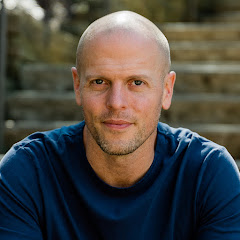 Tim Ferriss
Key Moments
Tony Fadell discusses his book 'Build,' leadership, product design, and climate tech investments.
Key Insights
The book 'Build' is a practical guide from collected experiences, intended as a mentor in a box.
True productivity balances intense work with dedicated time for rest, reflection, and physical/mental health.
Effective leadership involves empathy, active listening, and empowering teams to self-manage.
Investing in nascent, disruptive technologies, especially in climate solutions, is a core strategy for Future Shape.
Storytelling is crucial for defining products by understanding audience needs and framing the 'why' before the 'what.'
Differentiating between passionate advocacy and destructive behavior is key to effective leadership.
Addressing global challenges like climate change requires systemic change and innovative, scalable solutions.
THE ORIGINS AND PHILOSOPHY OF 'BUILD'
Tony Fadell's book, 'Build: An Unorthodox Guide to Making Things Worth Making,' stems from a desire to give back, inspired by the mentors who guided him. After years of people urging him to write a book, he approached it not as an autobiography but as a practical guide derived from daily conversations with founders and aspiring individuals. He co-authored it with Dina Levinsky, aiming to create a 'mentor in a box' filled with actionable advice, case studies, and personal failures, accessible to anyone regardless of their career stage.
BALANCING INTENSITY WITH WELL-BEING
Fadell debunks the myth of perpetual high-intensity work, drawing from his experience at General Magic where he worked extreme hours. He realized the necessity of a balanced approach, integrating physical and mental health practices, including healthy eating, exercise, and dedicated time for reflection. He learned from Steve Jobs that even on vacation, such time is crucial for expanding thinking and fostering creativity, illustrating that stepping away can often lead to clearer solutions than constant immersion.
EFFECTIVE STRATEGIES FOR TEAM MANAGEMENT
Managing small teams presents unique challenges, requiring adaptability and strong communication. Fadell emphasizes thanking team members for even small contributions, helping prioritize tasks, and exploring better tools to enhance their capabilities. He advocates for a flat organizational structure, promoting self-management and collaboration. When faced with expanding a team, he suggests considering task sharing or separation based on individual preferences and team dynamics, always prioritizing proactive individuals who can excel with minimal direct management.
FUTURE SHAPE'S MISSION AND INVESTMENT PHILOSOPHY
Future Shape operates as 'mentors with money,' investing in deep technology companies tackling significant environmental, societal, or health issues. They focus on 'pre-trend' investments, identifying disruptive technologies ahead of the curve, such as in the climate and energy sectors. Their mission is to deploy their network and expertise to solve complex problems, often shying away from fleeting trends like the metaverse. This contrarian approach has positioned them well as these critical areas gain broader attention.
THE POWER OF STORYTELLING IN PRODUCT DEVELOPMENT
Fadell stresses that storytelling should precede product development, serving to define the offering rather than merely sell it. By understanding the audience's pain points and motivations, and articulating the 'why' behind a product, creators can ensure resonance and build lasting relationships. He cites the iPhone's development and launch strategy, where Steve Jobs meticulously refined his pitch, as an example of this principle. The book itself was conceptualized using this method, starting with a press release to define its core message.
NAVIGATING LEADERSHIP AND DIFFICULT PERSONALITIES
Fadell addresses the challenging aspect of leadership, acknowledging that many perceive him as a 'jerk.' He differentiates constructive 'assholery' – passionate advocacy for quality, customer experience, and mission – from truly harmful behavior like bullying or degradation. This passion, even if uncomfortable, is rooted in a deep care for the product and team. He advises understanding the motivations behind such behavior and, when necessary, recognizing when to disengage from toxic dynamics.
INNOVATION IN CLIMATE SOLUTIONS AND ENERGY
Addressing the immense waste in energy infrastructure, Fadell highlights opportunities in programmable electrification and efficiency improvements. He discusses investments in next-generation motors (Turn Tide) and revolutionary relay switches (Menlo Micro) that drastically reduce energy loss. He also touches on the potential of the hydrogen and biomass economies for creating chemicals and fuels more sustainably. Future Shape prioritizes disruptive, scalable technologies that can fundamentally change industries and contribute to a circular economy, not just incremental improvements.
THE STRATEGIC IMPORTANCE OF CARBON REMOVAL
Fadell categorizes carbon removal into three key areas: direct air capture, sequestering carbon in biomass like biochar, and carbon capture from industrial emissions. He emphasizes the need for solutions that lock carbon away permanently, distinguishing this from simply planting trees. Biochar, he explains, is a promising method for long-term carbon sequestration. He notes that while direct air capture is developing, focusing on the source of emissions and preventing carbon release is also critical.
GEOPOLITICS AND THE FUTURE ENERGY SUPPLY CHAIN
The transition to an electron-based economy necessitates rethinking global supply chains, emphasizing energy independence and working with value-aligned partners. Fadell points out the vulnerabilities exposed by geopolitical events like the war in Ukraine. He advocates for building domestic or allied capabilities in material sourcing and manufacturing, moving away from relying solely on low-cost, distant providers. Innovations in non-lithium battery chemistries are also crucial for leveraging diverse resource availability.
CULTIVATING OPTIMISM AMIDST GLOBAL CHALLENGES
Fadell encourages combating apathy and pessimism by changing one's media diet and focusing on solutions. He believes that by engaging with the problems and learning about potential solutions, individuals can become part of the positive change. He highlights the human capacity for innovation and collaboration, as seen during the COVID-19 pandemic, and points to ongoing research and entrepreneurial endeavors in climate tech as reasons for cautious optimism about the future.
Mentioned in This Episode
●Products
●Software & Apps
●Companies
●Books
●Concepts
●People Referenced
Team Management & Product Development Checklist
Practical takeaways from this episode
Do This
Avoid This
Global Energy Loss & Potential Savings
Data extracted from this episode
| Category | Statistic | Impact / Potential Saving |
|---|---|---|
| Total Energy Loss in Inefficiencies | 60% of all energy created globally | Saving even half (30%) could mitigate significant climate crisis impact |
| Energy Loss in Motors | Very high 'tons and tons' (not specified percentage) | Next-gen motors (Turn Tide) can be 10-15% more efficient |
| Relay Innovation Stagnation | No innovation since 1880s/1850s | Menlo Micro's mem switches offer much better energy efficiency and reliability |
| India's Ceiling Fan Energy Consumption | 8% of all electricity | A single wall switch (Menlo Micro) can save 50%, reducing national consumption by 4% |
Common Questions
Tony Fadell's book 'Build' is a comprehensive guide drawing from his experience as a mentor, offering practical advice and stories on topics ranging from product development and team management to overcoming failures, aiming to be a 'mentor in a box' for anyone building a career or a company. He dedicated it to giving back, inspired by his own mentors.
Topics
Mentioned in this video
Tony Fadell's investment firm, a 'mentors with money' entity focused on disruptive deep technology companies tackling environmental, societal, or health issues, typically pre-trend.
A company believed by the host to be working in the biochar space, creating carbon removal solutions.
A company involved in carbon removal from the air using large-scale factories, mentioned as a potential solution though its scalability is still being evaluated.
A small company actively producing biochar on a mass scale, with its first factory already established, aiming for widespread deployment of carbon sequestration technology.
A company invested in by Future Shape that is revolutionizing electricity distribution with silicon-based 'mem switches' to replace antiquated electromagnetic relays, offering much better energy efficiency and reliability.
A battery recycling company mentioned as an example of entities getting involved in the 'trash to treasure' approach by extracting valuable minerals from waste streams.
The technology company where Tony Fadell and Steve Jobs worked together for 10 years, providing a backdrop for Jobs' leadership and product development approach.
An early technology company where Tony Fadell worked long hours, described as a 'genesis of a lot of amazing careers' but ultimately failed because the technology and market weren't ready.
A messaging application mentioned as an alternative to Skype, often having more noise due to friends and family, which Future Shape prefers to avoid for professional communication.
A luxury brand example mentioned in the context of high-quality, home-compostable plastics being produced by a Nordic company, demonstrating the material's viability for high-end products.
A company recognized by the host for its innovative and inspiring work in actual carbon removal, not just carbon credits or offsets.
A company invested in by Future Shape that is developing a next-generation electric motor to achieve higher efficiency (10-15% more) and eliminate the need for rare-earth magnets, addressing significant energy losses globally.
A company mentioned for its innovative carbon capture technology designed for semi-trailer trucks, likened to a remora fish piggybacking on sharks.
A country highlighted due to 8% of its electricity consumption being used by ceiling fans, demonstrating the significant potential for energy savings with new technologies like Menlo Micro's switches.
A country mentioned in the context of geopolitical tensions and its role in establishing dominant sourcing and distribution for raw materials crucial for an electron-based economy.
A country mentioned in the context of geopolitical tensions and its role in establishing dominant sourcing and distribution for raw materials crucial for an electron-based economy.
A concept involving the use of bio sources and waste (not edible sources) to create jet fuel and other chemicals, aiming for carbon neutrality.
A method to lock carbon from biomass into a stable form that remains in the ground for thousands of years, similar to how oil and coal were formed, while also producing energy.
An 'unloved' but promising area for climate solutions, focusing on creating products like fertilizer, concrete, and steel, and generating thermal energy without CO2 emissions, offering a pathway away from petroleum-based chemicals.
A field of interest for Tony Fadell and Future Shape, focusing on improving the efficiency of energy production, transmission, and consumption, encompassing everything from electric motors to wireless technologies.
A book by Michael Pillsbury, read by Tony Fadell to understand geopolitical tensions from a historical perspective and how technology influences global power dynamics.
A book by Barry Lopez, mentioned by the host to illustrate the concept of long-term planning and anticipation, drawing a parallel to Tony Fadell's investment strategy.
Tony Fadell's new book, noted for its practical advice, illustrations, stories, and case studies, designed to be a 'mentor in a box' for various career stages.
John Doerr's book, recommended as a great starting point for understanding climate solutions and finding ways to contribute to them.
Ray Dalio's book, found fascinating for its insights into history repeating itself and for helping to understand world order, with a potential for future editions to incorporate new technologies.
Author of 'Speed & Scale', a compilation of climate solutions, recommended as a resource for those seeking to learn about and contribute to solving the climate crisis.
Author of 'The Hundred-Year Marathon', focusing on China's strategy to become a global superpower and offering a historical perspective on geopolitical shifts.
Co-writer who tremendously helped Tony Fadell with the long-form writing of his book 'Build'.
Author of 'Of Wolves and Men', a non-fiction book that redefined nature writing by exploring the complex relationship between humans and wolves.
Author of 'The Changing World Order', whose work explores historical patterns of nations rising and falling, and whose future insights may include how technology could disrupt these historical arcs.
Guest and author of 'Build', an entrepreneur and investor known for his work at Apple and as a founder of Nest. He discusses his motivations for writing the book and his work with Future Shape.
Co-founder of Apple, whose unique vacation and product development habits (constantly refining pitches) taught Tony Fadell valuable lessons about leadership and storytelling.
More from Tim Ferriss
View all 689 summaries 81 min
Q&A with Tim — The Upcoming AI Tsunami and Building Offline Advantage
 91 min
The Random Show, Couch Edition! — Supplements, Breathing and Balance Training, and Much More!
 76 min
How to Quiet the Ruminative Mind and Avoid The Traps of Self-Help — Tim Ferriss
 86 min
NYT Bestselling Author on Writing 200+ Children's Books — Tish Rabe
Found this useful? Build your knowledge library
Get AI-powered summaries of any YouTube video, podcast, or article in seconds. Save them to your personal pods and access them anytime.
Get Started Free