Key Moments
"The War of Art" Author Steven Pressfield on Overcoming Self-Sabotage, Momentum, and Turning Pro
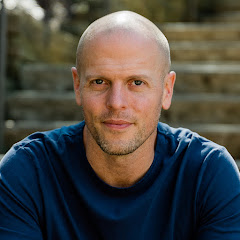 Tim Ferriss
Key Moments
Steven Pressfield discusses overcoming resistance, the importance of momentum, and finding joy in creative pursuits.
Key Insights
Resistance is an internal force that sabotages creative endeavors, often disguised as practical concerns like naming characters or editing.
Momentum is crucial in creative work; it's better to push through obstacles than to get bogged down, even if it means leaving difficult sections for later.
Embracing 'helpful delusions' or positive self-talk, like believing one's work will be great, is a powerful tool against self-doubt.
Suffering a 'wilderness' period of struggle and isolation is often necessary for growth and discovering one's true calling.
Creative work, especially fiction, can be a vital source of energy and a way to connect with a deeper, more authentic self.
The second half of life is about filling the 'vessel' created in the first half, focusing on delivering one's unique gifts and handling the 'voltage' of creative flow.
THE NATURE OF RESISTANCE AND SELF-SABOTAGE
Steven Pressfield's seminal concept, Resistance, is presented as an internal force that actively sabotages creative work. It manifests in various forms, such as procrastination, self-doubt, and overthinking minor details, like the laborious process of naming fictional characters. Pressfield likens this to a war that must be fought daily, emphasizing that creative pursuits are not a part-time occupation. He shares his personal struggles, including a period in a halfway house and the difficulty of finishing his first novel, illustrating how Resistance can paralyze potential, often fueled by societal conditioning that discourages individual ambition.
THE POWER OF MOMENTUM AND THE 'WILDERNESS' EXPERIENCE
Momentum is highlighted as a critical element in the creative process. Pressfield advocates for the 'Blitzkrieg' approach, suggesting that when encountering an obstacle, one should go around it to maintain forward motion, rather than getting stuck. This philosophy extends to taking breaks strategically, not between projects but during them, to avoid losing the built-up drive. He also discusses the concept of the 'wilderness' – a period of struggle, isolation, or hardship—as a necessary passage for personal growth and self-discovery, believing it's a profound, albeit difficult, journey toward finding one's authentic self and true calling.
THE ROLE OF HELPFUL DELUSIONS AND DENIAL
Pressfield posits that 'helpful delusions' and intentional denial can be powerful psychological tools for creatives. This involves actively cultivating positive self-beliefs, such as the conviction that one's work will be great, to counteract negative self-talk and external criticism. He maintains a state of denial regarding his own age and competitively views other writers to maintain focus on his own path. This practice is not about ignoring reality but about deliberately choosing a mindset that supports creative output and resilience against the inevitable challenges and doubts that arise.
THE CALLING OF FICTION AND FINDING ENERGY
Pressfield views fiction writing as a calling, an essential contribution to the world that brings beauty and truth. He argues that creative expression is not self-indulgent but an obligation to bring forth ideas that are 'pregnant' within us. For Tim Ferriss, engaging with fiction has become a vital source of creative energy, countering the depletion he experiences from more demanding, serious projects. This revitalizing effect suggests that embracing imaginative work, even when it seems absurd or without immediate practical application, can fuel overall well-being and productivity.
THE TWO HALVES OF LIFE: VESSEL AND FILLING
Drawing on Richard Rohr's philosophy, Pressfield describes life as divided into two halves. The first half is about building the 'vessel' – establishing identity, ego, and life structures. The second half is dedicated to 'filling the vessel' with purpose, creativity, and giving back. This transition often occurs around age 40, marking a shift from personal achievement to contributing one's unique gifts. This stage involves mastering one's craft and learning to handle the 'voltage' – the intense energy flow of creative inspiration – without being overwhelmed, ensuring sustained output and fulfillment.
THE MEMOIR 'GOVERNMENT CHEESE' AND THE WRITER'S ODYSSEY
Pressfield's memoir, 'Government Cheese,' chronicles his years of struggle and self-discovery before achieving literary success. The title refers to his experience delivering surplus government food, a job that provided sustenance for communities and served as a metaphor for his writing: delivering a load, being a vehicle for something meaningful. The memoir explores the concept of the 'writer's odyssey,' emphasizing that breakthroughs often don't pay off immediately but mature over time. He believes the book can help others navigating their own 'wilderness' periods, offering a message of hope that sustained effort and belief in a guiding wisdom can lead to finding one's true path.
Mentioned in This Episode
●Books
●Concepts
●People Referenced
Common Questions
Pressfield had a dream where his messy room organized itself, symbolizing that ambition is not immoral. This dream liberated him to pursue his goals, even though it took a long time to yield results.
Topics
Mentioned in this video
Host of The Tim Ferriss Show, where this interview takes place. He discusses his own experiments with fiction writing and his creative process.
Mentioned in the context of his autobiography, 'Memories, Dreams, Reflections', as an example of someone who valued the significance of dreams.
Mentioned as a writer who kept a file of great names he encountered, highlighting the practice of collecting names for characters.
Used as an example of an artist in the second half of their life, focusing on producing their creative work.
Steven Pressfield's former boss and mentor at the trucking company, who gave him crucial advice about professionalism.
Included in the literary 'canon' that Paul Rink recommended Steven Pressfield read to become a well-informed writer.
Cited as an example of an artist dedicated to their craft in the second half of life, practicing choreography daily.
Author of 'Gates of Fire', 'The War of Art', and the newest memoir 'Government Cheese'. Known for his insights on creative process, resistance, and overcoming self-sabotage.
A friend and mentor to Steven Pressfield who advised him to start the next novel the day after finishing the previous one.
Mentioned for his concept of 'The Dip', relating to persevering through challenging phases in creative work.
A Franciscan monk whose concept of life being divided into two halves (building a vessel, then filling it) resonates with Pressfield's ideas.
Mentioned as an example of a writer focused on producing books in the second half of his career.
Implied as part of the literary canon (referred to as 'Toll Story') that Paul Rink recommended Steven Pressfield read.
Used as an example of how audiences can fill in narrative gaps, illustrating the principle of not needing to describe every step in storytelling.
A podcast that discussed literature suggesting depressed individuals may have a more accurate perception of reality.
Cited as an example of a work with memorable and fantastic character names, illustrating the importance of naming in fiction.
Homer's epic poem used as a metaphor for the hero's journey and the essential passage through a period of personal 'wilderness'.
A seminal work by Steven Pressfield on overcoming creative blocks and resistance, featuring the concept of 'resistance'.
A novel by Steven Pressfield that was adapted into a film, often discussed in relation to finding one's true self and overcoming challenges.
A million-selling novel by Steven Pressfield about the Battle of Thermopylae.
Steven Pressfield's newest memoir detailing his years of struggle and creative evolution before his first novel was published.
More from Tim Ferriss
View all 689 summaries 81 min
Q&A with Tim — The Upcoming AI Tsunami and Building Offline Advantage
 91 min
The Random Show, Couch Edition! — Supplements, Breathing and Balance Training, and Much More!
 76 min
How to Quiet the Ruminative Mind and Avoid The Traps of Self-Help — Tim Ferriss
 86 min
NYT Bestselling Author on Writing 200+ Children's Books — Tish Rabe
Found this useful? Build your knowledge library
Get AI-powered summaries of any YouTube video, podcast, or article in seconds. Save them to your personal pods and access them anytime.
Get Started Free