Key Moments
The Science of Gratitude & How to Build a Gratitude Practice | Huberman Lab Essentials
 Andrew Huberman
Want to know something specific about what's covered?
We've already dissected every moment. Ask and we will deliver (with timestamps).
Key Moments
Effective gratitude practices involve stories of receiving thanks, not just listing items. This shifts brain activity, reduces anxiety, and boosts well-being.
Key Insights
Traditional gratitude practices (listing things you're grateful for) are less effective than story-based methods.
Receiving gratitude, or witnessing such exchanges, powerfully activates brain regions associated with well-being and social connection.
Gratitude practices can buffer against trauma, enhance social relationships, and even improve one's relationship with themselves.
The medial prefrontal cortex plays a key role in framing experiences, allowing gratitude to positively influence health metrics.
An effective gratitude practice involves recalling genuine experiences of receiving thanks or observing others receive thanks, embedded in a narrative.
Consistent, story-based gratitude practices can lead to long-lasting shifts in neural circuitry, reducing anxiety and increasing motivation and positive emotions.
Gratitude practices can also reduce inflammation markers (TNF alpha, IL-6) and amygdala activity, contributing to better physical health.
UNDERSTANDING THE POWER OF GRATITUDE
Gratitude is a potent pro-social behavior that positively impacts both mental and physical health. Research indicates that a consistent gratitude practice can lead to increased happiness, meaning, joy, and even resilience to trauma. It benefits social relationships and one's self-perception. Contrary to common belief, effective gratitude practices go beyond simply listing things to be thankful for, engaging specific neural circuits that promote positive states and reduce defensive responses.
NEURAL MECHANISMS OF GRATITUDE
Gratitude activates specific neural circuits, particularly the anterior cingulate cortex and medial prefrontal cortex, which are associated with approach behaviors and enhanced sensory experience. These circuits are modulated by chemicals like serotonin. The medial prefrontal cortex is crucial for setting the context of experiences, allowing us to reframe situations to derive positive health benefits. When gratitude circuits are active, they can antagonize aversive or defensive brain circuits, shifting the balance towards positive emotions and engagement.
INEFFECTIVE VS. EFFECTIVE GRATITUDE PRACTICES
Many common gratitude practices, such as merely listing things one is grateful for, are found to be less effective in shifting neural circuitry and physiology. The most potent form of gratitude practice involves the experience of receiving gratitude, or witnessing such exchanges. This is more impactful than actively giving gratitude. The key is the genuine, wholehearted intention behind the expression of thanks, whether in person or through observation of a narrative.
THE NARRATIVE AND STORY-BASED APPROACH
An effective gratitude practice is grounded in narrative or story. This can involve recalling a genuine personal experience of receiving heartfelt thanks or observing someone else receive help and expressing gratitude. Viewing powerful stories of survival and recovery, where individuals received significant aid, robustly activates pro-social and gratitude circuits. Storytelling and story-listening are fundamental to how the human brain organizes information and creates emotional connections.
BUILDING YOUR GRATITUDE PRACTICE
To build an effective gratitude practice, identify a powerful story of receiving gratitude or witnessing it. This story can be personal or observed. Jot down a few bullet points—such as the initial struggle, the form of help received, and the emotional impact—as cues for the narrative. Practicing this for just one to five minutes regularly, by reflecting on these cues and immersing yourself in the feeling of genuine thanks, can create significant positive shifts.
PHYSIOLOGICAL AND LONG-TERM BENEFITS
Regular, story-based gratitude practices have been shown to positively impact physiological markers. They can shift heart rate and breathing patterns into more relaxed states. Furthermore, these practices reduce amygdala activity (associated with fear and threat detection) and lower inflammatory markers like TNF alpha and IL-6. They also enhance functional connectivity in emotion and motivation-related brain regions, making anxiety circuits less active and boosting feelings of well-being and motivation.
Mentioned in This Episode
●Books
●People Referenced
Your Effective Gratitude Practice Cheat Sheet
Practical takeaways from this episode
Do This
Avoid This
Common Questions
The most effective gratitude practice involves focusing on the experience of receiving gratitude, either your own or observing someone else's. This is best achieved by engaging with a narrative or story that evokes genuine feelings of thanks, rather than simply listing things you are grateful for.
Topics
Mentioned in this video
More from Andrew Huberman
View all 405 summaries 33 min
Essentials: How to Access Your Creativity | Rick Rubin
 130 min
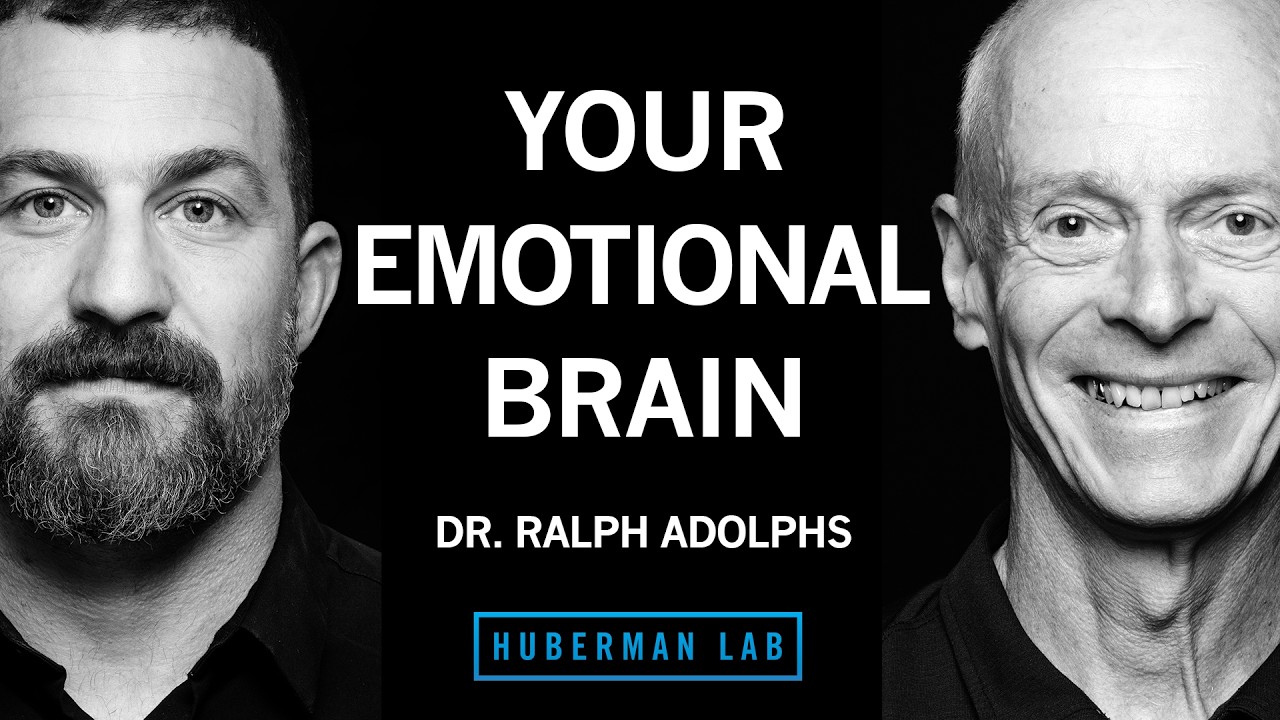
Episode 294 Ralph Adolphs
 35 min
Essentials: How to Optimize Female Hormone Health for Vitality & Longevity | Dr. Sara Gottfried
 129 min
Using AI to Increase Your Intelligence & Enrich Humanity | Dr. Fei-Fei Li
Ask anything from this episode.
Save it, chat with it, and connect it to Claude or ChatGPT. Get cited answers from the actual content — and build your own knowledge base of every podcast and video you care about.
Get Started Free