Key Moments
The Roots of Attention: A Conversation with Amishi Jha (Episode #380)
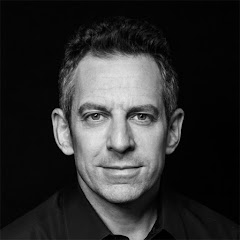 Sam Harris
Want to know something specific about what's covered?
We've already dissected every moment. Ask and we will deliver (with timestamps).
Key Moments
Amishi Jha discusses attention, mindfulness, and neuroscience, highlighting brain training limitations and the benefits of mindfulness for mental and emotional regulation.
Key Insights
Attention is not a single faculty but comprises selective focus, alerting, and goal-directed control.
Traditional brain-training games offer limited generalizability of skills.
Mindfulness is an intrinsic mental capacity involving purposeful, non-reactive attention to the present moment.
Mindfulness practice can strengthen attention and emotional regulation by reducing rumination and catastrophizing.
The brain operates as interconnected networks, and mindfulness practice can lead to sustained changes in these networks and even brain structure.
Varying the anchor for mindfulness practice (e.g., breath, sounds, body sensations) can offer different benefits and familiarity with experience.
THE SCIENCE OF ATTENTION AND ITS VULNERABILITIES
Amishi Jha, a cognitive neuroscientist, explains her research focus on the brain's attention system. Her lab investigates how attention functions, why it fails, and how mental training, particularly mindfulness, can strengthen it. Jha highlights that attention is critical, especially for professions with high stakes, where lapses can have severe consequences. Her work initially explored basic attentional mechanisms, but evolved to consider factors that can be leveraged to protect and enhance attentional capacity, moving beyond purely theoretical understanding to practical applications.
THE LIMITATIONS OF BRAIN TRAINING
Early in her career, Jha explored various methods to enhance attention, including brain-training games. She observed that while participants improved at specific tasks, these gains rarely transferred to other cognitive functions. This lack of generalizability led her to seek more effective approaches. Technological interventions also proved insufficient. This pursuit was intensified by her personal experience as a new mother struggling with her own attention, realizing the gap between her academic study and daily life.
DISCOVERING MINDFULNESS AS A TRAINING TOOL
Jha's personal quest for attentional improvement coincided with a serendipitous encounter with affective neuroscientist Richard Davidson, who suggested meditation as a tool. Despite initial skepticism rooted in cultural rejection and perceived lack of scientific rigor, Jha explored mindfulness meditation, starting with basic breath-focused practices. She discovered that this practice directly addressed the attentional challenges she faced, prompting her to pivot her research towards scientifically investigating the effects of mindfulness on attention and related cognitive functions.
DEFINING ATTENTION AND ITS MODES
Jha delineates attention into three primary modes: selective focus, which acts like a flashlight highlighting specific information; alerting, a broader, moment-to-moment awareness akin to a floodlight; and goal-directed selection, managed by executive functions that align actions with objectives, metaphorically represented by a juggler. These modes interact and are supported by distinct brain systems, forming the foundation for understanding how mindfulness influences cognitive processes. This tripartite model provides a framework for analyzing attentional control and its potential disruptions.
MINDFULNESS AS AN INTRINSIC MENTAL MODE
Mindfulness is described not as an external addition but an intrinsic mental capacity. It involves directing purposeful attention to the present moment, characterized by qualities of non-elaboration and non-reactivity. This practice aims to process raw experiential data without excessive interpretation or emotional response. The goal is to cultivate mental equanimity, allowing for well-being independent of external circumstances, thereby reducing habitual reactivity to pleasant and unpleasant experiences and fostering a state of openness and relaxation.
OVERCOMING DISTRACTIBILITY AND COGNITIVE FUSION
Jha addresses 'distractibility' or 'mind-wandering' as the 'dark matter of cognition,' where about 50% of waking moments are spent in the past or future. This mental time travel can involve unproductive rumination or catastrophizing. Mindfulness practice acts as an antidote by keeping the 'play' button engaged, focusing awareness on the present moment. This contrasts with 'cognitive fusion,' where individuals identify with their thoughts, losing awareness of their true condition as a background for all mental phenomena, rather than being engrossed in specific thoughts.
THE MECHANICS OF MINDFULNESS PRACTICE
A foundational mindfulness practice, like focusing on the breath, involves three steps: focusing attention on specific sensations (like breath-related ones), noticing when the mind wanders, and redirecting attention back to the anchor. This 'focus, notice, redirect' cycle strengthens attentional control. The process inherently involves distancing oneself from immersive experiences, enabling a clearer view of mental phenomena as transient appearances, rather than identifying as the subject of those experiences. This practice cultivates an ability to observe the mind from a distance.
NEURAL CORRELATES AND PRACTICE VARIATIONS
The brain operates through interconnected networks, not isolated modules. Mindfulness practice engages specific networks, and long-term practice can lead to sustained changes in their function and even structure. Distraction and mind-wandering involve different network dynamics. Jha notes that the choice of mindfulness anchor—breath, sounds, or body sensations—can influence the specific brain regions activated, potentially strengthening connections to sensory cortices. However, the core attentional control circuitry likely remains consistent, with variations tailored to individual needs and predispositions.
DYNAMIC APPROACHES TO MINDFULNESS TRAINING
While varying mindfulness anchors like breath, sounds, or bodily sensations can offer different benefits and insights, Jha emphasizes the importance of adaptability. For individuals with anxiety or hypervigilance, focusing on internal sensations might be counterproductive. Instead, practices like keeping eyes open and focusing on walking sensations might be more beneficial. This highlights the need for tailored approaches, considering individual predispositions, and suggests that varying anchors can foster broader familiarity with various aspects of experience while cultivating mental flexibility and equanimity.
Mentioned in This Episode
●Products
●Tools
●Organizations
●Books
●Concepts
●People Referenced
Common Questions
Amishi Jha's research focuses on understanding how the brain's attention system functions, why it fails, and how mental training, particularly mindfulness, can strengthen and protect it.
Topics
Mentioned in this video
Colleague who developed a three-dimensional model of mindfulness with Jha, Lutz, and Sarin.
Professor of Psychology at the University of Miami and Director of Contemplative Neuroscience.
Author of 'Meditation for Beginners'.
Colleague who developed a three-dimensional model of mindfulness with Jha, Dunn, and Sarin.
Affective neuroscientist whose talk influenced Amishi Jha's direction.
Host of the Making Sense podcast, interviewing Amishi Jha.
Director of Contemplative Neuroscience for this initiative, which she co-founded.
Amishi Jha's work has been featured here.
Media outlet that has covered Amishi Jha's work.
Media outlet that has covered Amishi Jha's work.
Amishi Jha's work has been featured here.
Media outlet that has covered Amishi Jha's work.
University where Amishi Jha is a professor of psychology.
Institution where Amishi Jha completed her post-doctoral training.
Amishi Jha's work has been featured here.
Media outlet that has covered Amishi Jha's work.
More from Sam Harris
View all 302 summaries 27 min
Is America Heading for a Debt Crisis? An Economist Explains
 27 min
Is America Heading for a Debt Crisis? An Economist Explains
 34 min
Is Psychedelic Therapy Ready for FDA Approval?
 26 min
You Lose Interest the Moment You Realize It's AI
Ask anything from this episode.
Save it, chat with it, and connect it to Claude or ChatGPT. Get cited answers from the actual content — and build your own knowledge base of every podcast and video you care about.
Get Started Free