Key Moments
The Quantum Hype Bubble Is About To Burst
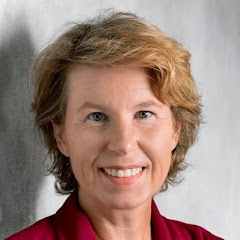 Sabine Hossenfelder
Key Moments
Quantum computing hype exceeds reality, risking a "quantum winter" due to immense technical challenges.
Key Insights
Current quantum computing hype is significantly outpacing actual technological capabilities and practical applications.
Many widely publicized claims about quantum computing's revolutionary potential are exaggerated or factually incorrect.
Building functional quantum computers faces enormous hurdles, including qubit decoherence, scalability, error correction, and a scarcity of practical algorithms.
The "quantum winter" refers to a potential future period of reduced investment and slowed progress if current overinflated expectations are not met.
While quantum metrology shows promise with fewer headlines, quantum computing and the quantum internet are subject to significant hype.
Despite significant investment, no quantum computing company is currently profitable, and many use consulting to generate minimal revenue.
THE SURGE OF QUANTUM TECHNOLOGY AND ITS HYPE
Quantum technology, particularly quantum computing, is currently attracting immense attention and financial investment from governments, businesses, and venture capitalists. This influx has dramatically impacted quantum physics research over the past decade, fueling significant hype around quantum computing's world-changing potential. However, this enthusiasm is largely unmerited, with many experts warning that the technology is being oversold and is unlikely to deliver on its most ambitious promises in the near future.
DISTINGUISHING PROMISING TECHNOLOGIES FROM HYPE
Not all quantum technologies are created equal in terms of hype versus promise. Quantum metrology, which focuses on improving measurement precision using quantum effects, is a prime example of a beneficial technology that receives minimal public attention. In contrast, concepts like the quantum internet are often discussed with little substance, while quantum computing is the subject of relentless headlines proclaiming a revolution. This disparity suggests that hype disproportionately inflates the perceived value of certain quantum applications.
THE REALITY OF QUANTUM COMPUTING CHALLENGES
The functionality of quantum computers relies on qubits, which exist in superpositions of states and can be entangled. While this enables them to solve specific mathematical problems, like large number factorization, much faster than classical computers (quantum advantage), building them is profoundly difficult. Major obstacles include qubit decoherence, where quantum properties are lost quickly, and the immense sensitivity to noise, which introduces errors that require complex correction mechanisms, further demanding more qubits.
TECHNICAL HURDLES: QUBITS, SCALABILITY, AND ALGORITHMS
Creating and maintaining qubits is a significant challenge. Superconducting qubits, used by Google and IBM, require extreme cold (10-20 mK) and decohere within microseconds. Ion traps are slightly less demanding but slower. Scaling these systems to the hundreds of thousands or millions of qubits needed for commercially relevant applications is a massive undertaking, complicated by issues like 'crosstalk' between qubits and drifting states. Furthermore, the number of practical quantum algorithms is surprisingly small.
MISINTERPRETATIONS OF QUANTUM ADVANTAGE AND NISQ COMPUTERS
The term 'quantum advantage' is often misinterpreted; it simply means a quantum computer performed a calculation faster than a classical one, not that the calculation was useful. Demonstrations have involved solving contrived problems or factoring small numbers like 21. Noisy Intermediate-Scale Quantum (NISQ) computers, which accept noise, have also failed to yield significant practical applications, leading to a decrease in their associated hype. The gap between current capabilities and the requirements for useful computation remains vast.
THE IMPENDING "QUANTUM WINTER" AND ITS CONSEQUENCES
The current bubble of inflated promises is expected to burst, ushering in a "quantum winter"—a period of significantly reduced investment and public interest. This scenario, warned by physicists and researchers, could lead to business failures in the quantum sector, as well as a potential marginalization of scientists. While this may cause financial losses for investors and job shifts for professionals, it could also lead to a more realistic assessment of quantum technology's true potential and limitations.
EXPERT OPINIONS ON THE FUTURE OF QUANTUM COMPUTING
Leading figures in physics and technology express considerable skepticism. Mikhail Dyakonov, author of "Will We Ever Have a Quantum Computer?", concludes that truly functional quantum computers are unlikely, with only expensive, special-purpose devices emerging. Experts like Victor Galitski highlight the scarcity of useful quantum algorithms and the massive gap between hardware and theoretical requirements. Nikita Gourianov notes how increased funding tempted scientists to oversell results, contributing to a speculative bubble in the field.
THE ECONOMICS OF QUANTUM COMPUTING AND FUTURE SCENARIOS
Currently, no quantum computing company is profitable, with most revenue generated through consulting services. A likely future scenario involves startups failing, venture capital drying up, and a few large companies monopolizing the few functional devices, which will primarily serve as research tools rather than commercial solutions. Universities may end up paying these large corporations to use the quantum computers, mirroring a subsidized research model rather than a market-driven one.
THE BROADER IMPLICATIONS AND THE HOPE FOR REALISM
The "quantum winter" may lead to fewer sensational headlines and a more grounded understanding of quantum computing's capabilities. While some will lose money and careers may shift, the overall outcome could be a refocusing on genuinely promising quantum technologies like metrology. By managing expectations and acknowledging the significant scientific and engineering challenges, a more sustainable path for quantum research and development can be forged, free from the current speculative hype.
Mentioned in This Episode
●Software & Apps
●Companies
●Books
●Concepts
●People Referenced
Navigating Quantum Computing: Hype vs. Reality
Practical takeaways from this episode
Do This
Avoid This
Common Questions
The 'quantum winter' refers to a potential future scenario where the current bubble of investment and hype around quantum computing bursts. This would lead to a sharp decline in funding, with businesses failing or focusing only on research applications, and scientists in the field becoming marginalized.
Topics
Mentioned in this video
Mentioned as a company pouring money into quantum computing and using superconducting qubits. Also noted for trying to build large cryogenic containers.
The sponsor of the video, recommended for learning science and mathematics through interactive courses, including a course on quantum computing.
A startup in quantum computing mentioned for its optimistic and jargon-filled language, such as having a 'fault tolerant team' that 'embraces entanglement' and helps find a 'superposition'.
Mentioned as a company pouring money into quantum computing, and using superconducting qubits. Also mentioned as potentially owning future quantum computing devices.
Mentioned through its managing director of research who predicted quantum computing would be 'bigger than fire'. The speaker critiques this optimistic outlook regarding business relevance.
A startup in quantum computing mentioned for its optimistic vocabulary, like 'working with customers in more than 10 verticals.'
Mentioned as a quantum technology that receives a lot of headlines but is not needed or wanted.
Described as a promising quantum technology that makes better measurements using quantum effects, and is already used by scientists, though it receives fewer headlines than quantum computing.
Used as an analogy for a promising technology that has not worked out as expected, similar to the overselling of quantum computing.
A book by Mikhail Dyakonov that questions the feasibility of practical quantum computers, concluding they are unlikely and suggesting a sociological analysis of the field.
A 602-page book by Chris Hoofnagle and Simson Garfinkle that discusses potential future scenarios for quantum computing, including the 'Quantum Winter'.
Computational quantum physicist at the University of Oxford who wrote an opinion piece in the Financial Times about the 'classical bubble' and overselling of quantum computing results.
Mentioned in the context of a blog post by Universal Quantum suggesting she needs a quantum computer for complex system modeling like climate change forecasting.
A physics professor who wrote a book questioning if we will ever have a quantum computer, suggesting special-task quantum devices are more likely and recommending sociological analysis of the field.
Professor at the Joint Quantum Institute who wrote on LinkedIn about the limited number of quantum algorithms and the significant gap between hardware capabilities and practical needs.
Co-author of 'Law and Policy for the Quantum Age', a book exploring future scenarios for quantum computing.
Co-author of 'Law and Policy for the Quantum Age', a book exploring future scenarios for quantum computing.
More from Sabine Hossenfelder
View all 65 summaries 7 min
7 minBreakthrough In Data Storage Could Store Your Photos for 10000 Years
 7 min
7 minThe Simulation Hypothesis Gets Scientific Backing
 7 min
7 minSurprise! Milky Way Might Not Have a Black Hole After All
 7 min
7 minThe First Moon Landing Wasn’t Apollo — And We Just Found It
Found this useful? Build your knowledge library
Get AI-powered summaries of any YouTube video, podcast, or article in seconds. Save them to your personal pods and access them anytime.
Get Started Free