Key Moments
The Politics of Antisemitism: A Conversation with Rabbi David Wolpe (Episode #348)
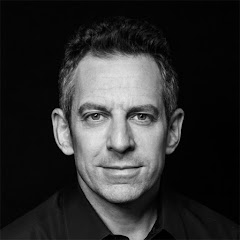 Sam Harris
Want to know something specific about what's covered?
We've already dissected every moment. Ask and we will deliver (with timestamps).
Key Moments
Rabbi Wolpe and Sam Harris discuss antisemitism, its historical roots, and its modern manifestations on the left and right.
Key Insights
Antisemitism is a protean and durable hatred with deep historical roots, including Christian theology and racial theories.
Modern antisemitism manifests in distinct forms on the far-right (e.g., Great Replacement Theory) and the far-left (e.g., oppressor/oppressed narrative).
The global response to the October 7th atrocities exposed a surprising resurgence and explosion of antisemitism, particularly on college campuses.
Institutional DEI initiatives on college campuses have inadvertently contributed to the rise of antisemitism by fostering divisive narratives.
Jews have historically succeeded due to cultural emphasis on literacy and scholarship, skills valuable in modern economies, but this success fuels conspiracy theories.
Figures on the right, like Tucker Carlson and Elon Musk, have engaged in rhetoric that, intentionally or not, provides openings for antisemitic interpretations.
THE RESURGENCE OF ANTISEMITISM POST-OCTOBER 7TH
The conversation between Sam Harris and Rabbi David Wolpe highlights a significant and surprising resurgence of antisemitism following the October 7th atrocities. While both acknowledge knowing that antisemitism still existed, the scale and intensity of its reappearance, particularly on college campuses, blindsided them. Rabbi Wolpe noted that while his father's generation viewed antisemitism as a primary concern, his own perception, and that of many others, had shifted towards seeing it as a historical issue. This perception was shattered by the global reaction, especially the vocal support for Hamas and condemnation of Israel by student organizations even before Israeli military action in Gaza.
HISTORICAL ROOTS AND PROTEAN NATURE OF ANTISEMITISM
Rabbi Wolpe and Harris delve into the historical wellsprings and adaptable nature of antisemitism. Tracing its lineage back to theological disputes in Christian Europe, where Jews were blamed for rejecting Jesus, they note how this evolved into racial antisemitism in the 19th century. The discussion emphasizes that antisemitism is a 'protean hatred,' meaning it morphs to fit different contexts and accusations. Jews have been hated for being capitalists, communists, stateless, and state-based, demonstrating its illogical and persistent quality, adaptable to nearly any societal fear or grievance.
MODERN MANIFESTATIONS: THE FAR-RIGHT AND THE FAR-LEFT
A key insight is the distinct yet often converging nature of modern antisemitism on opposite ends of the political spectrum. On the far-right, it often manifests through conspiracy theories like the 'Great Replacement Theory,' suggesting Jews orchestrate demographic changes through immigration. On the far-left, antisemitism arises from an oppressor-oppressed framework, where Jews are perceived as inherently privileged rather than a minority facing persecution. This dichotomy presents a challenge, as both ideological directions can lead to hostility towards Jews, albeit for different, often contradictory, reasons.
THE ROLE OF DEI AND INSTITUTIONAL FAILURES
The conversation critically examines the role of Diversity, Equity, and Inclusion (DEI) initiatives in exacerbating antisemitism, particularly within academic institutions. Harris points to the 'oppressor and oppressed narrative' central to DEI as a primary driver of the outrage seen on campuses. He argues that this ideology, by framing all social dynamics through a simplistic lens of power imbalance, makes it difficult for marginalized groups like Jews, who may not fit neatly into the oppressed category, to be seen sympathetically. The defense of figures like Harvard's former president Claudine Gay, despite accusations of plagiarism, is cited as an example of how DEI's focus on identity can overshadow other forms of misconduct.
JEWISH PROMINENCE AND THE MECHANICS OF CONSPIRACY
The discussion addresses the paradoxical situation of Jewish success in various fields and how this prominence fuels antisemitic conspiracy theories. Rabbi Wolpe explains that Jewish culture, with its historical emphasis on literacy, scholarship, and intellectual pursuits, has equipped Jews with skills highly valued in modern, knowledge-based economies. This cultural predisposition, coupled with their diaspora status, has led to overrepresentation in influential sectors. However, this success is twisted by antisemites into evidence of global control, with figures like Paul Wolfowitz being cited to 'prove' Jewish conspiracies, regardless of contradictory facts, illustrating the predictable pattern of conspiratorial thinking.
RESPONSIBILITY OF PUBLIC FIGURES AND RHETORICAL CONTOURS
Rabbi Wolpe and Harris scrutinize the role of influential public figures, such as Elon Musk and Donald Trump, in fostering an environment where antisemitism can flourish. They discuss how these figures, even if not explicitly antisemitic themselves, engage in rhetoric that can be interpreted as winks and nods to antisemites. This includes flirting with conspiracy theories like the 'Great Replacement' or making ambiguous statements in response to extremist groups. The failure to unequivocally condemn antisemitism and its proponents, alongside a focus on criticizing perceived 'elites,' creates openings that strengthen antisemitic movements without the public figures needing to voice overt hatred.
THE ISRAELI-DIASPORA JEWISH RELATIONSHIP
The events following October 7th had a profound impact on the relationship between Israeli Jews and diaspora Jews. For years, a sense of disconnect existed, with Israelis feeling they bore the brunt of history while diaspora Jews lived more comfortably. The atrocities and the ensuing global reaction forced diaspora Jews to confront their connection to Israel and the dangers faced by Jews worldwide. Simultaneously, Israelis recognized the importance of the diaspora's voice and support. This shared crisis, paradoxically, fostered a greater sense of global Jewish solidarity and a recognition of their intertwined fate.
THE UNLIKELY ALLIANCES OF MODERN ANTISEMITISM
The contemporary landscape of antisemitism is characterized by unusual and often perplexing alliances between disparate groups united by their animosity towards Jews. The phenomenon of 'Queers for Hamas' is presented as a stark example of this, seemingly inexplicable without understanding the shared antipathy. This unification highlights how antisemitism can transcend traditional ideological divides, drawing in groups from the far-left, far-right, and Islamist movements, all finding common ground in their opposition to the existence or perceived actions of Jewish people and the state of Israel.
Mentioned in This Episode
●Organizations
●Books
●Concepts
●People Referenced
Common Questions
Rabbi Wolpe notes that for a period after the Holocaust, antisemitism was seen more as a historical issue. However, recent events like October 7th have revealed its explosive resurgence, surprising many who believed it was a minimal concern compared to past eras.
Topics
Mentioned in this video
Host of the Making Sense podcast and interviewer in this discussion.
Figure associated with the Trump administration, mentioned in the context of powerful elites potentially influencing public discourse.
Billionaire philanthropist whose funding of progressive causes is often criticized by conservatives and targeted by antisemitic rhetoric.
Former president of Harvard University who resigned amid controversy regarding academic misconduct and testimony before Congress.
President of Penn who resigned.
Entrepreneur and political figure discussed for promoting the 'Great Replacement Theory' and perceived flirtation with right-wing antisemitism.
Mentioned as an example of how Jewish figures are scapegoated in conspiracy theories, even if they were not central to an event like the Iraq War.
Writer whose work on race and inequality is mentioned in the context of shaping contemporary discussions on oppression and privilege.
American industrialist whose writings, like 'The International Jew,' contributed to antisemitism in the US.
Media personality discussed for his promotion of the 'Great Replacement Theory' and perceived flirtation with right-wing antisemitism.
Tech entrepreneur whose public statements are discussed in relation to encouraging or flirting with antisemitic sentiments.
Former US President whose rhetoric and responses to controversial figures and groups are analyzed for their relationship with antisemitism.
Former Grand Wizard of the Ku Klux Klan, mentioned as an example of figures Trump has failed to unequivocally disavow.
Organization where Rabbi David Wolpe serves as a senior advisor.
University whose president, Elizabeth McGill, resigned.
Palestinian militant group whose actions on October 7th sparked significant debate and protest, particularly on college campuses.
Organization where Rabbi David Wolpe is a rabbi fellow.
Temple in Los Angeles where Rabbi David Wolpe is the Emeritus Rabbi.
The Nazi regime in Germany, whose ideologies and actions culminated in the Holocaust.
Institution where Rabbi David Wolpe is a visiting scholar.
Far-right group whose support by Trump was characterized as insufficient disavowal.
Publication that named Rabbi David Wolpe the most influential Rabbi in America.
A country discussed as historically different in its relationship with Jewish identity due to its diverse population.
The country targeted by Hamas attacks on October 7th, leading to widespread discussion and debate.
Site of a white supremacist rally where protesters chanted 'Jews will not replace us,' highlighting the connection between far-right extremism and antisemitism.
The region from which Hamas launched attacks on Israel on October 7th.
Country mentioned as an example where populism and antisemitism intersect, similar to the situation in the US.
Country from which many members of Rabbi Wolpe's former congregation in Los Angeles had fled due to antisemitism.
Antisemitism found on the political right, often linked to nationalist or racial purity ideologies.
Discussed as a historical root of antisemitism, particularly through early interpretations of Jewish rejection of Jesus.
Antisemitism found on the political left, often stemming from critiques of privilege and power dynamics.
A slogan and movement highlighting perceived bizarre alliances among groups united by antipathy, including some LGBTQ+ individuals supporting Hamas.
A strand of modern antisemitism with theological roots, influenced by Nazi ideology and present in a segment of the Muslim world.
A conspiracy theory alleging that elites are intentionally allowing non-white immigrants to replace white populations, often with antisemitic undertones.
More from Sam Harris
View all 302 summaries 27 min
Is America Heading for a Debt Crisis? An Economist Explains
 27 min
Is America Heading for a Debt Crisis? An Economist Explains
 34 min
Is Psychedelic Therapy Ready for FDA Approval?
 26 min
You Lose Interest the Moment You Realize It's AI
Ask anything from this episode.
Save it, chat with it, and connect it to Claude or ChatGPT. Get cited answers from the actual content — and build your own knowledge base of every podcast and video you care about.
Get Started Free