Key Moments
The Path to $100B by Paul Buchheit
 Y Combinator
Want to know something specific about what's covered?
We've already dissected every moment. Ask and we will deliver (with timestamps).
Key Moments
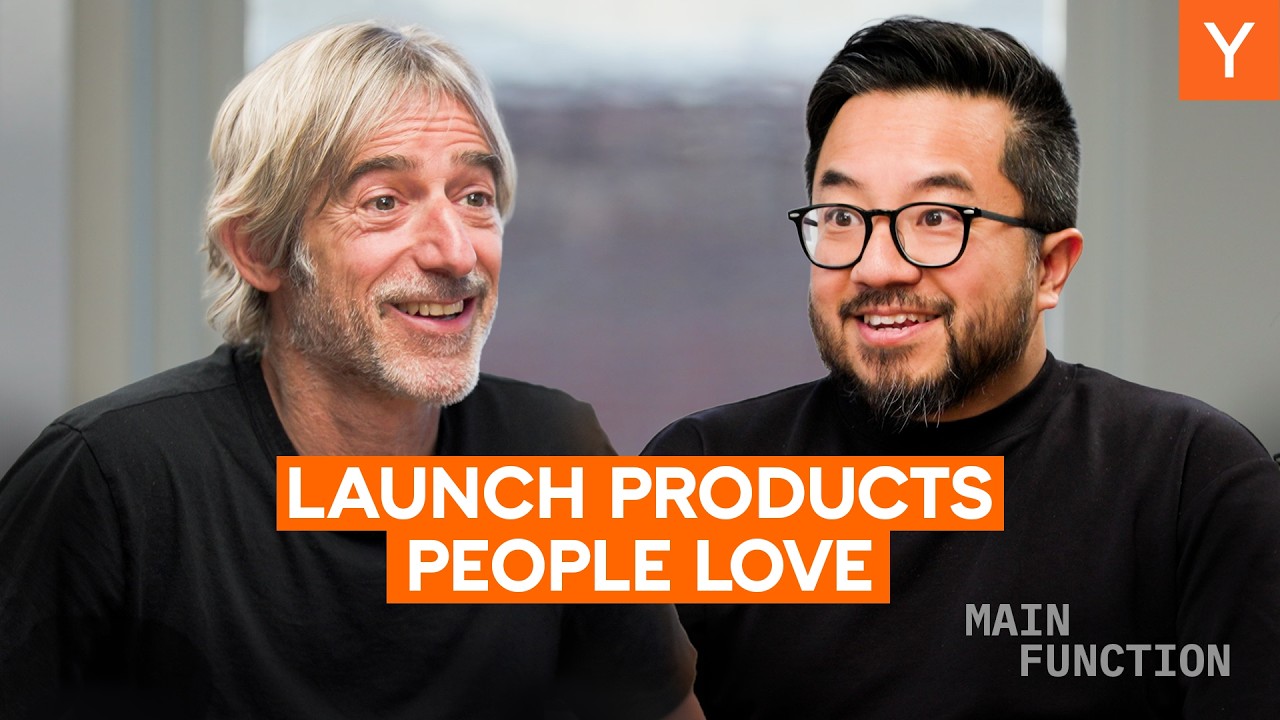
Paul Buchheit shares insights on building billion-dollar companies, from his experiences at Google and Gmail to founding FriendFeed and joining Facebook.
Key Insights
Building an epic company requires a clear vision of the future and the ability to adapt.
Early-stage startups should focus on deep appeal to a niche audience before broad market expansion.
Obsessive focus, frugality, and a deep understanding of network effects are crucial for massive scale.
Founder conviction and an irrational belief in the vision are vital, especially when facing immense challenges.
For network effect businesses, prioritizing the health of the network over individual user preferences is key.
A company's energy and direction can often be felt by walking into the office and observing employee sentiment.
THE PATH TO STARTUPS AND EARLY CAREER
Paul Buchheit's entrepreneurial journey began with a childhood fascination with inventors and a disinclination to work for others. In the 1990s, resources for startups were scarce, and Silicon Valley was the clear hub for innovation. Buchheit's initial plan was to work at Intel, hoping to find a startup opportunity there. However, the corporate environment felt like a 'rut,' lacking the excitement and innovation he sought. His passion for Linux, which was then considered niche, became a key criterion for his job search, leading him to Google as employee number 23.
THE GOOGLE EXPERIENCE AND THE BIRTH OF GMAIL
At Google, with just 20 employees, Buchheit experienced a vibrant atmosphere of productivity and belief in a grander vision. He recalls founders Larry Page and Sergey Brin thinking years ahead, even when immediate execution seemed impossible. This environment fostered an eagerness to work and contribute. The genesis of Gmail stemmed from Buchheit's long-held idea of web-based, accessible email, challenging the prevalent model of downloading emails locally. He built the first version of Gmail in a single day, iterating based on user feedback, a departure from his earlier, overly detailed approach to a failed web-based email startup in 1996.
THE 'POOH HEIGHT' RULE AND DEEP NICHE APPEAL
Buchheit emphasizes the 'Pooh Height Rule,' suggesting it's better to have a small group of users who deeply love a product than a large group who are indifferent. This is particularly relevant when entering established markets like email. Trying to appeal to everyone often results in a mediocre product. The strategy should be to create something that a small segment of people obsessively loves, and then gradually broaden that appeal over time. This deep, narrow appeal is easier to expand than starting with broad indifference and trying to convert users to adoration.
FRIENDFEED, FACEBOOK, AND THE NETWORK EFFECT
After leaving Google, Buchheit co-founded FriendFeed, aiming to recreate the positive aspects of early Google. While FriendFeed was a strong product, it couldn't compete with Facebook's dominance in the social networking space. This experience led Buchheit to realize Facebook's superior understanding of network effects. He observed that Facebook prioritized what was good for the network as a whole, even if it sometimes conflicted with individual user preferences. This focus on the network's health, rather than just individual user happiness, was a key differentiator for Facebook and a critical lesson for building large-scale network-based businesses.
THE ANATOMY OF AN EPIC COMPANY: FOCUS, FRUGALITY, OBSESSION, LOVE
Buchheit outlines four key components for building billion-dollar companies: focus, frugality, obsession, and love. Focus is a startup's most powerful weapon against larger incumbents. Frugality, or doing more with less, is essential for amplifying resources and achieving a high input-output ratio. Obsession, an almost irrational dedication to the vision, exemplified by figures like Elon Musk, is crucial for overcoming massive obstacles. Finally, a deep understanding of the target audience's needs and the overall system—whether it's the end-user, the buyer, or the network itself—is paramount.
THE ROLE OF CONVICTION AND EXTERNAL CHANGE
Founder conviction is indispensable, requiring belief in the vision beyond chasing trends. Leaders like Mark Zuckerberg demonstrate extreme conviction, even standing firm against overwhelming user backlash. Building an epic company often involves capitalizing on significant exponential changes in technology or society, such as the rise of personal computers or the internet. The key is to identify these shifts and position the startup to capture that emerging opportunity. Future-looking founders need to maintain a clear vision while staying grounded in the present, addressing immediate customer needs and challenges.
IDENTIFYING OPPORTUNITY AND AVOIDING DELUSION
The tipping point for a market is achieved when demand outstrips supply, a fact revealed by customer interactions and financial transactions, not just theoretical planning. Excessive funding before product-market fit can lead to delusion, detaching founders from reality. Startups must prioritize urgent problems and find customers who are desperate for a solution. For enterprise software, this means identifying buyers with acute pain points, rather than those with mere 'nice-to-have' solutions. founders must actively sell and engage with customers to stay grounded and avoid fabricating success stories.
LEARNING FROM THE PAST AND NAVIGATING THE FUTURE
Buchheit stresses the importance of learning from past mistakes and understanding the present landscape. Building an epic company requires a dual perspective: a dream or vision of the future, providing direction, and intense focus on immediate navigation, like avoiding pitfalls. Unlike passive theorizing, this involves actively engaging with customers and the market. While external changes create opportunities, it's the startup's ability to recognize and capture them, combined with its internal drive and operational discipline, that ultimately determines its potential for massive scale and success.
Mentioned in This Episode
●Products
●Software & Apps
●Companies
●Organizations
●Concepts
●People Referenced
Common Questions
Paul Buchheit's first job was at Intel, which he found comfortable but ultimately felt was a 'rut'. He left because he didn't look forward to continuing in a role that felt like 'doing time' and was more interested in Linux-based startups.
Topics
Mentioned in this video
An inventor mentioned as an example of someone who invented much but died penniless, lacking business acumen.
Co-founder of Google, known for thinking years ahead and challenging conventional ideas, contributing to an exciting work environment.
Founder of SpaceX, cited as an extreme example of a founder's irrational conviction and willingness to risk everything for a vision.
Co-founder of Stripe, mentioned as an example of a founder who actively worked within customer organizations to integrate their product.
Co-founder of Google, known for thinking years ahead and challenging conventional ideas, contributing to an exciting work environment.
Founder of Wufoo and later a YC partner, who Paul Buchheit made his first angel investment in.
Co-founder of Y Combinator, mentioned in the context of the Summer Founders Program and early YC announcements.
Founder of Facebook, highlighted for his extreme conviction and ability to withstand user backlash, such as with the News Feed.
An internet company located in Seattle, mentioned as an exception to the California concentration of early internet companies.
One of the companies in the YC summer o-5 batch, co-founded by Justin Kan, which later evolved into Twitch.
A company founded by Kevin Hale that Paul Buchheit angel invested in, which turned out to be a very successful investment.
An earlier social network that was unable to compete with Facebook.
An early internet company located in California, part of the first generation of IPO companies by the time Buchheit graduated college.
The company Paul Buchheit joined in 1999 as the 23rd employee, where he stayed for seven years and co-founded Gmail.
A streaming platform that originated from Justin.tv, co-founded by Justin Kan, who was part of an early YC batch.
Paul Buchheit's first job after college, where he worked before joining Google. He found the work comfortable but felt it was a rut.
An early internet company located in California, part of the first generation of IPO companies by the time Buchheit graduated college.
Mentioned as co-founded by Justin Kan, part of the early YC batch.
A social network co-founded by Paul Buchheit after leaving Google, aiming to create an awesome place to work and which introduced the 'like' button.
Paul Buchheit's long-time colleague and accelerator, where he has been for over seven years.
An early internet company located in California, part of the first generation of IPO companies by the time Buchheit graduated college.
A platform Paul Buchheit was an early user of, and saw information about the Y Combinator Summer Founders Program which led to his involvement.
A social media company mentioned in comparison to Facebook and FriendFeed, and whose founders were former Google employees.
The social media giant that acquired FriendFeed and demonstrated a strong understanding of network effects and user priorities.
The rocket company founded by Elon Musk, which faced significant challenges and financial risk in its early stages.
A company whose early founders, like Patrick Collison, directly integrated their product into customer organizations, demonstrating a hands-on approach.
A Google service Paul Buchheit worked on, providing code that was repurposed for the initial development of Gmail.
A social network developed by Google that gained popularity in Brazil but became unresponsive and died off in the US.
The email service created by Paul Buchheit, known for its search functionality and web-based access.
A competing email client whose database corruption issues when reaching 2GB of data inadvertently drove users to Gmail.
An operating system Paul Buchheit was obsessed with early on, seeking startups that used it.
A website Paul Buchheit read to find potential startups working with Linux.
An email client popular in the 90s that used POP3 to download emails to a computer, contrasting with the web-based model Buchheit envisioned.
A web-based email service that was good in 1996, mentioned by Buchheit in the context of his early attempts at creating web-based email.
More from Y Combinator
View all 602 summaries 33 min
India Can Create The Largest AI Companies
 41 min
Zynga Founder: Consumer Is Not Investible Right Now - Thats Why You Should Build It
 43 min
The Age Of The 40-Year-Old Solo Founder Is Here
 31 min
Groww: If Your Customers Don't Love It or Hate It, You've Already Lost
Ask anything from this episode.
Save it, chat with it, and connect it to Claude or ChatGPT. Get cited answers from the actual content — and build your own knowledge base of every podcast and video you care about.
Get Started Free