Key Moments
The Limits of Pleasure: A Conversation with Paul Bloom
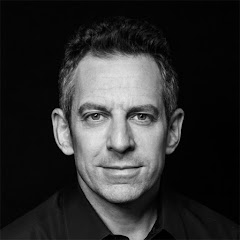 Sam Harris
Key Moments
Pleasure, pain, meaning, and suffering shape a good life, with chosen suffering often leading to meaning and fulfillment.
Key Insights
While pleasure is desirable, true fulfillment often arises from engaging with chosen forms of suffering and struggle.
The "sweet spot" for a good life involves a motivated pluralism, seeking both pleasure and meaning.
Our memory of experiences significantly shapes our retrospective judgment of happiness, often prioritizing peak moments and endings (Kahneman's remembering self).
True moral motivation may stem from genuine desires to do good, not just self-gratification, even if it involves personal sacrifice.
Parenthood, despite potential daily misery, is often retrospectively valued as a significant source of meaning.
Even unchosen suffering, in moderation, can build resilience and character, though its benefits are often exaggerated.
DEFINING THE SWEET SPOT: PLEASURE VERSUS SUFFERING
The core thesis explores the "sweet spot" in life, which involves understanding the distinct yet interconnected roles of pleasure and suffering. Pleasure is defined as a short-term, desirable experience, while suffering encompasses pain, anxiety, and disappointment. Contrary to a simple dichotomy, humans often seek experiences that involve controlled suffering or difficulty, either for the eventual pleasure derived (like rigorous exercise) or for a deeper sense of meaning.
THE DUAL NATURE OF HAPPINESS: EXPERIENCING VS. REMEMBERING SELVES
Drawing on Daniel Kahneman's research, the discussion highlights the discrepancy between our 'experiencing self' (the sum of moment-to-moment feelings) and our 'remembering self' (our retrospective memory of those experiences). The remembering self often overemphasizes peak moments and the final moments of an experience, while downplaying its duration. Kahneman suggests remembered happiness should be prioritized, as it's what we seriously consider when evaluating our lives.
CHOSEN SUFFERING AS A PATH TO MEANING AND PURPOSE
The book argues that certain forms of suffering, when deliberately chosen, are crucial for a meaningful life. This includes engaging in difficult projects, enduring hardship for a cause, or taking on challenges that involve struggle and doubt. Without this element of chosen difficulty, an experience might feel less significant or purposeful, suggesting that meaning is often forged through adversity rather than solely through passive pleasure.
MORAL MOTIVATIONS AND THE VALUE OF PARENTHOOD
The conversation delves into moral motivations, asserting that people are often driven by genuine desires to do good, not merely for self-gratification or to avoid guilt. Parenthood is examined as a complex case: while daily experiences with children might be rated as less pleasurable than other activities according to research, the retrospective valuation and overall meaning derived from raising children is profound for most parents, illustrating a disconnect between immediate experience and long-term significance.
UNCHOSEN SUFFERING AND ITS LIMITED BENEFITS
While chosen suffering can be a source of meaning, unchosen suffering (like chronic pain or tragedy) is acknowledged as distinct and generally negative. However, the discussion notes that a moderate amount of unchosen suffering might contribute to resilience, character development, and empathy. Claims about its transformative benefits are often exaggerated, but a complete absence of difficulty might lead to lower tolerance and less capacity for supporting others.
NOZICK'S EXPERIENCE MACHINE AND THE VALUE OF REALITY
Robert Nozick’s thought experiment of the 'experience machine'—a simulation offering any desired pleasure—is discussed. While many find the idea of a pleasurable, simulated life appealing, both speakers express an intuition against plugging into it. This preference for reality, even with its inherent suffering and struggles, over a perfect illusion suggests that authentic engagement with the world, regardless of its pleasure quotient, holds a unique and irreplaceable value.
NAVIGATING LIFE'S TRADE-OFFS AND EFFECTIVE ALTRUISM
Balancing the pursuit of pleasure with the quest for meaning involves complex trade-offs. The concept of effective altruism is highlighted as an example of divorcing the act of doing good from the immediate emotional 'feel-good' sensation. Prioritizing genuinely impactful actions, even if less emotionally rewarding, over feel-good charities, suggests a rational approach to maximizing positive outcomes by understanding biases like loss aversion and the peak-end rule.
THE RHYTHM OF LIFE AND THE APPEAL OF PROGRESS
People generally prefer lives that improve over time, demonstrating a preference for upward trajectories even if a different life path might yield a higher aggregate sum. This desire for progress influences choices and evaluations, suggesting that the narrative arc of our lives, with its moments of struggle and triumph, is integral to our sense of satisfaction and purpose, much like the satisfying resolution in a revenge narrative following an initial wrong.
Mentioned in This Episode
●Books
●Concepts
●People Referenced
Common Questions
Motivational pluralism is the idea that humans are driven by a variety of goals, not just pleasure. We also consistently pursue meaning, purpose, morality, truth, and beauty.
Topics
Mentioned in this video
Philosopher known for aphorisms like 'what doesn't kill us makes us stronger', referenced in the context of unchosen suffering.
Philosopher known for his work on effective altruism and animal liberation.
Nobel laureate in economics, known for his research on well-being and the experiencing vs. remembering self.
Philosopher and proponent of effective altruism, discussed in relation to decoupling resource allocation from emotional satisfaction.
Philosopher who proposed the experience machine thought experiment.
Psychologist whose work on happiness and the experience machine is discussed, contrasting with Kahneman's views.
Professor of Psychology at the University of Toronto and Emeritus Professor at Yale, author of 'The Sweet Spot'.
Mentioned as working with Sam Harris on the third season of 'Absolutely Mental'.
The idea that humans are driven by multiple, diverse goals, not just pleasure or meaning alone.
A Greek term often translated as 'flourishing' or 'well-being', related to living a good life.
The phenomenon where people prefer lives that end on a high note, even if the overall trajectory is less favorable.
A movement focused on using evidence and reason to determine the most effective ways to benefit others.
More from Sam Harris
View all 292 summaries 34 min
Is Effective Altruism Blind to the Biggest Problems? – Sam Harris & Will MacAskill
 21 min
What Is Technology Doing to Us?
 42 min
Is the Iran War Already Failing?
 90 min
FULL EPISODE: The Politics of Pragmatism and the Future of California (Ep. 464)
Found this useful? Build your knowledge library
Get AI-powered summaries of any YouTube video, podcast, or article in seconds. Save them to your personal pods and access them anytime.
Get Started Free