Key Moments
The Future of American Democracy
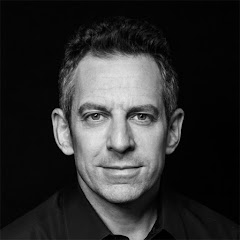 Sam Harris
Key Moments
Experts discuss the threats to American democracy from disinformation, election subversion, and declining faith in institutions.
Key Insights
Widespread belief in the stolen 2020 election is a significant threat to American democracy, fueled by misinformation and disinformation.
Attempts to subvert elections, such as pressuring officials to alter results or seizing voting machines, are ongoing and pose a clear danger.
The erosion of democratic norms is not solely attributable to Donald Trump but is also a result of broader trends within the Republican party and societal shifts.
Social media algorithms and the deliberate spread of 'flooding the zone with [expletive]' tactics create cynicism and make it difficult to discern truth.
Current institutions and legal frameworks may be insufficient to defend against coordinated efforts to undermine democratic processes.
Fixing the Electoral Count Act and focusing on election subversion are critical steps, but deeper cultural and educational changes are also necessary.
THE PERSISTENT LIE OF THE STOLEN ELECTION
The conversation centers on the profound threat to American democracy posed by the widespread belief among Republicans that the 2020 election was stolen. This belief, amplified by misinformation and disinformation, has significant consequences, creating a fractured reality where a substantial portion of the electorate operates under false premises. The panelists emphasize that this is not merely a matter of partisan disagreement but a fundamental challenge to the integrity of democratic processes and institutions.
ONGOING EFFORTS TOWARDS ELECTION SUBVERSION
Beyond the initial lie, the discussion details the active and ongoing attempts to subvert future elections. This includes strategies like replacing election officials with loyalists, targeting offices responsible for election certification, and seeking to seize voting machines. These tactics are presented as a direct continuation of efforts to overturn election results, highlighting a deliberate and systematic approach to undermine the democratic will.
THE ROLE OF MISINFORMATION AND SOCIAL MEDIA
A key insight is how authoritarians leverage 'flooding the zone with [expletive]' tactics, creating an overwhelming deluge of lies and conflicting narratives. This strategy, exemplified by Russian propaganda efforts and similarly employed by figures like Donald Trump, aims to generate cynicism and nihilism, making it impossible for citizens to discern truth. Social media platforms, with algorithms that often prioritize sensational and divisive content, exacerbate this problem by amplifying misinformation.
BROADER FORCES UNDERMINING DEMOCRACY
While Donald Trump is a central figure, the panelists argue that the issues run deeper than one individual. The Republican party's transformation into a personality cult, coupled with a populist base distrustful of mainstream institutions, has created an environment where democratic norms are devalued. The pursuit of power for its own sake, rather than ideological goals, has led to a corruption of conservative principles and a party willing to embrace illiberal tactics.
THE EROSION OF INSTITUTIONAL INTEGRITY AND NORMS
The discussion highlights how democratic systems rely heavily on the integrity of individuals and adherence to norms that are not always codified in law. When a few key individuals can be pressured to abandon these norms, the entire system is at risk. The normalization of actions previously considered unthinkable – such as threatening government defaults or attempting to overturn elections – signifies a dangerous shift in political behavior, moving away from established democratic practices.
PATHWAYS FOR REINFORCING DEMOCRACY
While acknowledging the difficulty, the panelists explore potential solutions. These include fixing the Electoral Count Act to clarify procedures, promoting bipartisanship on election integrity, and fostering a public discourse that emphasizes the tangible value of democracy. The importance of education, media literacy, developing new ethical frameworks for social media, and perhaps exploring electoral reforms like proportional representation are also considered vital, though challenging, steps towards a more resilient democracy.
Mentioned in This Episode
●Software & Apps
●Organizations
●Books
●Concepts
●People Referenced
Common Questions
The primary threat is the widespread belief in the lie that the 2020 election was stolen, which has led to ongoing efforts by the Republican party to subvert future elections and undermine democratic institutions. Something like 60% of Republicans believe this, which has significant consequences.
Topics
Mentioned in this video
Publication where Ann Applebaum's writing has appeared.
Publication where Ann Applebaum's writing has appeared.
A book by Ann Applebaum.
George Packer's most recent book, which Sam Harris was reading at the time of the podcast.
The report from the Special Counsel investigation into Russian interference, which the panelists argue showed clear evidence of obstruction of justice by Donald Trump.
A book by Ann Applebaum.
A book by Ann Applebaum that won the 2004 Pulitzer Prize for Non-Fiction.
Publication where Ann Applebaum's writing has appeared.
A book by George Packer that won the National Book Award.
Ann Applebaum's New York Times bestseller, an essay on democracy and authoritarianism.
Barton Gellman's book about Edward Snowden.
David Frum's tenth book, focusing on the restoration of American democracy.
Arthur Koestler's novel, used as an analogy for why people collaborate under pressure in political systems.
British publication where Ann Applebaum was the deputy editor.
Magazine that inspired the event with several articles focusing on the ongoing threat to American democracy.
Conservative media and research institution where David Frum spent part of his career.
University where David Frum earned his law degree.
A New York-based think tank where Barton Gellman is a senior fellow.
News network, mentioned as an example of media outlets that are accused of exaggerating events by Trump supporters.
Organization where David Frum was a former director.
Conservative media and research institution where David Frum spent part of his career.
University where David Frum earned his B.A. and M.A. in history.
News network mentioned in the context of the 2016 Republican debates and Donald Trump's interactions with its hosts.
Newspaper, mentioned as an example of media outlets that are accused of exaggerating events by Trump supporters, and also in the context of publishing corrections and bolstering credibility.
Political party in Germany, cited as an example of a successful multi-party system allowing for diverse new platforms.
A conservative congressional caucus that aligned with Donald Trump after the 2020 election.
Former U.S. President who defeated Richard Nixon in the 1960 election.
Supreme Court Justice, who articulated the 'counter speech doctrine' in 1927, which states that the cure for evil speech is more speech. This doctrine is now challenged in the age of widespread propaganda.
Former U.S. President, credited with normalizing the practice of ex-presidents making significant money after leaving office.
Host of the 'Making Sense' podcast, who initiated this discussion on American democracy and its threats.
A journalist, historian, staff writer at The Atlantic, senior fellow at the SNF Agora Institute at Johns Hopkins, and co-leader of a project on 21st-century disinformation.
Former U.S. President for whom David Frum served as a speechwriter and special assistant.
George Packer's mother and a college professor who taught a short story course that Sam Harris took.
Former U.S. President, whose behavior and role in challenging the 2020 election results are the central focus of the discussion.
Former Vice President who faced pressure from Donald Trump to overturn the 2020 election on January 6th, and whose integrity was crucial in upholding the election results.
Current U.S. President, whose electoral victory in 2020 was challenged by Trump, and whose administration's approach to democracy issues is discussed.
A staff writer at The Atlantic, author of 'Last Best Hope: America in Crisis and Renewal,' and winner of the National Book Award for 'The Unwinding.'
U.S. Senator, mentioned as an example of a Republican who has 'co-opted' by Trump after initially fighting him.
Former lawyer for Donald Trump, whose character and behavior in trying to subvert the 2020 election are questioned.
Right-wing propagandist who assists in spreading misinformation and creating cynicism among the public.
A staff writer at The Atlantic, senior fellow at the Century Foundation, author of 'Dark Mirror: Edward Snowden and the American Surveillance State,' and a three-time Pulitzer Prize winner.
Former U.S. Vice President, subject of a biography written by Barton Gellman, and mentioned in relation to his daughter Liz Cheney's political character.
Media mogul, owner of Fox News, who was reportedly hoping to make Chris Christie the Republican nominee in 2016.
U.S. Representative, highlighted as one of the few prominent Republicans willing to challenge Donald Trump and defend constitutional democracy despite political cost.
Author of 'Darkness at Noon,' cited in an analogy about collaboration in authoritarian regimes.
Georgia Secretary of State who refused Donald Trump's request to 'find' votes to overturn the 2020 election and whose integrity stood in Trump's way.
Current Vice President, mentioned in the context of Republicans' concerns about her potential powers over future election certifications, and her electability as President.
Former U.S. President who stepped aside after losing the 1992 election, mentioned as upholding norms.
CEO of Facebook, mentioned in the context of who should make decisions about speech on platforms, highlighting the need for democratic buy-in.
A senior editor at The Atlantic and author of 'Trump Apocalypse: Restoring American Democracy.' He spent most of his career in conservative media, was a speechwriter for George W. Bush, and is known for his strong opposition to Trump.
Podcast host whose controversy Sam Harris discussed in a previous episode, and related to the concept of bravery in media.
General who stated that intelligence agencies could not imagine the January 6th attack, reflecting a failure of imagination regarding the threats to democracy.
Former New Jersey Governor, who Rupert Murdoch reportedly hoped would become the Republican nominee in 2016.
Expected to be the Republican nominee in 2015, but his campaign was derailed by Donald Trump.
Former White House Chief of Staff, who worked to overturn the 2020 election results after Trump lost.
Right-wing propagandist who described the tactic of 'flooding the zone with shit' to create cynicism and nihilism.
Governor of Georgia, who affirmed the state's election results in 2020 and became an enemy of Donald Trump.
Diplomat and author of a biography written by George Packer, which also won awards.
U.S. Senator, mentioned alongside Ted Cruz as a Republican who initially fought Donald Trump but then lost and changed his views.
U.S. Senator, described as the 'perfect embodiment' of the Republican party's strategy of power at any cost, largely through weaponizing the filibuster.
Fox News host, mentioned as an outside advisor to Trump who tried to persuade him to stop talking about the 2020 election results.
Former Venezuelan President, whose method of slowly undermining democracy through small changes is compared to Donald Trump's tactics.
Former U.S. President who defeated Gerald Ford in 1976 and made a point of not getting rich from his former office.
Conspiracy theorist who was deplatformed from social media, raised as an example in the debate over censorship and free speech.
Former presidential candidate, whose focus on electoral reform (like ranked-choice voting) is mentioned in the context of improving the American voting system.
Mentioned as briefly being in the lead as a Republican frontrunner in late 2015 before Donald Trump solidified his position.
President of Russia, whose use of misinformation tactics is compared to Donald Trump's.
Former U.S. Vice President who lost the 1960 presidential election, mentioned as an example of a candidate accepting election results despite a close contest.
Former U.S. President, whose relative silence on political issues since leaving office is noted, after he faced backlash for commenting on cancel culture.
Former Prime Minister of the UK, whose famous quote about democracy being the best of the worst systems is referenced.
Former Fox News host who famously confronted Donald Trump during a 2016 Republican debate.
Former U.S. Senator endorsed by Trump to run against Governor Kemp in Georgia.
Former U.S. President who accepted a close defeat in 1976 and was the first president to give speeches for money after leaving office.
Former U.S. President, mentioned in the context of ex-presidents giving speeches for money, though he was not able to do so due to his age.
Social media platform discussed as a 'public square' and its role in spreading information, misinformation, and fostering outrage.
Publication where Ann Applebaum's writing has appeared.
Video platform mentioned by Sam Harris as a platform he doesn't depend on for income, allowing him more freedom of speech.
Social media platform, described as neither a publisher nor a phone company, whose algorithms prioritize emotional and divisive content, contributing to misinformation spread.
Entertainment platform suggested as a potential medium for civic education through dramas about propaganda.
Country whose government's approach to delivering material benefits while maintaining a surveilled, unfree society is presented as a 'nightmare vision' for the future.
Country where Malaysian Airlines Flight 17 crashed in 2014 after being shot down by Russians, mentioned as an example of Russia 'flooding the zone' with misinformation.
A democratic stronghold in Georgia, whose county election officials are targeted by new Republican state laws.
State where a court rejected the state legislature's redistricting due to a violation of a state referendum for independent commission.
Country whose president, an environmental lawyer, emerged from a green movement, serving as an example of new political party formation.
One of the states where Trump and his allies attempted to subvert the 2020 election results by pressuring state officials.
One of the states where Trump and his allies attempted to subvert the 2020 election results by pressuring state officials.
Country mentioned in the context of avoiding war in Ukraine, and its actions potentially being claimed as a success by the Biden administration.
One of the states where Trump and his allies attempted to subvert the 2020 election results by pressuring state officials, also mentioned in the context of voter machine issues.
Country noted for its innovative use of social media to foster constructive conversations and protect democracy from political division.
More from Sam Harris
View all 292 summaries 34 min
Is Effective Altruism Blind to the Biggest Problems? – Sam Harris & Will MacAskill
 21 min
What Is Technology Doing to Us?
 42 min
Is the Iran War Already Failing?
 90 min
FULL EPISODE: The Politics of Pragmatism and the Future of California (Ep. 464)
Found this useful? Build your knowledge library
Get AI-powered summaries of any YouTube video, podcast, or article in seconds. Save them to your personal pods and access them anytime.
Get Started Free