Key Moments
The DEEP VZN Scandal: How Good Intentions Nearly Ended the World
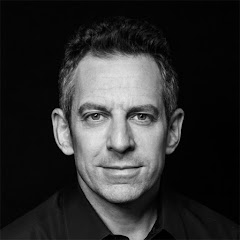 Sam Harris
Want to know something specific about what's covered?
We've already dissected every moment. Ask and we will deliver (with timestamps).
Key Moments
US government's DEEP VZN project, aimed at finding dangerous viruses, was halted due to catastrophic risk concerns.
Key Insights
The DEEP VZN program aimed to discover and characterize potentially pandemic-grade viruses from remote locations.
The program's core activities involved 'virus hunting,' genetic characterization, and open publication of findings and virus genomes.
Critics argued that collecting and studying dangerous viruses in leaky labs increases the risk of accidental release or weaponization.
The open publication of virus genomes could equip thousands of unvetted individuals with the means to create bioweapons.
A concerted whistleblowing effort involving public figures, scientists, and policymakers successfully pressured the US government to halt the program.
While DEEP VZN was stopped, the underlying risks of bioweapons development, exacerbated by AI, persist globally.
THE ORIGINS OF CONCERN: BIORISK AND DEEP VZN
Rob Reid discusses his decade-long focus on biorisk, stemming from writing a science fiction novel that featured a synthetic biology-based pandemic. This personal exploration led to a TED talk and collaborations, eventually bringing him into contact with the US government's Agency for International Development (USAID). A startling discovery within USAID was the DEEP VZN program, a $125 million, five-year initiative with the stated intention of improving global biosecurity but which a prominent expert described as having the potential to 'cancel civilization.'
DEEP VZN'S THREE DANGEROUS PROPOSITIONS
DEEP VZN was built upon three core, risky ideas. Firstly, 'virus hunting' involved collecting up to 10,000 undiscovered viruses from remote locations like bat caves and bush meat markets in developing countries, bringing them into densely populated areas for study. Secondly, 'characterization' aimed to identify which of these viruses were most likely to be pandemic-grade, a process that could inadvertently highlight potential bioweapons. Finally, the program planned to publish the genomes of these dangerous viruses openly, effectively distributing bioweapon blueprints globally.
THE INHERENT RISKS OF VIRUS COLLECTION AND CHARACTERIZATION
The practice of 'virus hunting' and subsequent genetic 'characterization' carries significant risks. Laboratories, even at the highest biosafety levels, are known to leak, and there is no standardized reporting system to track these incidents. Bringing potentially deadly pathogens into these 'leaky vessels' in populated areas is more dangerous than them remaining in isolated natural environments. Furthermore, identifying 'pandemic grade' viruses doesn't offer practical benefits like vaccine development without live testing, which is ethically impossible for deadly pathogens. Instead, it creates a list of highly dangerous viruses that could attract unwanted attention from nefarious actors.
OPEN PUBLICATION: ARMING POTENTIAL ADVERSARIES
The most alarming aspect of DEEP VZN was its intention to publish the genomes of dangerous viruses discovered and characterized. At the time, an estimated 30,000 individuals worldwide possessed the technical skills and knowledge to synthesize these viruses from scratch using techniques like reverse genetics. This plan would have effectively granted near-nuclear-arsenal-level destructive power to thousands of unvetted individuals globally, potentially including those in unstable regions or with malicious intent, thereby democratizing bioweapon creation to an unprecedented degree.
THE WHISTLEBLOWING CAMPAIGN AND PROGRAM HALT
Upon learning of DEEP VZN, Rob Reid collaborated with Sam Harris to raise public awareness through a podcast episode, specifically targeting then-USAID administrator Samantha Power. Despite initial silence, a broader coalition, including figures like Tristan Harris, Daniel Schmokenberger, and organizations like Helena (with Pro Basu playing a key role), emerged. Pressure mounted through bipartisan efforts, including actions by Senators Lindsey Graham, James Risch, and Rand Paul, leading to the program being effectively defanged and eventually formally terminated in September 2023, removing a significant source of plausible bioweapon risk.
THE PERSISTENT THREAT IN A CHANGING LANDSCAPE
While DEEP VZN was successfully dismantled, the fundamental threat remains. Other nations, like China's Wuhan Institute of Virology, have engaged in similar virus collection efforts, and past US-funded programs like Predict also collected vast numbers of viruses. Crucially, advancements in artificial intelligence are significantly accelerating the potential for bioweapon development. The ability to synthesize dangerous pathogens from publicly available genetic information, a capability highlighted by the publication of the 1918 flu genome, is now far more accessible, posing an escalating global security challenge.
Mentioned in This Episode
●Software & Apps
●Organizations
●Concepts
●People Referenced
Common Questions
Deep Vision was a USAID-authorized program with a $125 million budget aimed at discovering and studying novel viruses. It was controversial because its three main components—virus hunting in remote areas, characterizing deadly viruses, and publishing their genomes—were seen as creating extreme biosecurity risks, potentially empowering individuals to create bioweapons.
Topics
Mentioned in this video
An investor and entrepreneur, who was interviewed by Rob Reed for his podcast 'After'.
Podcast guest and whistleblower who investigated the Deep Vision project for its potential to cause catastrophic harm.
A former Google design ethicist and co-founder of the Center for Humane Technology, who helped organize a brainstorm session about existential risks.
A U.S. Senator who held a hearing in the summer of 2022 where Kevin Esfeld testified about Deep Vision.
Co-founder of TED, known for his work in venture capital and promoting impactful ideas.
Administrator of USAID at the time, who was an initial target for the whistleblower effort regarding Deep Vision.
A U.S. Senator who, along with Senator James Risch, had staff who became aware of Deep Vision and expressed concerns to USAID.
An existential risk thinker who curated a group of experts to brainstorm solutions for existential threats, including the Deep Vision project.
The executive branch of the U.S. federal government, which invited Rob Reed to present on biosecurity.
A non-profit organization that presents talks on various subjects, where Rob Reed gave a talk related to biosecurity risks.
The United States Agency for International Development, which authorized the Deep Vision project.
A virology research institute in Wuhan, China, also known as WIV, which has been involved in collecting and understanding coronaviruses.
A USAD authorized program with a $125 million budget intended to discover and analyze novel viruses, which was criticized for its extreme biosecurity risks.
The field of biology concerned with developing new biological parts, devices, and systems, or redesigning existing, natural biological systems for useful purposes.
More from Sam Harris
View all 302 summaries 27 min
Is America Heading for a Debt Crisis? An Economist Explains
 27 min
Is America Heading for a Debt Crisis? An Economist Explains
 34 min
Is Psychedelic Therapy Ready for FDA Approval?
 26 min
You Lose Interest the Moment You Realize It's AI
Ask anything from this episode.
Save it, chat with it, and connect it to Claude or ChatGPT. Get cited answers from the actual content — and build your own knowledge base of every podcast and video you care about.
Get Started Free