Key Moments
The Accidental AI Canvas - with Steve Ruiz of tldraw
 Latent Space Podcast
Key Moments
Steve Ruiz discusses tldraw, its evolution from an open-source whiteboard to an AI canvas, and the future of multimodal AI.
Key Insights
tldraw evolved from an open-source whiteboard to a platform for exploring multimodal AI due to unexpected demand and technological advancements.
The 'Make it Real' feature, integrating tldraw with GPT-4V, allows users to turn wireframes into functional web prototypes.
tldraw's unique architecture as a web canvas composed of React components enables interactive widgets and custom integrations impossible in traditional platforms.
Multimodal prompting, especially when combined with a visual canvas like tldraw, offers a powerful and iterative way to interact with AI models.
The future of tldraw involves becoming a platform for multimodal AI exploration and development, acting as a 'battleground' for AI models.
tldraw aims to be the infrastructure for teams and developers to build AI-driven experiences, rather than just a end-user product.
FROM FINE ART TO CODE: A FOUNDER'S UNEXPECTED PATH
Steve Ruiz began his career in fine art, earning a Master's in Visual Art and writing about contemporary art. A shift towards making money and collaborating led him into product design, initially by building websites. His experience with tools like Framer taught him about prototyping, coding for exploration, and the challenges of interactive design, particularly within canvas-like environments. This background, though unconventional, proved foundational for his later work.
PERFECTING THE AESTHETIC: OPEN SOURCE INNOVATIONS
Ruiz gained traction by tackling aesthetic problems in design tools through open-source projects shared publicly. 'Perfect Arrows' addressed the subjective challenge of creating good-looking arrows between points. His most significant contribution before tldraw was 'Perfect Freehand,' a vector-based solution for variable-width lines, solving a problem many had attempted but failed to open-source effectively. This project's success demonstrated the power of public development and solving underserved visual problems.
THE BIRTH OF THE INFINITE CANVAS: TLDRRAW'S ORIGINS
After contributing to Excalidraw and developing other infinite canvas tools, Ruiz recognized a gap for a general-purpose whiteboard engine. He envisioned tldraw primarily for himself and for solving the complex, subjective problems of infinite canvases. The project's open-source nature, combined with its intuitive design and robust feature set, quickly gained popularity. Unexpectedly, companies began approaching tldraw not for a whiteboard, but as an infrastructure to embed similar functionalities into their own products.
ACCIDENTAL MULTIMODALITY: THE 'MAKE IT REAL' PHENOMENON
The explosion of multimodal AI, particularly GPT-4V, created an opportunity. tldraw's existing canvas infrastructure, capable of embedding interactive web elements, proved ideal for building a demo called 'Make It Real.' This feature allows users to draw a wireframe, send it to GPT-4V with a prompt, and receive a functional HTML prototype. The ease of integration and the power of leveraging AI for rapid prototyping resonated widely, leading to viral success.
THE CANVAS AS AI INFRASTRUCTURE: FUTURE POSSIBILITIES
Ruiz sees tldraw not just as a whiteboard but as a foundational platform for exploring AI. Its unique tech stack, built with React components, allows for interactive widgets and deep customization. He envisions tldraw becoming the 'battleground' where various AI models can be tested and compared, fostering innovation in multimodal prompting. The goal is to empower developers and teams to build diverse AI-driven experiences, rather than focusing on a single SaaS product.
EVOLVING THE EXPERIENCE: DRAWING, LENS, AND BEYOND
tldraw has continuously evolved, introducing features like 'Draw Fast' for real-time image generation based on input and 'Lens' for hypnotic, rapidly updating visual experiences. These projects showcase the potential of combining drawing interfaces with AI models. Ruiz emphasizes that the value lies in the interactive experience and the exploration of possibilities, rather than just the final output. Future developments include commercial licensing for tldraw 2.0 and deeper integrations with AI capabilities.
Mentioned in This Episode
●Software & Apps
●Companies
●Organizations
●Concepts
●People Referenced
Common Questions
Steve Ruiz has a background in fine art, holding a master's degree in visual art from the University of Chicago. He transitioned to tech, developing skills in prototyping, technical design, and open-source contributions before founding tldraw.
Topics
Mentioned in this video
A popular collaborative whiteboard tool that product managers often use, serving as a benchmark for collaborative features and a potential area where tldraw could be integrated.
An experimental design tool by Steve Ruiz that was built on an infinite canvas concept, serving as a precursor to tldraw.
A platform where tldraw reached the number one trending spot upon its open-source release.
A virtual assistant company that deals with scheduling and research, representing progress in the AI agent field.
The specific AI model used in the 'Make It Real' feature to convert wireframes into functional HTML code.
A technology used by tldraw for real-time updates in collaborative experiences.
Mentioned as another example of a website style that could be mimicked by AI.
A diagramming software that utilizes the Perfect Freehand technology.
A design tool that Steve Ruiz used extensively in the past, even working for the company, which taught him about code-based product design and exploratory phases.
Figma's collaborative whiteboard tool, which Steve Ruiz initially dismissed as comparable to his early tldraw project.
An open-source, web-based infinite canvas and whiteboard tool that serves as a platform for building various applications, including AI-powered experiences.
An open source vision and multimodal model that was shouted out by Steve Ruiz.
A collaborative whiteboard tool that incorporates Perfect Freehand technology and is considered an alternative to tldraw.
Mentioned by the host in the context of backend systems diagrams and cloud diagrams, and by Steve Ruiz as a potential application for tldraw's AI capabilities.
A demo API used to showcase tldraw's ability to integrate with external endpoints for data retrieval.
An upcoming AI model mentioned as a potential alternative to GPT-4, highlighting the rapid evolution and competition in the AI space.
A design platform that now uses Perfect Freehand for its variable width line technology.
A platform where users can view and adapt the code generated by AI for tldraw projects.
A design tool mentioned as a competitor and a platform whose team Steve Ruiz considered working for before joining Adobe. Also mentioned in the context of its AI integrations.
A company whose website appearance was used as a style reference for AI generation.
The platform where tldraw became a top trending repository after its open-source launch.
A company Steve Ruiz worked for in New York that focused on design tools, particularly for mobile platforms.
A platform for viewing and adapting AI-generated code from tldraw projects.
A platform mentioned in the context of prompting environments where users might interact with AI.
The organization hosting a dev day event where the 'Make It Real' demo gained significant traction. Also mentioned as a potential AI model provider for tldraw's features.
The company Steve Ruiz initially decided to join after developing tldraw, but ultimately declined to pursue the opportunity to build tldraw.
More from Latent Space
View all 203 summaries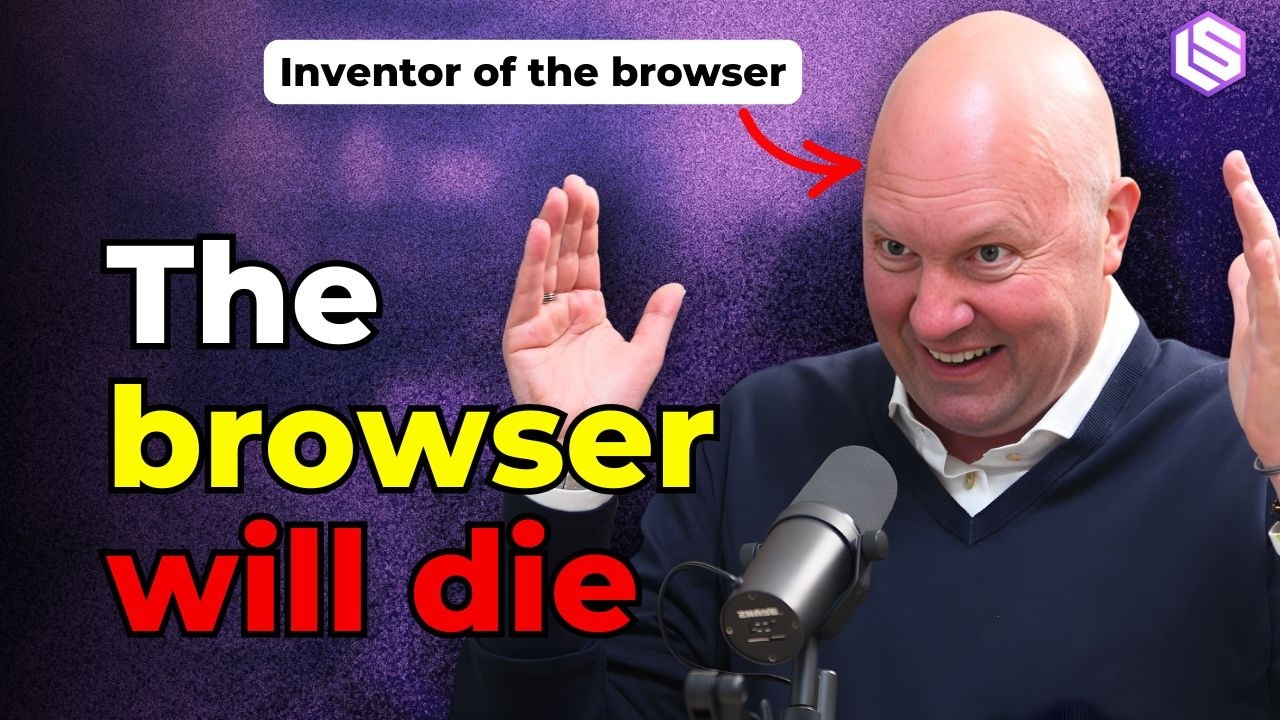 77 min
Marc Andreessen introspects on Death of the Browser, Pi + OpenClaw, and Why "This Time Is Different"
 67 min
Moonlake: Multimodal, Interactive, and Efficient World Models — with Fan-yun Sun and Chris Manning
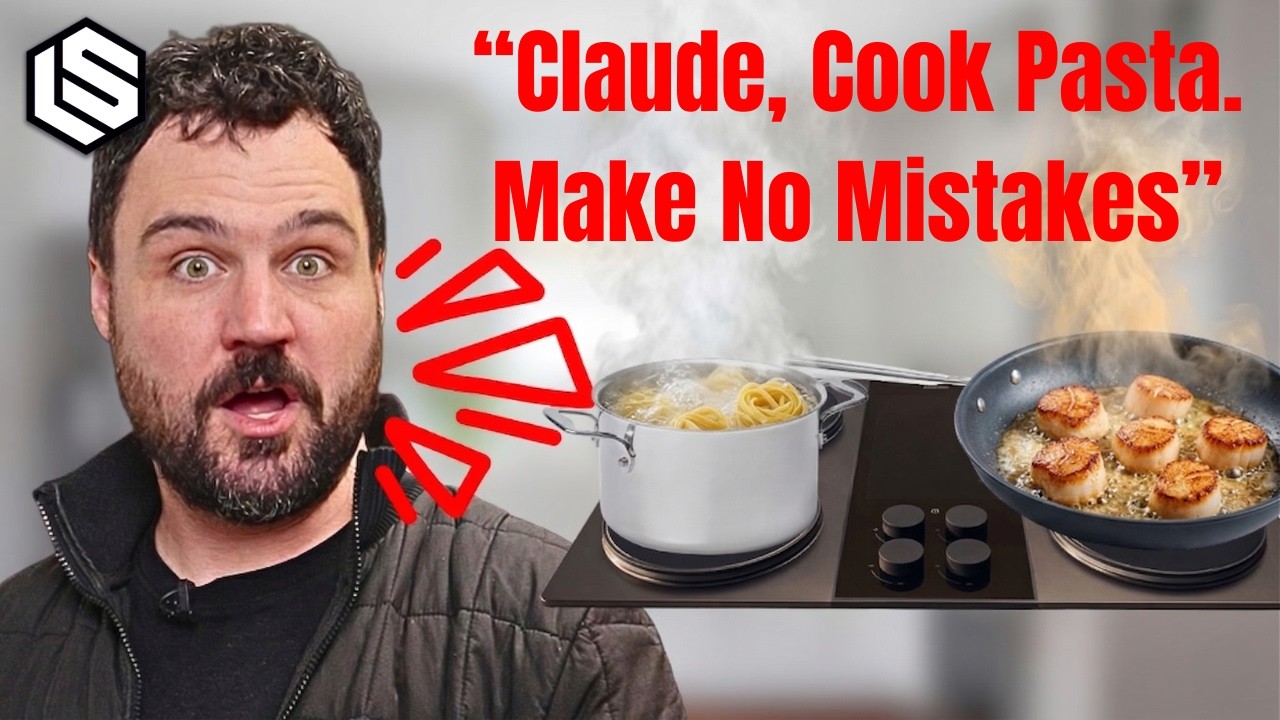 38 min
The Stove Guy: Sam D'Amico Shows New AI Cooking Features on America's Most Powerful Stove at Impulse
 55 min
Mistral: Voxtral TTS, Forge, Leanstral, & Mistral 4 — w/ Pavan Kumar Reddy & Guillaume Lample
Found this useful? Build your knowledge library
Get AI-powered summaries of any YouTube video, podcast, or article in seconds. Save them to your personal pods and access them anytime.
Get Started Free