Key Moments
Studying Medicine in Eastern Europe - A comprehensive guide
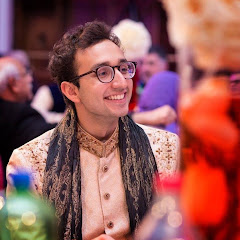 Ali Abdaal
Want to know something specific about what's covered?
We've already dissected every moment. Ask and we will deliver (with timestamps).
Key Moments
Study medicine in Eastern Europe: lower grades, affordable fees, recognized degrees, and agency support.
Key Insights
Studying medicine in Eastern Europe offers a viable alternative for UK students who miss or don't receive offers, with generally lower entry requirements.
European medical degrees are recognized by the GMC, allowing graduates to practice in the UK or other EU countries.
Tuition fees in Eastern Europe are significantly lower than in the UK, with living costs also being more affordable.
Entrance exams are crucial for admission, often outweighing A-Level grades, providing a second chance for applicants.
Agencies like MedConnect Europe can assist with the application process, legalizations, and entrance exam preparation, for a fee.
While primarily taught in English, basic local language learning is incorporated for patient interaction during clinical years.
AN ALTERNATIVE PATHWAY TO MEDICAL SCHOOL
For students who do not secure offers to study medicine in the UK, Eastern Europe presents a valuable alternative. Agencies like MedConnect Europe facilitate this pathway, offering support and guidance. This option is particularly beneficial for those who narrowly miss their grades or find UK applications unattainable, providing a realistic opportunity to pursue a medical career.
ENTRY REQUIREMENTS AND ADMISSIONS PROCESS
Admission to medical programs in Eastern Europe typically involves lower A-Level grade requirements compared to the UK. While some universities may have a minimum grade requirement (e.g., C grades), many prioritize performance in their own entrance examinations. These exams, though specific to each university, are manageable with preparation using provided syllabi and practice papers.
FINANCIAL CONSIDERATIONS: FEES AND LIVING COSTS
The financial aspect of studying medicine in Eastern Europe is a significant draw. Annual tuition fees are considerably less than in the UK, often around 8,000 euros (approximately 6,000 pounds). Living costs are also substantially lower, with monthly expenses, including rent for a one-bedroom apartment, potentially as low as 500 pounds, offering a more budget-friendly experience.
UNIVERSITY LOCATIONS AND SOCIAL LIFE
Eastern Europe offers various countries for medical studies, including the Czech Republic, Bulgaria, Romania, and Hungary. Cities like Sofia and Plovdiv in Bulgaria provide a vibrant city life, while others, such as Varna, are located near the coast. The choice of university can significantly impact the social experience and the size of the international student community.
GMC RECOGNITION AND CAREER PROSPECTS
Degrees obtained from recognized Eastern European medical universities are accepted by the UK's General Medical Council (GMC). Graduates can apply for foundation year jobs (F1/F2) in the UK similarly to UK graduates, though the sixth year internship in Europe is recognized as equivalent to F1, allowing direct application for F2 posts. The upcoming UK MLA exam will further standardize assessment for all international and UK medical graduates.
THE ROLE OF AGENCIES AND APPLICATION TIMELINE
While direct university applications are possible, agencies simplify the often tedious process of document legalization, notarization, and entrance exam preparation. MedConnect Europe, run by medical students, offers packages for comprehensive support. Applications can be time-sensitive, with entrance exams often held in early September for a late September start, though some universities offer February intake.
ACADEMIC RIGOR AND LANGUAGE OF INSTRUCTION
Despite a less stringent entry process, the medical curriculum in Eastern Europe is academically rigorous and comparable to UK standards. Instruction is predominantly in English, though learning the local language is encouraged for patient communication during clinical years. Professors often have international experience, enhancing the quality of education.
ACCOMMODATION AND STUDENT LIFE
Student accommodation options in Eastern Europe range from affordable university dorms to private apartments. Private flats are generally preferred for their comfort and proximity to campuses. The availability of new student-focused housing is increasing due to a growing international student population, making it easier to find suitable living arrangements.
INTERNATIONAL RECOGNITION AND FUTURE MOBILITY
Medical degrees from recognized Eastern European institutions are accepted across the EU, enabling graduates to practice in numerous European countries without additional entrance exams. For those aspiring to work in the United States, the USMLE can be pursued. This broad recognition underscores the value and legitimacy of education received in these regions.
Mentioned in This Episode
●Software & Apps
●Organizations
●Concepts
Medical School Fees and Living Costs Comparison
Data extracted from this episode
| Location | Annual Tuition Fee (Euros) | Annual Tuition Fee (GBP) | Monthly Living Costs (GBP) |
|---|---|---|---|
| Europe (General) | 8,000 | Approx. 6,000 | Approx. <500 |
| Bulgaria | Approx. <500 | ||
| UK (General) | Higher than Europe | Approx. >500 (highly variable) |
Common Questions
Entry requirements are generally lower than in the UK, with some universities requiring just C grades at A-level and others having no strict grade requirement, focusing instead on entrance exams. Biology and Chemistry A-levels are often preferred.
Topics
Mentioned in this video
Mentioned as one of the European countries offering medical studies along with Bulgaria, Romania, and Hungary.
Mentioned as one of the European countries offering medical studies.
The country where Abdullah is studying medicine. It's highlighted for its lower tuition and living costs compared to the UK.
The capital city of Bulgaria, mentioned as a large and vibrant city option for medical students, offering a different social experience compared to smaller cities.
Cited as another European country where students can study medicine, with its programs also taught in English.
A city in Bulgaria with a medical school located near the beach, noted for having a significant German student community.
A specific medical university in Bulgaria mentioned as having a different academic schedule, starting in February instead of September.
Mentioned as the alma mater of one of Abdullah's professors, highlighting the quality of some international faculty.
The General Medical Council, which recognizes degrees from European universities for practice in the UK and has specific registration requirements and upcoming exams like the UK MLA.
Mentioned as a potential requirement for international students, though the video focuses on entrance exams and general admission rather than specific language tests.
Mentioned as a country with medical schools, though the speaker has less information about it. Two F1 doctors in Cambridge are noted as being from Poland.
Mentioned as a place where one of Abdullah's internal medicine professors completed some training.
More from Ali Abdaal
View all 194 summaries 119 min
The Dark Side Of Getting Rich On Youtube
 78 min
How to Quit Your Job (and Find Work You Actually Love)
 89 min
If You Want to Make Money From YouTube, Do This (Case Study)
 25 min
stop waiting, just hit record
Ask anything from this episode.
Save it, chat with it, and connect it to Claude or ChatGPT. Get cited answers from the actual content — and build your own knowledge base of every podcast and video you care about.
Get Started Free