Key Moments
Stress Testing Our Democracy: A Conversation with Barton Gellman (Episode #384)
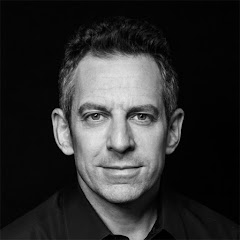 Sam Harris
Want to know something specific about what's covered?
We've already dissected every moment. Ask and we will deliver (with timestamps).
Key Moments
Wargames reveal US democracy is vulnerable to authoritarianism; laws are insufficient, norms are weak, and state resistance is key.
Key Insights
Wargames simulating an authoritarian president showed that current laws are often insufficient, relying more on norms that can be easily broken.
State-level actors like Governors and Attorneys General hold significant power to resist federal overreach, but they need clear understanding of their authorities.
Concerns about election integrity are frequently used as a pretext to suppress votes, particularly among minority and low-income populations.
Political control over election certification processes introduces opportunities for mischief, chaos, and potentially overturning election results.
A landslide election victory, while unlikely, would significantly reduce controversies and disputes, making the outcome clearer.
Pro-democracy advocates and legal experts are actively preparing for potential challenges to democratic institutions, but more work remains.
TRANSITION FROM JOURNALISM TO ACTIVISM
Barton Gellman, a Pulitzer Prize-winning journalist, has shifted from reporting on threats to democracy to actively defending it. After years of writing about existential dangers, particularly concerning Donald Trump's potential post-election actions, Gellman joined the Brennan Center for Justice. His motivation was to move from observation to action, stepping off the sidelines to contribute to safeguarding democratic institutions and civil rights.
WARGAMES SIMULATING AUTHORITARIAN PRESIDENCY
Gellman spearheaded the Democracy Futures project, a series of five tabletop exercises or 'wargames,' involving approximately 175 former officials and civil society leaders. These games modeled scenarios of an authoritarian president attempting to consolidate power, testing the ability of pro-democracy advocates to restrain such a leader across multiple rounds of response and counter-response.
FOCUS ON DEMOCRACY-THREATENING ACTIONS
The wargames deliberately excluded ordinary policy disputes, focusing instead on actions that posed direct threats to democracy and the rule of law. Simulated actions included using federal agencies like the Department of Justice for political prosecution, employing anti-trust actions against media-owning companies, and mobilizing federal troops for domestic protest suppression or mass migrant expulsions.
THE FRAGILITY OF NORMS VERSUS LAWS
A key takeaway from the Trump years and the wargames is the crucial difference between laws and norms. While laws provide formal constraints, many actions that could be abuses of power were not explicitly prohibited, relying instead on unwritten norms of conduct. When these norms are disregarded, as seen during the Trump presidency, the system's ability to self-correct is significantly weakened.
STATE-LEVEL RESISTANCE AND ITS LIMITATIONS
The exercises highlighted the potential power of state-level officials, such as Governors and State Attorneys General, to resist federal overreach. However, it was also revealed that many officials lack a clear understanding of the boundaries of their authority. Preparatory work and clear legal frameworks are necessary for them to effectively challenge federal actions that threaten civil liberties or election integrity.
ELECTION INTEGRITY AS A VOTER SUPPRESSION TOOL
Gellman argues that claims of election 'integrity' are often a pretext for voter suppression, particularly targeting Democratic-leaning voters. Proposals like strict voter ID laws, such as the SAVE Act, are presented as solutions to non-existent problems like widespread non-citizen voting. In reality, these measures disproportionately disenfranchise minority and low-income citizens who may lack necessary documentation like birth certificates or passports.
POLITICAL CONTROL OVER ELECTION CERTIFICATIONS
A new front in the battle for election integrity involves efforts to politicize the certification of election results. In states like Georgia, new rules allow partisan election officials to refuse certification and launch investigations. This shifts a ministerial function, historically handled by non-partisan administrators or courts, to potentially partisan actors, opening avenues for delay, chaos, and attempts to overturn election outcomes.
THE UNLIKELY BUT IMPACTFUL ROLE OF A LANDSLIDE
While most projections suggest the upcoming election will be close, a landslide victory for either candidate would significantly diminish the impact of election disputes. Election administrators often 'pray for a landslide' because clear, overwhelming results render minor controversies, such as ballot dropbox security or specific voting procedure complaints, largely irrelevant, thereby reinforcing the legitimacy of the outcome.
SYMMETRY IN POTENTIAL ELECTION DISPUTES
Although Donald Trump's base has a more established history of contesting election results, there is a potential symmetry in how Democrats might react to a loss. Influential Democrats and voters could challenge outcomes, attempt to block certifications, and claim widespread cheating. However, Gellman believes these challenges would likely not represent a majority within the Democratic party, unlike the more organized efforts seen on the right.
ONGOING PREPARATION AND FUTURE CHALLENGES
Pro-democracy organizations and legal experts are actively engaged in preparing for potential post-election challenges and authoritarian overreach. Efforts include lobbying for protective legislation, engaging in litigation against restrictive laws, and educating state officials on their powers. Despite significant progress, Gellman emphasizes that 'plenty more work to be done' to fortify democratic defenses.
Mentioned in This Episode
●Companies
●Organizations
●Books
●Concepts
●People Referenced
Common Questions
The Democracy Futures Project is a series of tabletop exercises or war games designed by the Brennan Center for Justice. These games simulate scenarios where an authoritarian president is elected, testing how pro-democracy advocates and government institutions would respond to restrain their power.
Topics
Mentioned in this video
The law school associated with New York University, where the Brennan Center for Justice is based.
A non-partisan law and policy institute that works on democracy and civil rights. Barton Gellman is a senior advisor there.
The US tax agency, mentioned as an entity an authoritarian president might use to challenge the tax exemptions of nonprofits.
A magazine where Barton Gellman previously worked as a staff writer, focusing on political issues.
Former Republican Governor of New Jersey who participated in the war games, specifically in a scenario involving federalizing the National Guard.
Mentioned in the context of using the National Guard during the desegregation of Southern universities.
The Republican Secretary of State in Georgia who refused Trump's request to 'find votes' to overturn the 2020 election results.
Vice President and Democratic candidate in the upcoming election, discussed in the context of election outcomes and potential challenges to results.
Mentioned as someone who, along with Trump, has raised concerns about election integrity.
Former US President whose potential authoritarian agenda and actions are discussed, including his role in election integrity debates and the prospect of a second term.
President of the Brennan Center for Justice, whom Barton Gellman contacted about joining to protect the election.
Host of the Making Sense podcast, interviewing Barton Gellman. He is the host and creator of the podcast.
Owner of Amazon and The Washington Post, mentioned as a potential target for antitrust actions by an authoritarian president.
The candidate who won the 2020 election, whose electoral votes were secured by the certification actions of individuals like the Republican on the Michigan State Board of Elections.
Democratic Governor of Wisconsin who vetoed legislation that would have politicized the vote count.
A swing state that could be a tipping point in the upcoming election, with polls showing a very close race.
Mentioned in the context of the 2000 election, which was decided by a very narrow margin.
One of the key swing states expected to be a tipping point in the upcoming election, with polls showing a very close race.
A swing state that could be a tipping point in the upcoming election, with polls showing a very close race.
A swing state that could be a tipping point in the election, where the Democratic governor vetoed legislation to politicize the vote count.
A proposed voting rights act that the Brennan Center prioritizes, aiming to improve access to voting.
A policy agenda developed by conservative organizations, written by former Trump administration officials, which informed the war games' simulation of a presidential agenda.
A piece of proposed legislation that the Brennan Center prioritizes, aimed at expanding voting rights.
A proposed bill, ostensibly to stop non-citizens from voting, which requires voters to present a birth certificate or passport, potentially disenfranchising many.
More from Sam Harris
View all 314 summaries 23 min
Why the AI Skeptics Keep Being Wrong
 25 min
Elon Musk Didn't Found Tesla
 98 min
Coin Toss for the Future: A Conversation with Ryan Greenblatt UNLOCKED (Ep. 494)
 29 min
It's a Coin Toss Whether AI Takes Over
Ask anything from this episode.
Save it, chat with it, and connect it to Claude or ChatGPT. Get cited answers from the actual content — and build your own knowledge base of every podcast and video you care about.
Get Started Free