Key Moments
Serhii Plokhy: History of Ukraine, Russia, Soviet Union, KGB, Nazis & War | Lex Fridman Podcast #415
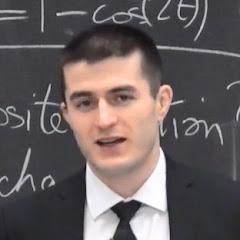 Lex Fridman
Want to know something specific about what's covered?
We've already dissected every moment. Ask and we will deliver (with timestamps).
Key Moments
Serhii Plokhy on Ukraine's history, Russian Empire's collapse, KGB, Nazis, and the current war.
Key Insights
The collapse of the Soviet Union was a continuation of the Russian Empire's disintegration, driven by nationalism and global imperial decline.
Ukraine played a pivotal role in the Soviet collapse through its referendum and pursuit of independence.
Stepan Bandera is a complex figure, embodying Ukrainian nationalist aspirations while entangled with Nazi collaboration in a propaganda-laden narrative.
The KGB evolved in power, significantly influencing Soviet decision-making and shaping the mindset of its officers, like Putin.
Putin's historical narrative, particularly the idea of Russians and Ukrainians as 'one people,' draws from 19th-century imperial ideology.
The ongoing war in Ukraine is viewed as a struggle for sovereign statehood and a rejection of Russian imperial ambitions.
THE COLLAPSE OF EMPIRES AND THE RISE OF NATIONALISM
Historian Serhii Plokhy posits that the collapse of the Soviet Union was not an isolated event but a continuation of the Russian Empire's disintegration, a process arrested by Bolshevik ideology but reignited by resurgent nationalism in the late 20th century. He distinguishes the ideological collapse of communism, the end of the Cold War, and the dissolution of the Soviet Union itself, arguing that attributing the fall solely to ideology oversimplifies the complex interplay of geography, economics, and the inherent fragility of multinational states. The expansionist nature of empires, he notes, ultimately proves unsustainable, as seen in the global redrawing of maps throughout the 20th century with numerous new states emerging.
UKRAINE'S PIVOTAL ROLE IN SOVIET DISSOLUTION
Ukraine's decision to declare independence was a critical factor in the Soviet Union's final demise. The Ukrainian referendum and subsequent declaration of independence by its leaders effectively signaled the end of the Soviet project, as Russia, outnumbered and outvoted by other republics, lost its incentive to maintain the union. This was underscored by President Yeltsin's pragmatic assessment that without Ukraine, Russia's interest in the Soviet Union waned. The economic strain on the collapsing Soviet state, with its imperial ambitions proving costly, further accelerated this process, making Ukraine's assertion of sovereignty a decisive blow.
NAVIGATING THE COMPLEX LEGACY OF NATIONALISM AND COLLABORATION
Serhii Plokhy delves into the contentious figure of Stepan Bandera, highlighting the mythologized versus the real person. Bandera, a young nationalist leader, became a symbol of Ukrainian resistance, particularly against Polish and later Soviet rule. While his organization collaborated with Nazi Germany with the hope of achieving Ukrainian independence, this alliance is heavily debated and used in propaganda. Plokhy emphasizes that Bandera's life was largely spent imprisoned or in exile, and the narrative surrounding him is deeply polarized, often serving as a propaganda tool rather than a historical fact. The far-right's presence in Ukraine, while present, is presented as marginal, with the country maintaining a unique democratic trajectory, even electing a Jewish president.
THE KGB'S EVOLVING INFLUENCE AND IMPERIAL MINDSET
The KGB's power fluctuated throughout the Soviet era, initially curtailed after Stalin's reign but regaining significant influence in the 1970s and 80s. Plokhy details how key decisions, such as the intervention in Afghanistan, involved KGB leadership, and its head, Yuri Andropov, eventually succeeded Brezhnev. This historical trajectory fostered a specific mindset within the KGB – one of strategic planning, operational execution, and a potential resentment towards party leadership. Plokhy argues that this KGB culture, characterized by a belief in control and operational effectiveness, has influenced the current Russian establishment, including Vladimir Putin, who himself served 16 years in the organization.
HISTORICAL NARRATIVES AND THE 'RUSSIAN QUESTION'
Putin's rhetoric often draws from a 19th-century imperial conception of a unified Russian nation, viewing Ukraine and Belarus as integral parts of this larger entity. This narrative, Plokhy explains, was largely dismantled by the Bolsheviks' recognition of distinct national identities to hold the empire together. However, the Russian Orthodox Church retained its imperial outlook, influencing post-Soviet Russian statehood. Scholar Aleksandr Solzhenitsyn's 'Russian Question' focused on the division and perceived tragedy of ethnic Russians outside the Russian Federation and advocated for a unified Slavic state, a vision that resonates in contemporary Russian foreign policy and its justification for actions in Ukraine.
THE REBIRTH OF STATEHOOD: UKRAINE'S STRUGGLE FOR SOVEREIGNTY
The Ukrainian question, as viewed by Plokhy, is the ongoing struggle for and maintenance of a sovereign state, a stark contrast to historical periods of rebellion against imperial powers. Key moments like the Orange Revolution and the Revolution of Dignity underscore Ukraine's commitment to democracy and Western integration, setting it on a collision course with an increasingly autocratic Russia. The 2014 annexation of Crimea and the subsequent hybrid warfare in Donbas were direct responses to Ukraine's westward drift. The war has solidified Ukrainian identity and statehood, fostering unity and a sense of shared purpose, distinguishing Ukraine as a nation that has found its state after centuries of imperial subjugation.
NUCLEAR RISKS AND THE RETURN OF COLD WAR DYNAMICS
Plokhy discusses the inherent vulnerabilities of nuclear energy, not just in technical terms but also due to political and social factors, citing Chernobyl and Fukushima as examples. He notes that authoritarian regimes and secrecy, as seen in the Soviet Union, exacerbate these risks. The current war has introduced unprecedented dangers, with hostilities occurring on nuclear power plant territories like Zaporizhzhia. He argues that while nuclear energy is statistically safer than fossil fuels, public fear of radiation and the political instability in regions developing nuclear power make it a less reliable long-term solution. This situation, coupled with a renewed Cold War-like global order dominated by US-China rivalry, presents persistent challenges for future stability.
Mentioned in This Episode
●Organizations
●Books
●Concepts
●People Referenced
Common Questions
Serhii Plokhy is a historian at Harvard University and the director of the Ukrainian Research Institute. He specializes in the history of Eastern Europe, particularly Ukraine, and has written books on the Soviet Union, Chernobyl, and the current war in Ukraine.
Topics
Mentioned in this video
A KGB assassin who killed two leaders of the Organization of Ukrainian Nationalists, including Stepan Bandera, using a spray pistol.
A controversial radical Ukrainian nationalist and leader of the Organization of Ukrainian Nationalists, whose myth continues to influence current narratives.
A key character from the HBO Chernobyl series, whose presence in a court meeting was a dramatic liberty.
Former Commander of Ukrainian Armed Forces, popular figure whose recent firing by Zelenskyy is viewed as a dangerous moment in the war.
A key figure in the 19th-century Ukrainian national revival who read the 'History of the Rus'' and interpreted it for Ukrainian national identity.
A Ukrainian World War II veteran who received ovations in the Canadian Parliament, later revealed to have served in the Galicia Division, creating a controversy.
A historian at Harvard University and the director of the Ukrainian Research Institute. He specializes in the history of Eastern Europe with an emphasis on Ukraine.
A book written by Serhii Plokhy that covers the current war in Ukraine.
A book written by Serhii Plokhy discussing the formation of Slavic identities, especially East Slavs.
An anonymous manuscript from the 1820s, central to the Cossack myth and the rise of Ukrainian nationalism, arguing for the Cossack elite's rights and distinct nationhood.
A Foreign Legion unit created by Germans in Ukraine, composed of Galician volunteers, whose members later created controversy, such as the Yaroslav Hunka incident.
The armed wing of the OUN, which fought against the Soviets into the early 1950s and is associated with the Bandera myth.
A radical nationalist group led by Bandera that emerged in Ukrainian territories controlled by Poland, seeking Ukrainian independence, even collaborating with Nazis briefly.
More from Lex Fridman
View all 552 summaries 227 min
Gary Gallagher: American Civil War, Slavery, Lincoln, Grant & Lee | Lex Fridman Podcast #499
 232 min
The Rise and Fall of the Roman Empire and the Byzantine Empire | Lex Fridman Podcast #498
 174 min
Biggest Mysteries in Physics: Antimatter, Dark Energy & ToE - Don Lincoln | Lex Fridman Podcast #497
 259 min
FFmpeg: The Incredible Technology Behind Video on the Internet | Lex Fridman Podcast #496
Ask anything from this episode.
Save it, chat with it, and connect it to Claude or ChatGPT. Get cited answers from the actual content — and build your own knowledge base of every podcast and video you care about.
Get Started Free