Key Moments
Sean Kelly: Existentialism, Nihilism, and the Search for Meaning | Lex Fridman Podcast #227
 Lex Fridman
Key Moments
Existentialism explores freedom, responsibility, and the search for meaning in a godless world. It contrasts with nihilism and emphasizes creating one's essence through choices.
Key Insights
Existentialism posits that existence precedes essence, meaning individuals define themselves through their choices and actions.
A core tenet is radical freedom, which comes with immense responsibility, making individuals 'condemned to be free'.
Nihilism, as described by Nietzsche, is the absence of external grounding for existence after the 'death of God,' contrasting with existentialism's emphasis on self-creation.
Heidegger's concept of 'thrownness' highlights our inherent situatedness in history and lineage, challenging Sartre's notion of absolute freedom.
Camus views existence as absurd, a tension between our desire for meaning and the universe's indifference, advocating for embracing this absurdity rather than succumbing to suicide.
Meaning can be found in embracing the present moment, acknowledging life's inherent risks and vulnerabilities, and engaging in creativity and connection.
THE CORE OF EXISTENTIALISM: EXISTENCE PRECEDES ESSENCE
Existentialism, often associated with mid-20th-century French philosophers like Sartre and Camus, fundamentally argues that for humans, 'existence precedes essence.' This means individuals are not born with a predetermined purpose or nature. Instead, they first exist, and then, through their choices and actions, they define who they become. This places a profound responsibility on individuals to create their own meaning and identity in a world potentially devoid of inherent purpose or divine guidance.
RADICAL FREEDOM AND THE BURDEN OF RESPONSIBILITY
A central theme in existentialism, particularly in Sartre's atheistic version, is radical freedom. Because there is no God to provide a blueprint for life, individuals are entirely responsible for their choices. This freedom is simultaneously empowering and terrifying, leading to the concept of being 'condemned to be free.' Every action, from how one sits to how one speaks, is a result of a choice, and individuals are accountable for shaping their being through these constant decisions, without external justification.
EXISTENTIALISM VERSUS NIHILISM: GROUNDING EXISTENCE
Nihilism, popularized by Nietzsche, describes a state where traditional values and beliefs have lost their grounding, largely due to the 'death of God.' Nietzsche saw this as a descriptive condition of modernity, where the absence of a divine anchor leaves existence without inherent meaning. Existentialism differentiates itself by focusing on how individuals can *create* meaning in this vacuum. While nihilism might suggest despair in the absence of grounding, existentialism proposes that this absence is precisely what allows for self-creation and the forging of personal values.
THE CHALLENGE OF 'THROWNNESS': HEIDEGGER'S CONTRIBUTION
Martin Heidegger, though a complex figure, introduced the concept of 'Dasein's thrownness.' This acknowledges that humans are 'thrown' into existence with pre-existing conditions such as their lineage, history, and societal context, which they did not choose. This contrasts with Sartre's more absolute view of freedom. Heidegger suggests that while we are free to respond to our circumstances, we cannot escape the fundamental fact of our situatedness. This 'thrownness' complicates the notion of radical freedom by highlighting the often unchosen aspects that shape our lives.
CAMUS AND THE ABSURDITY OF EXISTENCE
Albert Camus identified the human condition as 'absurd.' This arises from the fundamental conflict between humanity's innate desire for meaning, order, and reason, and the universe's indifferent silence or lack of inherent meaning. Camus uses the myth of Sisyphus, eternally rolling a boulder uphill only for it to roll back down, as a metaphor for repetitive, seemingly meaningless human existence. However, he argues against suicide, proposing instead that embracing this absurdity, and rebelling against it through conscious awareness and living fully, is the only way to find freedom.
FINDING MEANING IN A SECULAR AGE: ART, LANGUAGE, AND CONNECTION
The conversation explores various paths to finding meaning in a secular world. This includes appreciating the 'music of language' and how different languages shape thought, as well as finding significance in great works of literature like Dostoevsky's 'The Brothers Karamazov' or Melville's 'Moby Dick.' These narratives often grapple with profound human experiences like guilt, suffering, and the search for cosmic meaning. The importance of 'aliveness,' characterized by moments of profound engagement, transcendent experience, and genuine connection, is highlighted as a counter to despair and existential ennui.
THE ROLE OF CREATIVITY, HUMOR, AND LISTENING
Creativity is presented not just as novelty but as a communicative act deeply embedded in social context, capable of changing our understanding of ourselves and the world. Humor, often seen as destabilizing, can be a vital tool for confronting the absurd, pulling the rug out from under our assumptions and offering new perspectives. Furthermore, the act of truly listening—to others, to situations, and to the world—is emphasized as crucial for navigating complexity, avoiding dogmatism, and fostering empathy, which are essential for living a meaningful life.
HEIDEGGER, TECHNOLOGY, AND THE DANGER OF OPTIMIZATION
Heidegger's analysis of our age as 'technological' suggests a pervasive way of understanding existence as infinitely flexible and efficient resources to be optimized. This 'technological framing' risks reducing ourselves and the world to mere means to an end, obscuring deeper meaning. The danger lies in accepting this framed reality without question, sacrificing genuine human experience for efficiency. However, Heidegger also posits that within this supreme danger lies the saving possibility: recognizing technology's limitations and our own agency to relate to it differently.
AI, CREATIVITY, AND THE FUTURE OF HUMAN CONNECTION
The discussion touches upon artificial intelligence, questioning whether AI can be truly creative or artistic. The argument is made that art is inherently communicative and 'socially embedded,' requiring interaction and the capacity to change human understanding. While AI can excel in constrained domains and generate novel outputs, true artistry seems to require a deeper connection to human experience, culture, and consciousness. The evolving relationship between humans and AI raises questions about how we adapt and whether we risk becoming more like computers ourselves, losing touch with the richness of human experience.
THE SEARCH FOR MEANING: WHAT CHARACTERIZES US?
Ultimately, the meaning of life remains a profound mystery. While rationality is often cited as our defining characteristic, it's proposed that a deeper human trait is the simultaneous experience of the ungroundedness of our values and their very real significance. This capacity to hold this paradox, to live in the light of this mystery, is core to our condition. The aim, as suggested by Albert Borgmann, is to cultivate moments where one can genuinely say, 'There's no place I'd rather be,' filling life with such experiences as a path toward meaningful existence.
Mentioned in This Episode
●Software & Apps
●Companies
●Organizations
●Books
●Concepts
●People Referenced
Common Questions
Sartre's atheistic existentialism proposes that there is no God, and therefore humans are condemned to be free. 'Existence precedes essence' means we define who we are through our choices and actions, bearing full responsibility for them without external justification. This places a terrifying yet empowering burden on individuals, as they are the sole ground of their being (48s).
Topics
Mentioned in this video
A French philosopher and writer often associated with existentialism, though he resisted the label. Known for his philosophy of the absurd, particularly in 'The Myth of Sisyphus'.
An Irish novelist, mentioned in discussion about the importance of deeply knowing a culture and language to understand literature, drawing on the host's experience with Joyce's works.
An Austrian philosopher, mentioned briefly as sharing a birth year with Heidegger and Hitler, and having some similarities with Heidegger's philosophy.
An American novelist, whose 'The Old Man and the Sea' is discussed as sharing existentialist themes with 'Moby Dick', specifically focusing on courage and confronting life's difficulties in old age.
A French mathematician and philosopher from the 17th century, considered an early figure in the existentialist tradition because of his focus on Christianity as a way of living, not just a set of beliefs.
An influential author and philosopher known for objectivism, strong statements about reason, objective reality, and the virtue of selfishness, often dismissed by academic philosophers but praised for her originality by the host.
Co-author of a big book on neural networks with Jim Anderson, mentioned in Sean Kelly's academic background in computational neuroscience.
A Russian novelist and philosopher discussed for his existential interpretation of Christianity, focusing on guilt, responsibility, love, and salvation in novels like 'The Brothers Karamazov'.
A 14th-century German mystic, celebrated for his translation of Christian concepts into vernacular German, introducing unique terms like 'grunt' (ground) that enriched its meaning for speakers.
A French writer, intellectual, existentialist philosopher, feminist, and social theorist, mentioned as a major figure associated with existentialism.
A contemporary American author, whose work is described as brilliant for observing the modern world's temptation for diversion through entertainment. His tragic suicide and philosophical explorations of boredom and peak experiences are discussed in relation to finding meaning.
A major figure in mid-20th century French philosophy, known for his atheistic existentialism and the concept that 'existence precedes essence', emphasizing radical freedom and individual responsibility.
A Danish philosopher often seen as the first existentialist philosopher, whose work explores themes of anxiety, despair, and the importance of individual choice. Mentioned for his use of humor as a destabilizing force.
A Martinican psychiatrist, philosopher, revolutionary, and political theorist, mentioned for his writings in the 1950s about the experience of being a black man in Paris and contending with social positions that negate or oppress.
A German philosopher mentioned as a complex figure in existentialism, whose concept of 'thrownness' contrasts with Sartre's radical freedom. His political background as a Nazi is also noted.
A 19th-century German philosopher who made the term 'nihilism' popular and famously declared 'God is dead', advocating for humans to be artists of life in response to the lack of an external ground.
A former classmate of Sean Kelly's who left philosophy to become a successful Hollywood comedy writer, then returned to write a dissertation on Kierkegaard's views on humor.
An 18th-century German poet, quoted by Heidegger as saying, 'in the supreme danger lies the saving possibility,' referring to humanity's relationship with technology.
Italian poet, whose works are included in the 'great literature' discussed in 'All Things Shining'.
A German philosopher living in Montana, whose advice on living a meaningful life focuses on aiming for many moments about which one can say, 'there's no place I'd rather be, no thing I'd rather be doing, no buddy I'd rather be with, and this I will remember well'.
A legendary jazz musician whose improvisation, turning a 'wrong' note into a 'right' one through creative response, is used to illustrate Nietzsche's concept of artistic creation.
A very important philosopher and mentor to Sean Kelly, known for his English-speaking interpretations of Heidegger and criticisms of traditional symbolic AI. He co-authored 'All Things Shining' with Kelly.
A German-Swiss poet, novelist, and painter, mentioned by the host as a favorite author. His works, like 'Siddhartha', explore absurdism and a Buddhist-like engagement with the moment.
An undergraduate teacher of Sean Kelly's at Brown, who co-authored a significant book on neural networks with Geoff Hinton.
A scholar of 14th-century German mysticism, whose work highlights Meister Eckhart's translation of Christianity into vernacular German and the new concepts it introduced.
Author of 'Moby Dick', whose work is highlighted as another great 19th-century novel, exploring an existential journey away from Christianity towards a polytheistic understanding of meaning.
A legendary tennis player, whose extraordinary ability to use his body to transcend its limitations is described by David Foster Wallace as a 'religious experience,' representing a peak moment of significance.
A jazz pianist who played with Miles Davis, whose anecdote about turning a 'wrong' chord into a 'right' one exemplifies Nietzsche's view of creative improvisation and responding to constraints.
A renowned Russian author, mentioned by the host in the context of famous translators of Russian literature and the deep philosophical thinking required for translating his and Dostoevsky's works.
Two German students from the 1920s who, after reading Nietzsche, committed an unmotivated murder, misinterpreting nihilism as a justification for acting against conventional morality.
Mentioned as being born in the same year as Wittgenstein and Heidegger, adding to the disturbing context of Heidegger's association with Nazism.
The Greek goddess of love, mentioned as a deity representing the realm of love in Homeric culture, contrasted with Ares to illustrate polytheistic, localized meanings of existence.
An author who competed in the Loebner Prize (Turing Test competition) and won the 'most human human' prize. His observations suggest that humans may be becoming more like computers due to technological mediation in the digital age.
A Russian-born composer, whose 'The Rite of Spring' is used as an example of art that, while initially met with controversy, profoundly changed musical understanding and demonstrated deep communicative power.
Dostoevsky's last novel, described as a murder mystery exploring notions of guilt, responsibility, and the possibility of love and salvation in the face of atrocious actions, providing an existential interpretation of Christianity.
A novel by Dostoevsky, mentioned by the host alongside 'The Idiot' as a favorite work.
Plato's foundational work in philosophy, cited for its myth of souls (gold, silver, bronze) which represents a view of innate essence contrasting with existentialist thought.
An essay by Albert Camus, described as super accessible and engaging, which opens with the 'one truly significant philosophical question' being that of suicide, and concludes that human existence is absurd but can be embraced.
A book co-authored by Sean Kelly and Hubert Dreyfus, which explores great literature in Western history to find meaning in a secular age, covering authors like Homer, Virgil, Dante, Melville, and David Foster Wallace.
David Foster Wallace's unfinished novel, which reportedly drove him to distraction. It centers on an IRS tax examiner who finds bliss in intense boredom, a philosophical ambition Kelly finds 'unlivable' for a human being.
A novel by Hermann Hesse, cited as an example of his work that embodies a Buddhist-like philosophy of experiencing the moment and engaging with the river of life.
A classic 19th-century novel by Herman Melville, explored as a work that contrasts with Dostoevsky, focusing on the protagonist Ishmael's journey from depression and a broken Christianity to a whaling voyage. It explores a polytheistic understanding of meaning through suffering and confrontation with a symbolic leviathan.
A novel by Hermann Hesse, recalled by the host as exploring humor as a fundamental part of the existentialist ethic for dealing with absurdity.
A novel by Ayn Rand, mentioned alongside 'The Fountainhead' as works Sean Kelly read in high school.
An article by David Foster Wallace published in The New York Times Magazine, analyzing Federer's tennis artistry as a form of transcendent, peak human experience.
An essay by David Foster Wallace about cruise ships, where he describes himself as a 'roving eyeball,' observing everything with intense sensitivity. Kelly likens this to Ivan Karamazov's potentially isolating 'witness' role.
Jean-Paul Sartre's magnum opus, cited as the source for his example of the waiter illustrating 'bad faith'.
Eric Kaplan's dissertation, which explores Kierkegaard's idea that humor has a crucial destabilizing feature, linking it to the riskiness and vulnerability necessary for a meaningful life.
A novel by Dostoevsky, mentioned by the host as his favorite, characterized by the main character's optimism and love for the world, deeply connecting with the host.
A novella by Ernest Hemingway, mentioned by the host as having similar existential themes to 'Moby Dick', focusing on old age, the passing of time, and personal identity through the struggle with a single fish.
A novel by Ayn Rand, mentioned as a book Sean Kelly read in high school, exemplifying her philosophy of radical individualism and self-reliance.
The institution where David Foster Wallace delivered a famous graduation speech about the freedom to interpret situations, which Kelly discusses as reflecting Wallace's philosophy.
The publication where David Foster Wallace's article 'Roger Federer as Religious Experience' appeared.
Sean Kelly's undergraduate institution, where he had a teacher, Jim Anderson, influential in neural networks.
A DeepMind AI program that plays the board game Go, mentioned as an example of AI surprising humans in game-playing, preceding AlphaGo Zero and AlphaZero.
A DeepMind AI system that achieved superhuman performance in games like Go and Chess, surprising grandmasters with its creative moves. Discussed for its potential artistry if it were deeply socially embedded and cognizant of its psychological impact.
An IBM chess-playing computer, mentioned as an early example of AI surprising humans in game-playing, preceding AlphaGo and AlphaZero.
Mentioned as a place to visit to better understand James Joyce's works, emphasizing the role of cultural immersion in literary appreciation.
The capital of Ireland, specifically mentioned as a place to visit to understand James Joyce's works.
A political entity from which Ayn Rand emigrated, influencing her strong philosophical views against collectivism.
A modern work of art mentioned as reflecting nihilism through its characters. The group of 'nihilists' in the film are seen as misinterpreting true nihilism by embracing apathy and destructive actions.
A ballet and orchestral concert work by Igor Stravinsky, famously caused riots at its premiere due to its radical new sound but ultimately proved to be a deeply communicative act that changed musical understanding.
The publication where Sean Kelly wrote a piece arguing that AI cannot be an artist and creativity will always be a human endeavor.
A version of DeepMind's AlphaGo that learned Go entirely from self-play, mentioned as an example of AI surprising humans in game-playing, preceding AlphaZero.
The Greek god of war, mentioned as a deity representing the realm of battle fury in Homeric culture, contrasted with Aphrodite to illustrate polytheistic, localized meanings of existence.
A test of a machine's ability to exhibit intelligent behavior equivalent to, or indistinguishable from, that of a human. Discussed in relation to the Loebner Prize and the potential for machines to seem more human, or for humans to become more machine-like.
The AI research laboratory that created AlphaZero, the system discussed for its creative play in games like Go and Chess.
A social media platform, mentioned as a digital space where 'aliveness' might be found by younger generations, contrasting with a view of an 'over-optimized world' and potentially opening new opportunities for experience.
More from Lex Fridman
View all 547 summaries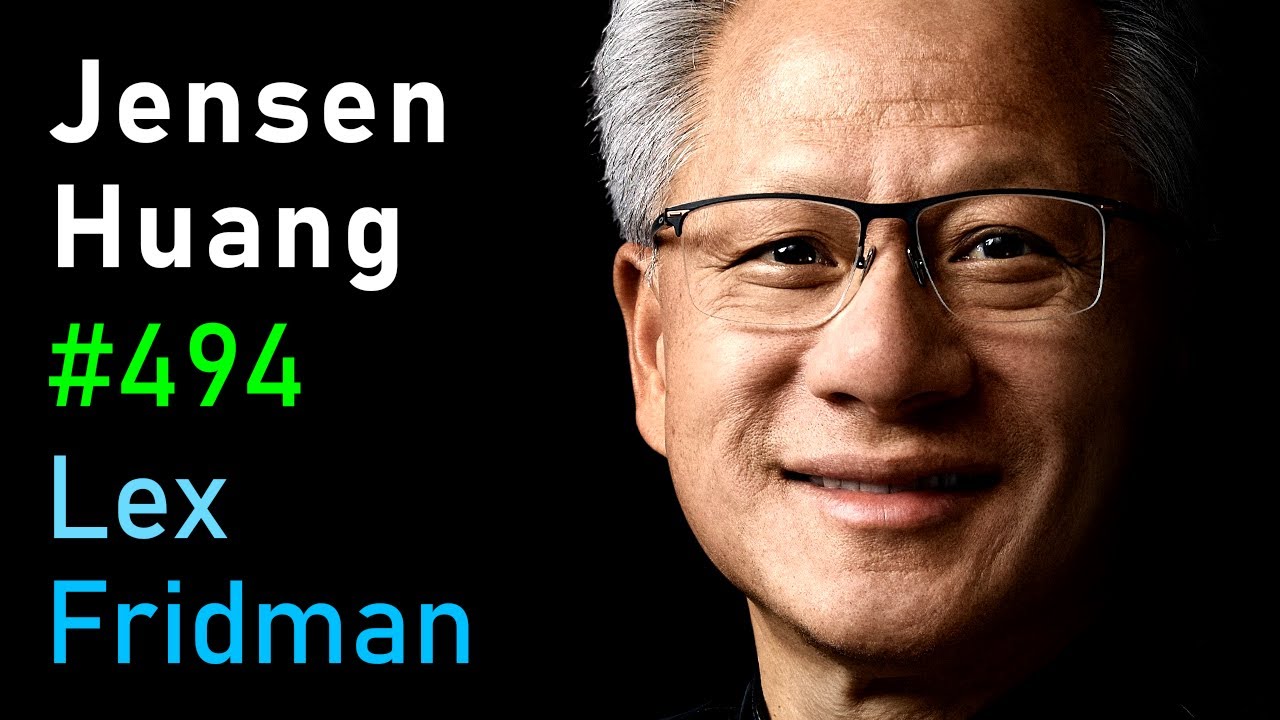 146 min
Jensen Huang: NVIDIA - The $4 Trillion Company & the AI Revolution | Lex Fridman Podcast #494
 311 min
Jeff Kaplan: World of Warcraft, Overwatch, Blizzard, and Future of Gaming | Lex Fridman Podcast #493
 154 min
Rick Beato: Greatest Guitarists of All Time, History & Future of Music | Lex Fridman Podcast #492
 23 min
Khabib vs Lex: Training with Khabib | FULL EXCLUSIVE FOOTAGE
Found this useful? Build your knowledge library
Get AI-powered summaries of any YouTube video, podcast, or article in seconds. Save them to your personal pods and access them anytime.
Get Started Free