Key Moments
Scott Aaronson: What is a Quantum Computer? | AI Podcast Clips
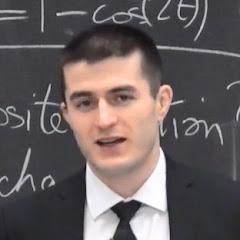 Lex Fridman
Key Moments
Quantum computing harnesses quantum mechanics principles like superposition and interference. Error correction is key for reliable quantum computers despite challenges.
Key Insights
Quantum computing uses quantum mechanics principles such as superposition and interference, not just probabilities, but complex amplitudes.
A qubit, the basic unit of quantum information, can exist in a superposition of states (0 and 1), allowing for vastly more complex states than classical bits.
Decoherence, the unwanted interaction of qubits with the environment, is the primary challenge in building quantum computers, causing quantum states to collapse.
Quantum error correction theory, developed in the 1990s, shows reliable quantum computers can be built from unreliable qubits by encoding information redundantly.
Current quantum computers are in the 'Noisy Intermediate-Scale Quantum' (NISQ) era, capable of tasks hard for classical computers but not yet offering practical usefulness.
Scaling quantum computers requires a significant overhead of physical qubits for encoding each logical qubit due to error correction, making large-scale applications very demanding.
THE FUNDAMENTALS OF QUANTUM COMPUTING
Quantum computing represents a novel approach to computation, leveraging the principles of quantum mechanics, formulated in 1926. Instead of relying solely on probabilities, quantum mechanics uses 'amplitudes,' which are complex numbers that can be positive, negative, or even imaginary. A quantum superposition occurs when a system is assigned an amplitude for every possible configuration it could be in when measured. For instance, an electron can have an amplitude for being in one location and another amplitude for being elsewhere.
AMPLITUDES, SUPERPOSITION, AND INTERFERENCE
The measurement of a quantum system forces its amplitudes to convert into probabilities, typically by squaring their absolute values. However, while isolated, these amplitudes evolve according to rules alien to everyday probability. A key phenomenon is interference, where amplitudes can cancel each other out. This is illustrated by the double-slit experiment, where particles seem to avoid areas where paths could have canceled each other out, but reappear when one path is blocked.
THE QUANTUM BIT (QUBIT) AND COMPUTATIONAL POWER
A quantum computer's basic unit is the qubit, a bit that can be in a superposition of both 0 and 1 states by having corresponding amplitudes. The power scales exponentially: a thousand interacting qubits require amplitudes for all 2^1000 possible configurations, a number unmanageable by any classical computer. This vast state space is not exploited by simply trying all answers in parallel, as measurement yields a single random outcome.
HARNESSING QUANTUM MECHANICS FOR ALGORITHMS
The core trick in quantum computing lies in choreographing interference patterns. Quantum algorithms are designed to ensure that amplitudes leading to wrong answers cancel each other out, while amplitudes leading to the correct answer reinforce each other. This precise manipulation of amplitudes via superposition and interference is what enables quantum computers to solve certain problems much faster than classical ones.
PHYSICAL IMPLEMENTATIONS AND ABSTRACTION
Qubits can be physically realized through various quantum systems, such as superconducting circuits or atomic nuclei with spin. In classical computing, one can be a virtuoso programmer without knowing the underlying hardware. While ideally, quantum computing aims for this level of abstraction, current noisy quantum computers have not yet achieved perfect decoupling; the physical implementation significantly impacts performance.
DECOHERENCE: THE PRIMARY CHALLENGE
The main obstacle in building quantum computers is decoherence, which arises from unwanted interactions between qubits and their environment. Any interaction that leaks information about the qubit's state (0 or 1) causes its quantum state to collapse, as if it were measured. To perform computations, qubits must be isolated from the environment yet precisely controllable, a delicate balancing act that engineers are striving to achieve.
QUANTUM ERROR CORRECTION AND FAULT TOLERANCE
Theory of quantum error correction and fault tolerance, developed in the 1990s, offers a solution. It demonstrates that reliable quantum computers can be constructed from unreliable qubits. By encoding information redundantly across multiple qubits, errors caused by decoherence can be detected and corrected, a process that imposes a significant overhead in the number of physical qubits required.
THE NOISY INTERMEDIATE-SCALE QUANTUM (NISQ) ERA
We are currently in the NISQ era, analogous to the early vacuum tube days of classical computing. These noisy, non-error-corrected quantum devices are now capable of performing tasks that are difficult for classical computers to simulate, as demonstrated by experiments like Google's quantum supremacy. The challenge remains to find useful applications for these NISQ devices within the next decade.
SCALABILITY AND FUTURE PROSPECTS
Achieving large-scale quantum computation requires overcoming the immense qubit overhead imposed by error correction. For instance, breaking RSA encryption might need thousands of logical qubits, each requiring thousands of physical qubits, leading to millions of physical qubits. While progress is significant, further theoretical breakthroughs and substantial investment are crucial for advancing beyond the NISQ era towards practical, fault-tolerant quantum computing.
Mentioned in This Episode
●Products
●Software & Apps
●Companies
●Studies Cited
●Concepts
●People Referenced
Physical Implementations of Qubits Discussed
Data extracted from this episode
| Type of Qubit | Description | State |
|---|---|---|
| Superconducting Qubits | Little coils where current can flow in two energy states | Superposition of two different states |
| Atomic Nucleus Spin | Individual atomic nucleus with a spin property | Superposition of clockwise and counterclockwise spin states |
Common Questions
Quantum computing leverages principles like superposition, where quantum systems can exist in multiple states simultaneously, and amplitudes, which are complex numbers that describe the probability of different states. These amplitudes can interfere, allowing for constructive or destructive interference in calculations.
Topics
Mentioned in this video
A type of computer that utilizes quantum-mechanical phenomena such as superposition and entanglement to perform calculations.
Noisy Intermediate-Scale Quantum, referring to the current era of quantum computing where devices have a limited number of qubits and are susceptible to noise.
A fundamental principle of quantum mechanics where a quantum system can exist in multiple states simultaneously until measured.
A branch of mathematics concerned with numerical descriptions of how likely an event is to occur.
The fundamental theory in physics describing nature at the smallest scales of energy and matter.
A theoretical framework and set of techniques used to protect quantum information from errors caused by decoherence and other noise.
Numbers used in quantum mechanics to describe fundamental states of a system, analogous to probabilities but capable of being complex numbers.
The process by which a quantum system loses its quantum properties due to interaction with its environment, leading to loss of quantum states.
Numbers that can be expressed in the form a + bi, where a and b are real numbers and 'i' is the imaginary unit.
The demonstration that a programmable quantum device can solve a problem that no classical computer could solve in any feasible amount of time.
The basic unit of quantum information, analogous to the classical bit, but can exist in a superposition of 0 and 1 states.
A theoretical framework that allows for reliable quantum computation even with imperfect physical qubits and operations, building upon error correction.
More from Lex Fridman
View all 547 summaries 146 min
Jensen Huang: NVIDIA - The $4 Trillion Company & the AI Revolution | Lex Fridman Podcast #494
 311 min
Jeff Kaplan: World of Warcraft, Overwatch, Blizzard, and Future of Gaming | Lex Fridman Podcast #493
 154 min
Rick Beato: Greatest Guitarists of All Time, History & Future of Music | Lex Fridman Podcast #492
 23 min
Khabib vs Lex: Training with Khabib | FULL EXCLUSIVE FOOTAGE
Found this useful? Build your knowledge library
Get AI-powered summaries of any YouTube video, podcast, or article in seconds. Save them to your personal pods and access them anytime.
Get Started Free