Key Moments
Science & Survival: A Conversation with Martin Rees (Episode #323)
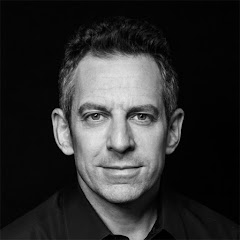 Sam Harris
Key Moments
Martin Rees discusses science's role in navigating civilizational risks like pandemics, AI, nuclear war, and climate change.
Key Insights
Science is a progressive, social endeavor, with new understandings often incorporating older theories.
Genius in science is rare and not always correlated with making groundbreaking discoveries, which can be serendipitous.
Humanity faces unprecedented civilizational risks due to advanced technology, including engineered pandemics and cyberattacks.
The rapid development of AI and biotechnology poses significant existential threats that require global regulation and awareness.
Addressing long-term risks like climate change requires overcoming short-term political incentives and leveraging influential voices.
Future human evolution may involve radical redesign through genetic modification and cybernetics, potentially leading to non-biological intelligence.
THE NATURE AND PROGRESS OF SCIENCE
Martin Rees emphasizes that science is a continuous, collective effort, not a collection of immutable facts. While absolute certainty is elusive, scientific progress builds upon existing knowledge, often incorporating earlier theories as special cases, as seen with Newton's laws and Einstein's relativity. This provisional nature necessitates a careful approach to scientific authority, balancing reliance on expert consensus with the understanding that even established ideas can be refined or superseded.
GENIUS AND SCIENTIFIC CONTRIBUTION
The concept of the lone scientific genius, while compelling, is often a quasi-myth. While exceptional intellects exist, major scientific breakthroughs can also arise serendipitously through observation and opportunity rather than sheer intellectual might. Unlike art, scientific contributions become integrated into a larger edifice, often meaning someone else would have made a similar discovery if the first person hadn't, underscoring science's social and collaborative nature.
EXISTENTIAL RISKS AND TECHNOLOGICAL THREATS
Humanity now possesses the technological power to cause its own extinction or severe long-term setbacks. Beyond climate change and biodiversity loss, Rees highlights the profound risks posed by engineered pandemics, which could be far more virulent than natural ones, and cyberattacks that could cripple essential infrastructure. These threats are amplified by the increasing accessibility of powerful technologies to small groups or individuals.
ARTIFICIAL INTELLIGENCE AND BIOTECHNOLOGY CHALLENGES
The rapid advancement of artificial intelligence and biotechnology presents novel and potentially overwhelming challenges. Unlike nuclear weapons technology, which requires significant infrastructure, genetic engineering and AI development can be more democratized, making them harder to regulate. The potential for misuse, accidental breakdowns, or profound societal dependency on these technologies necessitates urgent international cooperation and robust oversight.
ADDRESSING LONG-TERM RISKS AND PUBLIC PERCEPTION
Motivating political action on long-term, slow-moving threats like climate change is difficult due to short-term electoral cycles and the abstract nature of future risks. Public awareness, amplified by influential figures like Pope Francis, David Attenborough, Bill Gates, and Greta Thunberg, is crucial to pressuring governments and businesses to act. This heightened awareness can help bridge the gap between scientific understanding and effective policy implementation.
THE FAR FUTURE AND POST-HUMAN EVOLUTION
Looking towards the distant future, Rees posits that human evolution will accelerate through deliberate redesign via genetic modification and cybernetics, leading to 'post-humans' or non-biological intelligences. This 'secular intelligent design' could manifest first in off-world colonies, such as Mars, where pioneers might develop into a distinct species better suited to alien environments. This evolutionary trajectory could ultimately lead to interstellar expansion by artificial entities.
THE FERMI PARADOX AND ELECTRONIC CIVILIZATIONS
The Fermi Paradox—the apparent absence of extraterrestrial civilizations—can be partially explained by the likelihood that advanced life evolves into non-aggressive, electronic forms. Such entities might be introspective, focusing on deep thought rather than outward expansion. Furthermore, the vast timescales of cosmic evolution mean that any intelligent life that arose elsewhere would likely have progressed far beyond a biological stage, leaving electronic artifacts as the most probable sign of advanced intelligence.
Mentioned in This Episode
●Products
●Software & Apps
●Organizations
●Books
●Concepts
●People Referenced
Common Questions
Martin Rees's book 'If Science Is to Save Us' addresses existential risks to humanity and highlights both the potential of science to save us and our failures to fully utilize its promise, particularly in politics and institutions.
Topics
Mentioned in this video
Mentioned as one of the exceptional individuals in physics.
Cited as a positive influence who talks sense about technological opportunities and realities, contributing to discussions on complex issues.
Astronomer, former president of the Royal Society, fellow and former master of Trinity College Cambridge, Emeritus Professor of Cosmology and Astrophysics at Cambridge, and member of the UK House of Lords. He is the author of the book 'If Science Is to Save Us'.
Mentioned in the context of space exploration and his desire to die on Mars. His vision for human space flight is discussed as being potentially riskier and cheaper than governmental endeavors.
Mentioned as a philosopher who observed that science never truly proves theories true, but rather proves false theories false.
Mentioned as an example of someone from Martin Rees's field with special intellectual qualities, broad interests, and the ability to work at a great speed.
Cited as an influential figure whose 2015 encyclical helped energize support for climate action, contributing to the consensus at the Paris climate conference.
Mentioned as a leader whose potential actions regarding nuclear weapons are a concern, but the larger risk is seen as antiquated technology leading to accidental war.
Mentioned as a figure who has energized the younger generation and helped raise awareness of environmental issues.
Mentioned as a mathematician who secluded himself for seven years to do his work, highlighting an exceptional solitary effort.
Mentioned as someone who clearly had a rather special intellect.
Described as a 'secular Pope' who has raised global awareness of environmental damage, ocean pollution, and climate change.
Quoted regarding the vastness of eternity, 'eternity is very long especially towards the end'.
Discussed in the context of genius, with the suggestion that they may do more harm than good as the recipients are not always the ones making serendipitous discoveries or the most qualified to pontificate on various subjects.
Martin Rees is a fellow and former master of this college at Cambridge University.
Mentioned as a body that must try to think of ways to regulate AI and other complex systems.
Its monitoring and inspection capabilities for nuclear weapons are mentioned as a model for regulating dangerous technologies.
Mentioned as a body that must try to think of ways to regulate AI and other complex systems.
Martin Rees served as the president of this organization, which is the National Academy of Sciences of the UK.
Martin Rees is a member of this legislative body.
Mentioned in contrast to Newton's laws, providing a deeper understanding and wider applicability, and expected to be incorporated into a future unifying theory.
Cited as an example of a scientific revolution.
Cited as an example of scientific principles that are almost incontestable and good enough for practical applications like programming spacecraft.
Mentioned in the context of the Fermi paradox and the probability of intelligent life in the galaxy.
More from Sam Harris
View all 292 summaries 34 min
Is Effective Altruism Blind to the Biggest Problems? – Sam Harris & Will MacAskill
 21 min
What Is Technology Doing to Us?
 42 min
Is the Iran War Already Failing?
 90 min
FULL EPISODE: The Politics of Pragmatism and the Future of California (Ep. 464)
Found this useful? Build your knowledge library
Get AI-powered summaries of any YouTube video, podcast, or article in seconds. Save them to your personal pods and access them anytime.
Get Started Free