Key Moments
Science & Civilization: A Conversation with Neil deGrasse Tyson (Episode #302)
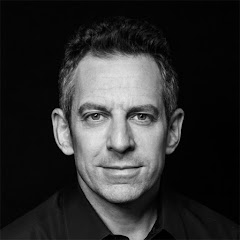 Sam Harris
Want to know something specific about what's covered?
We've already dissected every moment. Ask and we will deliver (with timestamps).
Key Moments
Neil deGrasse Tyson and Sam Harris discuss science, civilization, and societal issues, advocating for statistical literacy.
Key Insights
Science's uniqueness lies in its self-correcting process and reliance on evidence over opinion or authority.
Misunderstandings of science often stem from misinterpreting the dynamic nature of consensus-building as error.
Scientific progress involves expanding understanding, not necessarily overturning established paradigms in every advance.
Probability and statistics are crucial for understanding risk and making informed decisions, yet are poorly taught.
Climate change presents a challenge due to the mismatch between its long-term scale and short-term political cycles.
Activism tactics, while attention-grabbing, can alienate the public and distract from the core issues.
THE UNIQUE ESSENCE OF SCIENCE
Science distinguishes itself as a human endeavor not through the infallibility of its practitioners, but through its methodology. While scientists are susceptible to biases, the scientific process includes an inherent, albeit often unwritten, agreement to test hypotheses, seek evidence, and acknowledge when one is wrong. This contrasts with many other human arguments, which can escalate due to unyielding worldviews, whereas scientific disagreements ideally conclude with a call for more data or a shared understanding.
DEMYSTIFYING SCIENTIFIC PROGRESS AND CONTROVERSY
Confusion about science arises when the public misunderstands the dynamic nature of scientific consensus. Changes in policy or understanding, particularly evident during the COVID-19 pandemic, are often perceived as scientific error rather than the natural evolution of knowledge based on new data. The process of scientific inquiry, with its inherent uncertainty, testing, and criticism, can appear messy. However, the remedy for scientific mistakes is more science—more rigorous testing, data, and scrutiny.
AUTHORITY, CONSENSUS, AND THE FRONTIER OF KNOWLEDGE
There's a tension between valuing scientific consensus and remaining open to paradigm shifts. While relying on expert consensus is necessary due to the vastness of scientific knowledge, true breakthroughs often challenge existing views. Scientific progress isn't solely about overthrowing past ideas; many discoveries fill knowledge gaps without negating previous work. Consensus in science refers to the body of evidence presented in research papers, not mere opinions, and is generally reliable, especially in less socially biased fields.
THE CRITICAL ROLE OF PROBABILITY AND STATISTICS
A significant societal deficit lies in the public's poor understanding of probability and statistics. This lack of numeracy contributes to misinterpretations of risk, as seen in issues like climate change and the impact of smoking. Everyday variations in temperature, for instance, may seem minor, but a slight shift in the average can have extreme consequences at the tail end of the distribution, leading to more frequent extreme weather events. This statistical literacy is vital for informed decision-making.
ADDRESSING CLIMATE CHANGE AND TIME-SCALE MISMATCHES
Climate change is a particularly challenging problem due to a fundamental mismatch between its long-term operating scale and the short-term cycles of political systems and human lifespans. Activist tactics, such as those involving vandalism of art, while gaining attention, can alienate the public. This generational gap in engagement is not unusual, but the existential nature of climate risk requires solutions that transcend immediate political concerns and are properly understood through statistical analysis.
NAVIGATING INFORMATION AND THE DANGER OF SELECTIVE SKEPTICISM
In the modern age, anyone can find a credentialed individual to support almost any viewpoint, often by cherry-picking data that aligns with their pre-existing political, cultural, or personal desires. This selective skepticism is amplified when individuals engage in "doing their own research" without rigorous statistical understanding. The challenge for the public is to discern legitimate scientific discourse from dissenting views that are politically or ideologically motivated, emphasizing the consensus derived from overwhelming evidence.
Mentioned in This Episode
●Companies
●Organizations
●Books
●Concepts
●People Referenced
Common Questions
Science is unique because scientists, while human, are expected to rigorously test their hypotheses and admit when they are wrong. Arguments between scientists often end with a call for more data or a friendly drink, unlike societal disputes that can escalate to conflict.
Topics
Mentioned in this video
The institution where Neil deGrasse Tyson is the director of the Hayden Planetarium.
An institution that synthesizes scientific information, highlighted as a resource for understanding complex topics.
Mentioned in the context of public health messaging during COVID-19 and the need for better communication.
A cryptocurrency trading firm that experienced a significant collapse, mentioned in the podcast intro.
A professional organization for physicists whose convention in Las Vegas is mentioned.
A movement of which Sam Bankman-Fried was a visible face, impacted by the FTX collapse.
The field that Einstein famously had reservations about, despite contributing to its development.
Used as a simple example to illustrate that fundamental scientific truths (like its composition) are not subject to opinion or shift.
CEO of FTX, whose company's implosion is discussed as a significant current event.
Philosopher of science whose concept of 'paradigm shift' is discussed in relation to scientific revolutions.
The host of the Making Sense podcast, who introduces the episode and interviews Neil deGrasse Tyson.
Astrophysicist, author, and director of the Hayden Planetarium, the guest on the podcast.
More from Sam Harris
View all 310 summaries 38 min
The Second Plane, 25 Years Later
 27 min
Is the Far Left Hijacking the Democratic Party?
 27 min
How Trump Became Immune to Scandal
 48 min
When Should You Trust Your Intuition?
Ask anything from this episode.
Save it, chat with it, and connect it to Claude or ChatGPT. Get cited answers from the actual content — and build your own knowledge base of every podcast and video you care about.
Get Started Free