Key Moments
Sam Harris on the Joe Rogan vs. Douglas Murray Debate, Religion, Deportations, & Bill Maher
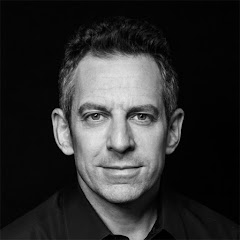 Sam Harris
Key Moments
Sam Harris and Jaron Lowenstein discuss social media, religion, political division, free speech, and expertise on podcasts.
Key Insights
Children are being kept off social media to protect them from its negative impacts on self-worth and mental well-being.
The erosion of traditional religion has created a void in community and ethical instruction that secular culture struggles to fill.
Maintaining relationships across political divides requires prioritizing personal connections over political disagreements.
Podcast hosts have a responsibility to fact-check and push back against misinformation, not just platform guests for 'good hangs'.
True free speech principles are distinct from platform content moderation, and all platforms curate content.
Expertise is crucial for determining truth, and individuals who present themselves as experts without proper credentials or verification risk causing harm.
PROTECTING CHILDREN IN THE DIGITAL AGE
The conversation begins by addressing concerns about the well-being of young men and teenagers, highlighting the significant role of social media. Sam Harris and Jaron Lowenstein discuss the proactive measures taken to shield their own daughters from early and extensive social media exposure. They prioritized delaying smartphone access and educating their children about the potential for social media to anchor self-worth to external validation, aiming to mitigate its soul-crushing effects. This approach underscores a deliberate effort to foster a healthier relationship with technology and external influences.
THE DECLINE OF RELIGION AND THE SEARCH FOR COMMUNITY
The discussion delves into the societal impact of declining religious adherence, exploring whether this erosion contributes to a sense of unease among younger generations. Harris acknowledges the trend towards secularization and atheism but notes secular culture's struggle to provide the sense of the sacred, community, and strong ethical instruction traditionally offered by religion. While acknowledging that piecemeal efforts like 'spiritual but not religious' often fall short, he suggests that platforms like 'Waking Up' aim to offer a more coherent framework for these essential human needs, fostering community and contemplative practices.
NAVIGATING POLITICAL DISAGREEMENT AND MAINTAINING RELATIONSHIPS
A significant portion of the discussion focuses on the challenge of maintaining relationships amidst deep political polarization, particularly when friends or family hold vastly different views. Harris emphasizes the importance of prioritizing certain relationships over political disagreements, stating he is willing to sacrifice some relationships for ethical consistency, especially with public figures causing harm. He contrasts this with his approach to close friends who voted for Trump, where he prioritizes the relationship by navigating conversations carefully or disengaging when necessary. This strategy highlights a conscious effort to preserve connection without compromising core values.
THE RESPONSIBILITY OF PLATFORMING AND THE DEBATE AROUND FREE SPEECH
The conversation critically examines the role of podcasters and social media platforms in the spread of information and misinformation. Harris argues that all platforms, including Joe Rogan's podcast and X, are inherently in the business of curation, making decisions about who to amplify. He contends that while the First Amendment protects against government censorship, it doesn't absolve platforms of the responsibility to push back against harmful lies and misinformation. Harris criticizes hosts like Rogan for failing to adequately fact-check guests, especially on critical issues like conspiracy theories or historical revisionism, thereby giving a platform to potentially damaging ideas without necessary scrutiny.
THE MISUNDERSTOOD NATURE OF FREE SPEECH AND CONTENT MODERATION
Sam Harris clarifies his stance on free speech, emphasizing that his critiques are not against the First Amendment's protection of political expression. Instead, his concerns lie with content moderation policies on private platforms and the ethical responsibilities of those who host public discourse. He rejects the notion of 'free speech absolutism' as applied to platforms, arguing that all businesses must moderate content. Harris stresses that the issue is not whether one *can* platform someone, but whether it is *responsible* to do so without proper preparation and fact-checking, especially when dealing with potentially harmful narratives or historical revisionism.
THE CRUCIAL ROLE OF EXPERTISE IN DETERMINING TRUTH
The discussion highlights the dangers of devaluing expertise in favor of anecdotal evidence or contrarian viewpoints. Harris uses examples like Alex Jones and COVID-19 vaccine hesitancy to illustrate how non-experts can spread misinformation with significant real-world consequences. He argues that even when established experts err, the path to truth still requires the work of competent professionals. The conversation criticizes individuals like Dave Smith for presenting themselves as experts on complex geopolitical issues without the necessary qualifications or accountability, contrasting them with genuine experts like war correspondents who bear reputational consequences for factual errors.
THE PERNICIOUS INFLUENCE OF MISINFORMATION AND ANTI-SEMITISM
A sharp critique is leveled against individuals and platforms that amplify anti-semitic tropes and conspiracy theories, particularly in the context of current events. Harris specifically calls out Daryl Cooper for his handling of Holocaust revisionism and Candace Owens for promoting blood libel and conspiracy theories about Israel's involvement in 9/11. He expresses concern that popular podcasters are lending credibility to these dangerous narratives by hosting such figures, framing their amplification as a failure to uphold basic journalistic ethics and a contribution to the alarming rise of anti-semitism globally. This segment underscores the severe societal impact of unchecked misinformation.
THE 'ART OF THE DEAL' AND FINANCIAL LUMINARIES' PRAISE
The discussion touches upon the paradoxical praise from financial experts regarding Donald Trump's tariff policies. Harris expresses skepticism about what he might be missing, noting that most economists oppose such tariffs. Bill Ackman's assessment of Trump's tariff execution as 'brilliantly executed' is presented as an example of this perplexing phenomenon. Harris likens it to a scenario where a leader is applauded for every action, regardless of its actual merit, suggesting a potentially uncritical acceptance of certain political figures' endeavors by some prominent voices in the financial world.
Mentioned in This Episode
●Software & Apps
●Books
●Concepts
●People Referenced
Common Questions
The erosion of religion can lead to a void in community and ethical instruction, which secular culture struggles to adequately replace through institutions. This absence may contribute to the challenges faced by young people, particularly concerning self-worth anchored to online feedback.
Topics
Mentioned in this video
More from Sam Harris
View all 292 summaries 34 min
Is Effective Altruism Blind to the Biggest Problems? – Sam Harris & Will MacAskill
 21 min
What Is Technology Doing to Us?
 42 min
Is the Iran War Already Failing?
 90 min
FULL EPISODE: The Politics of Pragmatism and the Future of California (Ep. 464)
Found this useful? Build your knowledge library
Get AI-powered summaries of any YouTube video, podcast, or article in seconds. Save them to your personal pods and access them anytime.
Get Started Free