Key Moments
Sam Harris on the Biden Cover-Up vs. Trump's Authoritarianism (Making Sense #416)
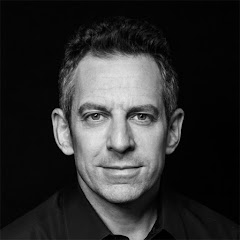 Sam Harris
Key Moments
Sam Harris discusses Biden cover-up vs. Trump's authoritarianism, questioning democracy's corruption.
Key Insights
The Biden administration's handling of Joe Biden's cognitive decline was a 'cover-up,' a misjudgment rooted in delusion and hubris.
While Trump's actions threaten democracy, the Democrats' decisions and media complicity in downplaying Biden's issues also represent a corruption of democratic processes.
The 'cover-up' surrounding Biden's fitness for office was a failure of coordination and incentives within the Democratic party, not necessarily a calculated deception.
Many within the Democratic party and media are criticized for enabling Biden's candidacy, with Harris suggesting those involved should not work in politics again.
Trump's authoritarian tendencies and alleged corruption, such as using the government to enrich himself and weaponizing institutions like the FBI, are seen as fundamentally damaging.
Despite the severity of Biden's perceived 'cover-up,' some argue that Trump's actions, driven by genuine malice and self-interest, pose a greater threat to democratic norms and institutions.
THE BIDEN 'COVER-UP': DELUSION AND THE CORRUPTION OF DEMOCRACY
Sam Harris initiates a discussion on what he terms the 'Biden cover-up,' characterizing the effort to keep Joe Biden's cognitive decline out of public full view as a massive misjudgment fueled by delusion, hubris, and dishonesty. He cites Jake's book, highlighting the troubling depth to which this project went and the unrepentant attitudes of those involved. Harris suggests that this situation, along with the perceived sidelining of Bernie Sanders in 2016, represents a significant corruption of democratic principles, questioning whether these instances were moments where democracy was truly absent.
CHALLENGING DEMOCRATIC IDEALS: COMPARING BIDEN'S VIABILITY AND TRUMP'S THREAT
The conversation delves into the complex choice presented to voters, framing it as a selection between a candidate perceived as 'genuinely evil' by a significant portion of society and another whose fitness for office was increasingly questioned. Harris acknowledges the perception of Trump as outside the bounds of acceptable political behavior, likening his perceived evil to 'banality.' He argues that the choice between a 'nearly comatose' president and Trump highlights the deep-seated fear of Trump, even as he points out that Trump's supporters often hold equally 'delusional' beliefs, such as those within the QAnon movement.
MEDIA'S ROLE AND THE EFFECTIVENESS OF THE BIDEN COVER-UP
Harris criticizes the mainstream media for not paying more attention to Biden's declining performance during his term and campaign. He emphasizes that the revelation about Biden's condition was not entirely new to everyone, but rather that the debate stage marked a point where it became undeniably impossible to hide. He asserts that the real scandal lies in the people close to Biden who observed this decline repeatedly over years, yet actively concealed it to protect him from public scrutiny, calling this a genuine cover-up involving lies and protection from exposure.
COORDINATION PROBLEMS AND THE FAILURE OF THE DEMOCRATIC APPARATSCHIK
The discussion shifts to the internal dynamics within the Democratic party, which Harris characterizes as a 'coordination problem' rather than a calculated deception. He describes an incentive structure where expressing doubt about Biden's viability was seen as disloyalty, likely compromising career prospects. This created a 'hall of mirrors' effect, making it difficult for individuals to voice concerns or take action. Harris suggests this pathological process, while disastrous for the Democrats, was not an effective strategy but rather a self-inflicted wound.
ACCOUNTABILITY FOR ENABLERS AND THE BETRAYAL OF PUBLIC TRUST
Harris expresses strong views on accountability for those who enabled Biden's candidacy, stating that individuals who covered for him or supported his run post-debate should never work in politics again. He finds the level of self-deception detailed in Jake's book 'mind-boggling' and feels personally 'betrayed' by media sources he relied upon. He questions why more intrepid journalistic questions weren't asked, comparing it to how Trump would have been relentlessly scrutinized under similar circumstances, especially regarding his cognitive abilities.
DIMINISHED CAPACITY VS. MALICE: THE GREATER THREAT
While acknowledging Biden's communication deficits and age, Harris posits that the crucial distinction lies between a president with diminished capacity and one perceived as 'genuinely evil' and self-serving. He admits a preference for a president in a coma whose duties are managed by a committee over someone he views as malicious. Despite the 'betrayal' felt due to the Biden cover-up, he maintains that Trump's potential presidency, with his alleged corruption, authoritarian tendencies, and utilization of institutions like the FBI against citizens, represents a greater threat, pushing the nation towards fascism.
TRUMP'S AUTHORITARIAN ROAD AND THE CORRUPTION OF INSTITUTIONS
The conversation details the perceived deeper liabilities of a Trump presidency, extending beyond his business dealings and potential self-enrichment. Harris points to the weaponization of the FBI under figures like Cash Patel, where individuals are allegedly investigated and bankrupted for opposing Trump. This, he argues, is a direct path to fascism, far worse than a government run by 'normal people' who might be motivated by career advancement or the 'swamp' of traditional politics. He contrasts this with the system before, even acknowledging issues with figures like Hillary Clinton and Kamala Harris.
THE NATURE OF LIES: TRANSPARENCY VS. DECEPTION
Harris elaborates on his discomfort with outright lying and secrecy, finding it more offensive than perceived corruption that is out in the open. However, he cautions against giving Trump a 'pass' based on the visibility of his alleged sins, arguing that the full extent of his activities remains unknown. He discusses Trump's tendency to lie, even about trivial matters, and suggests a sociopathic detachment from the harm caused, citing the example of a torturer in El Salvador. This behavior, coupled with the disregard for due process, is seen as damaging to society and the system.
THE 'BIG LIE' VS. THE 'BIDEN LIE': DISTINCT FORMS OF DECEIT
The distinction is drawn between Trump's 'Big Lie' about election results and the 'Biden lie,' which Harris frames as a lie about being president. He acknowledges the clarity and malice of Trump's initial lie while characterizing Biden's situation as more ambiguous and slow-rolling. Harris uses the analogy of an elderly parent's refusal to give up driving to explain the understandable self-serving bias and delusion involved when someone with deficits cannot admit their limitations, suggesting this is a difficult negotiation for those around them.
THE UNACKNOWLEDGED HARM AND THE IMPERATIVE FOR AUTONOMY
The profound damage to societal systems and the edging towards fascism due to the disregard for due process are highlighted as unacknowledged harms. While acknowledging the widespread visibility of Trump's actions, Harris stresses the potential for unknown corruptions. He reiterates that the idea of Trump 'not covering anything up' is a misunderstanding, given his prolific lying. The core argument is that even with the acknowledged problems of the past political landscape, the current situation, marked by alleged deliberate deception and authoritarian creep, is a grave concern that necessitates a return to more transparent and accountable governance, even if it means entrusting duties to a committee.
Mentioned in This Episode
●Companies
●Organizations
●Books
●Concepts
●People Referenced
Common Questions
The 'Biden cover-up' refers to the alleged extensive efforts to hide President Biden's cognitive decline and unsuitability for the presidency, particularly during the election campaign and his term.
Topics
Mentioned in this video
More from Sam Harris
View all 292 summaries 34 min
Is Effective Altruism Blind to the Biggest Problems? – Sam Harris & Will MacAskill
 21 min
What Is Technology Doing to Us?
 42 min
Is the Iran War Already Failing?
 90 min
FULL EPISODE: The Politics of Pragmatism and the Future of California (Ep. 464)
Found this useful? Build your knowledge library
Get AI-powered summaries of any YouTube video, podcast, or article in seconds. Save them to your personal pods and access them anytime.
Get Started Free