Key Moments
Sam Harris on How Populism and Inequality Threaten Open Societies (Making Sense #423)
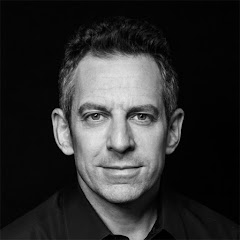 Sam Harris
Key Moments
Populism and inequality challenge open societies; media landscape shifts to influencers; capitalism needs reform, not rejection.
Key Insights
Open societies are vulnerable to those who exploit tolerance to undermine it, exemplified by Islamist movements and certain right-wing factions.
The rise of independent media and influencers signifies a decline of traditional gatekeepers, often favoring populism's rejection of elites.
Populism thrives on resentment and a rejection of elite institutions, leading to a disregard for professional standards and integrity in media and politics.
Economic inequality and perceived failures of capitalism fuel populist movements, leading to radical proposals that may worsen existing problems.
While capitalism is seen as the best available system, its current iteration is damaged by corruption, cronyism, and a lack of focus on the common good.
Defending open societies requires balancing the protection of liberal principles with the necessity of safeguarding against internal threats without authoritarian overreach.
THE CHALLENGE TO OPEN SOCIETIES
The discussion begins by acknowledging the paradoxical nature of democracies and open societies, which extend protections even to those who seek to dismantle them. This includes groups like Islamists using free speech to advance illiberal aims and right-wing elements exploiting loopholes for power. The core dilemma is how to defend democratic principles against internal threats without compromising the very values that define these societies. Karl Popper's notion of an open society, characterized by mechanisms for error correction through free speech and pluralism, is presented as the ideal to protect.
INTERNAL THREATS AND ILLIBERAL AIMS
A significant threat to open societies comes from individuals and groups who leverage tolerance to undermine it. The transcript highlights the 'stealth and none too stealthy Islamist campaigning' aimed at smuggling theocracy into Western communities. Furthermore, it notes how some segments of the left have aligned with Islamists, a trend exacerbated by the conflict in Gaza and persistent anti-semitism within certain communities. The challenge lies in addressing these dangerous ideas without resorting to xenophobia or bigotry.
THE RISE OF POPULISM AND MEDIA DISRUPTION
Populism is characterized as a rejection of elites and their institutions, fueled by resentment. This sentiment has disrupted the traditional media landscape, with 'gatekeepers' disappearing and being replaced by influencers and independent personalities. Figures like Tucker Carlson are cited as examples of individuals who operate with impunity, prioritizing entertainment and appeal over professional integrity or factual accuracy. This shift allows for the spread of misinformation and conspiracy theories without accountability.
INEQUALITY AS A DRIVER OF DISCONTENT
Deepening wealth inequality is identified as a major catalyst for political discontent and the rise of figures like Juan Makani. The perception that capitalism is not working for ordinary people, particularly in concentrated locations like New York City, breeds frustration. While acknowledging the failures of socialism, the transcript argues that capitalism's current form, marred by corruption, cronyism, and a regressive tax code, is alienating citizens and making them receptive to radical alternatives.
REFORMING CAPITALISM AND REBUILDING TRUST
The conversation advocates for reforming, rather than abandoning, capitalism. The ideal is a version of capitalism that incorporates compassion and a commitment to the common good, free from corruption and preferential treatment. The current 'kleptocracy' dynamic, where individuals 'ransack the place,' is damaging capitalism's reputation. Rebuilding trust in institutions, including media and government, is crucial, despite their current reputational damage from scandals and the proliferation of misinformation.
SECURING DEMOCRACY AGAINST INTERNAL FOES
The difficulty of defending democracy without compromising its principles is a recurring theme. On immigration, the challenge is to vet individuals for potentially dangerous ideologies like Islamism or jihadism without engaging in broad xenophobia. The transcript suggests that countries should not be eager to import individuals who would undermine their societies, drawing a parallel to not importing Nazis. This includes addressing homegrown threats and ensuring that actions, not just words, like physical obstruction and harassment, lead to consequences.
Mentioned in This Episode
●Organizations
●Concepts
●People Referenced
Common Questions
Open societies are perpetually under threat from those who use the principles of tolerance to undermine tolerance itself. This includes groups seeking to smuggle theocracy into Western communities and those who disregard factual standards for personal gain.
Topics
Mentioned in this video
More from Sam Harris
View all 292 summaries 34 min
Is Effective Altruism Blind to the Biggest Problems? – Sam Harris & Will MacAskill
 21 min
What Is Technology Doing to Us?
 42 min
Is the Iran War Already Failing?
 90 min
FULL EPISODE: The Politics of Pragmatism and the Future of California (Ep. 464)
Found this useful? Build your knowledge library
Get AI-powered summaries of any YouTube video, podcast, or article in seconds. Save them to your personal pods and access them anytime.
Get Started Free