Key Moments
Sam Harris on Christian Nationalism and the New Right with Katherine Stewart
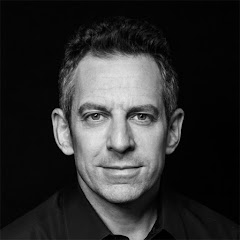 Sam Harris
Key Moments
Katherine Stewart discusses Christian Nationalism, the New Right, and their threat to democracy.
Key Insights
Christian nationalism is an ideology and political movement, distinct from Christianity itself, aiming to establish America as a Christian nation with laws based on a reactionary interpretation of the Bible.
The 'New Right' movement, influenced by thinkers like Carl Schmitt, is characterized by a hostility towards democracy and its institutions, seeking to dismantle them.
Vast concentrations of wealth (funders) are fueling anti-democratic projects, while intellectuals (thinkers) provide ideological frameworks, and political activists (sergeants) mobilize the rank and file.
Project 2025, a comprehensive plan for governance, represents a merger of the New Right and Christian nationalist movements, with many of its authors now in key government positions.
The 'woke' issue is cynically used by the right as a distraction from bread-and-butter issues and as a political vulnerability, while mainstream institutions struggle to maintain standards in an asymmetric media landscape.
There's a dangerous asymmetry in how errors are treated: mistakes by left-leaning institutions erode their reputation, while right-wing media faces fewer consequences, enabling misinformation.
THE CONFLUENCE OF REACTIONARY FORCES
Katherine Stewart, an investigative journalist, whose work focuses on the anti-democratic movement, discusses the complex intersection of various reactionary forces in American politics. She highlights the presence of "allies of convenience" who, despite not being ideologically unified, collectively work towards similar anti-democratic aims. This includes Christian nationalists, oligarchs with diverse religious (or non-religious) backgrounds, and reactionary Catholics, all of whom seem to find common ground in opposing liberalism and investing in projects that undermine democratic norms. The current political landscape, characterized by these disparate groups coalescing, presents a confusing but critical challenge to understanding the state of American democracy.
MONEY, LIES, AND GOD: THE MOVEMENT'S FOUNDATION
Stewart unpacks the title of her book, 'Money, Lies, and God,' to explain the core components of the movement she studies. 'Money' refers to the vast concentrations of wealth that have destabilized the political system, creating resentments and empowering a select few to influence politics. 'Lies' points to the pervasive use of disinformation and conspiracism, which separates the rank-and-file from facts and misdirects their anger. 'God' signifies the crucial role of religious nationalism as the primary ideological framework for a significant portion of the movement, providing a moral and cultural justification for their anti-democratic agenda.
THE ARCHITECTS OF ANTI-DEMOCRACY: FUNDERS AND THINKERS
The movement comprises distinct groups: wealthy 'funders' like the DeVos and Prince families, who, despite varied religious beliefs (or lack thereof), agree on crushing liberalism and invest heavily in anti-democratic projects. Simultaneously, 'thinkers,' often associated with the 'New Right,' provide the ideological underpinnings. Some of these thinkers, such as Russell Vought and Michael Anton, have held or been nominated for positions within the Trump administration. Notably, some are influenced by political theorists like Carl Schmitt, a Nazi-era theorist, demonstrating a deep-seated hostility to democratic principles even while professing reverence for the founders.
PROJECT 2025 AND THE IMPLEMENTATION OF AN AGENDA
Project 2025, a massive policy document from the Heritage Foundation, is presented as a concrete plan for transforming governance, representing a 'marriage' of the New Right and Christian nationalist movements. Despite claims from Donald Trump and his supporters that they were unaware of or distanced from the project, many of its key architects and contributors, including Russell Vought, now hold significant positions in the administration. This indicates a coordinated effort to implement a deeply reactionary agenda that fundamentally challenges democratic structures and norms, moving beyond mere rhetoric to tangible governmental change.
DECONSTRUCTING CHRISTIAN NATIONALISM
Stewart clarifies that Christian nationalism is distinct from Christianity itself; it's an ideology and political movement asserting that America was founded as a Christian nation and that its laws should reflect a specific, reactionary interpretation of the Bible. This mindset is leveraged for political power through a sophisticated organizational machine encompassing policy groups, advocacy organizations, and sophisticated communication networks. These efforts, often leadership-driven, aim to mobilize pastors and congregations to support hard-right candidates, even though many American Christians and various religious organizations explicitly reject Christian nationalist tenets.
THE COMPLEX RELATIONSHIP BETWEEN CHRISTIAN NATIONALISM AND WHITE SUPREMACY
While Christian nationalism and white supremacy are not synonymous, Stewart acknowledges a significant overlap. Some groups, like the Proud Boys, have increasingly adopted religious identities as the Christian nationalist movement has gained power. The pathway into this movement is diverse, attracting individuals motivated by racism and anti-immigration sentiments who then find religious justification for their politics. This intersects with those concerned about issues like border security, and even intellectuals who may consciously disavow racism but are influenced by anti-democratic thinkers like Carl Schmitt, illustrating the complex and often uncomfortable Venn diagram of these ideologies.
OLIGARCHS, IDEOLOGY, AND THE FEAR OF POPULAR BACKLASH
Stewart discusses the role of oligarchs who, while not all religious or adhering to traditional Christian beliefs, are influenced by iconoclastic thinkers and advocate for forms of rule beyond traditional democracy, often citing an impending 'apocalypse' due to 'woke' culture. Many of these wealthy individuals operate in insulated environments, seeking deregulatory policies beneficial to their businesses and protected contracts. However, they are also keenly aware of growing public resentment over wealth inequality and their impact on working and middle classes. This awareness can foster a sense of defensiveness and fear of public backlash, contributing to their support for movements that promise to maintain their advantageous status quo.
THE 'WOKE' DISTRACTION AND ASYMMETRIC WARFARE
The discourse around 'woke' ideology is presented as a deliberate and effective distraction employed by the right. Stewart argues that while the far-left does amplify divisive ideas that benefit the right, the constant focus on these issues by right-wing figures like Christopher Rufo and Elon Musk diverts attention from critical 'bread-and-butter' issues such as poverty and gun violence. She contends that the mainstream media, universities, and Hollywood have been captured by these issues to a degree that creates genuine political vulnerabilities. Sam Harris points out that while the right is adept at setting these 'traps,' figures on the left have walked into them, such as NPR's controversial editorial on looting, highlighting an asymmetry in how errors are perceived and exploited.
THE ASYMMETRY OF REPUTATIONAL DAMAGE AND MEDIA ACCOUNTABILITY
A significant consequence of this dynamic is the profound asymmetry in how media and institutions are held accountable. Errors made by left-leaning or mainstream institutions, like the New York Times, can be devastating to their reputation and are amplified relentlessly by the right to claim all institutions are untrustworthy. Conversely, right-wing media outlets, often operating as misinformation factories, face fewer consequences for inaccuracies. This creates a difficult rhetorical landscape where admitting mistakes, like the de-platforming of the New York Post or the former intelligence chiefs' statement on the Hunter Biden laptop, is exploited without acknowledgment of the broader context or the standards left-leaning institutions strive for.
Mentioned in This Episode
●Products
●Companies
●Organizations
●Books
●Concepts
●People Referenced
Common Questions
Katherine Stewart's book, 'Money, Lies, and God: Inside the Movement to Destroy American Democracy,' explores the anti-democratic movement in the U.S., focusing on how wealth, disinformation, and religious nationalism intersect to destabilize democracy.
Topics
More from Sam Harris
View all 292 summaries 34 min
Is Effective Altruism Blind to the Biggest Problems? – Sam Harris & Will MacAskill
 21 min
What Is Technology Doing to Us?
 42 min
Is the Iran War Already Failing?
 90 min
FULL EPISODE: The Politics of Pragmatism and the Future of California (Ep. 464)
Found this useful? Build your knowledge library
Get AI-powered summaries of any YouTube video, podcast, or article in seconds. Save them to your personal pods and access them anytime.
Get Started Free