Key Moments

Key Moments
9/11 was weaponized to expand the American empire, beyond counterterrorism.
Key Insights
Immediately after 9/11, officials signaled a willingness to broaden targets beyond al Qaeda, hinting at an imperial expansion rather than a narrowly tailored self-defense response.
The open endorsement of regime change in Iraq, and the framing of 9/11 as a catalyst for broader strategy, reflect a Pearl Harbor–style mindset among a segment of U.S. policymakers.
A planned path of ‘war of choice’ emerged, with mentions of attacking multiple countries that had not attacked the U.S., reshaping regional power, especially in the Middle East.
The global footprint of the U.S. military expanded dramatically, with operations spanning dozens of countries and a wider network of bases and access agreements.
Drones and secret operations became central to warfare, enabling remote strikes and raids in many nations under the umbrella of counterterrorism, often without formal authorization or public debate.
INTRODUCTION: THE MOTION AND CONTEXT
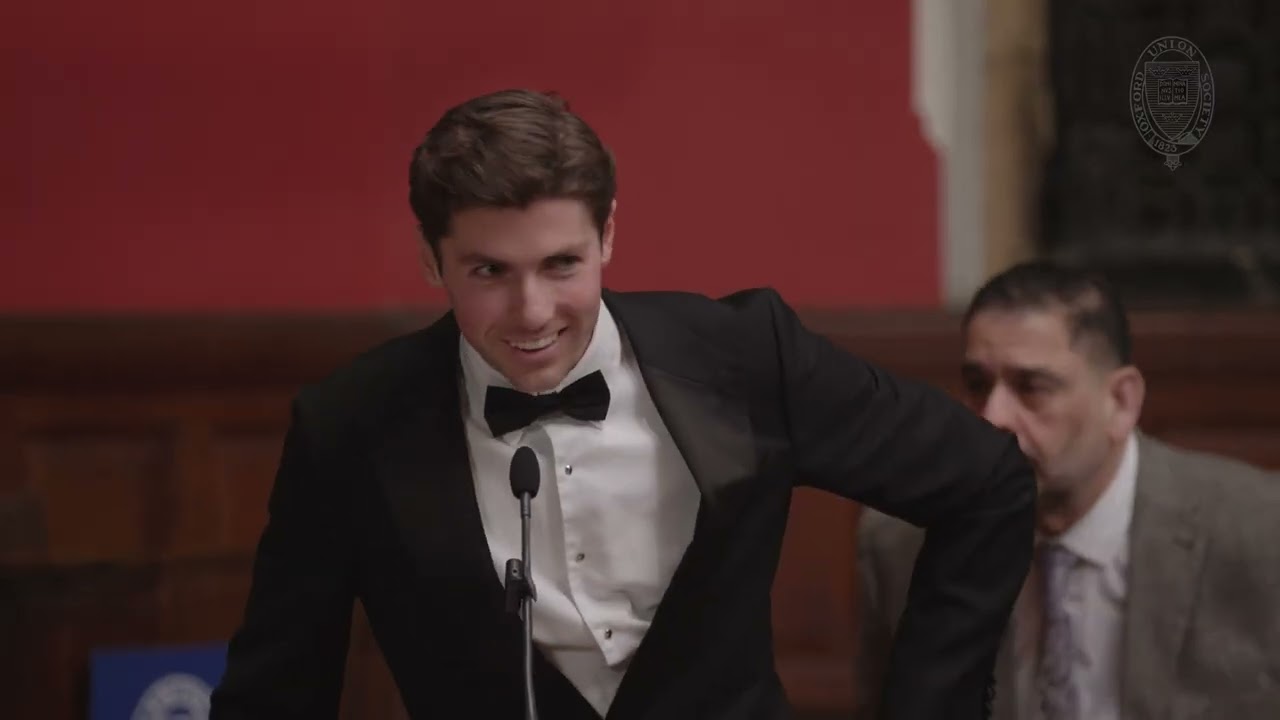
After 9/11, the speaker frames the moment as a test of trust between citizens and leaders, arguing that a just response would have targeted those who planned and abetted the attacks. Instead, he maintains, power seekers within Washington saw an opportunity to redraw the world map. The speech acknowledges the horror of the event but asserts that fear was cynically exploited to justify far-reaching, expansive actions that stretch far beyond genuine self-defense. The speaker positions himself as the final proponent to crystallize the claim that 9/11 became a license to project power globally.
IMMEDIATE TENDENCIES: FROM RESPONSE TO REMAKE
Hours after the planes hit, defense secretary Rumsfeld allegedly sought excuses to strike Iraq, a country not connected to 9/11, according to contemporaneous notes. The speech highlights a disturbing instinct to widen the conflict to things related and not related. This reveals a mindset that treated 9/11 less as a singular tragedy to avenge and more as a catalyst to reshape the global order. The claim is that this framing demonstrates an opportunistic imperial expansion rather than a narrowly focused counterterrorism effort.
THE OPEN DOOR: PNAC AND THE PEARL HARBOR MINDSET
A year before the attacks, the Project for a New American Century urged unchallenged US military dominance and even called for regime change in Iraq regardless of direct linkage to 9/11. The speaker cites an early open letter dated nine days after 9/11 urging action against Saddam Hussein with or without solid evidence. Taken together, these elements are presented as evidence that policymakers sought an imperial blueprint rather than a restrained crisis response.
WARS OF CHOICE: SEVEN COUNTRIES IN FIVE YEARS
Retired NATO commander Wesley Clark recalls briefings about plans to attack seven countries in five years, beginning with Iraq and followed by Syria, Lebanon, Libya, Somalia, Sudan, and Iran. None of these nations attacked the United States, yet they entered the crosshairs of a strategy justified by fighting terror. The speaker argues that this sequence reflects a predetermined ambition to reshape the Middle East and reassert American dominance rather than to respond to an immediate threat.
AFGHANISTAN AND THE CONTINUUM OF OCCUPATION
Afghanistan in 2001 showed the initial response to remove al Qaeda, but the mission quickly evolved into a lengthy occupation and permanent basing. The United States established enduring footholds and bases in the region, projecting power beyond eliminating terrorists. The paragraph describes how the venture outlived its original mandate, creating strategic leverage in Central Asia and laying the groundwork for a sustained military presence at the doorstep of a shifting geopolitical landscape.
IRAQ 2003: A WAR OF CHOICE IN THE OIL RICH HEART
Iraq is presented as the archetype of a war of choice framed as a response to terrorism but built on contested claims of weapons of mass destruction. The invasion placed US forces at the heart of the Gulf and enabled deep political involvement, including the construction of the largest embassy on Earth in Baghdad. The narrative emphasizes that this intervention had little direct link to 9/11 yet served as a strategic prize for a broader imperial project.
GLOBAL FOOTPRINT: A BORDERLESS OPERATION
Under the banner of a borderless war on terror, the United States expanded its reach across the globe. New bases and access agreements emerged from West Africa to Southeast Asia, with troop deployments, training missions, and advisory roles. Critics counted operations in as many as 78 countries, illustrating an empire in all but name, with a security blanket cast over vast swaths of the world and a justification anchored in counterterrorism rhetoric.
DRONES AND SHADOW OPS: A NEW AGE OF WARFARE
Drones became a salient feature of post–9/11 warfare, enabling strikes far beyond declared battlefields. The US conducted operations in Pakistan, Yemen, Somalia, Libya, Syria, and the Philippines, often without public acknowledgment of war authorities. At the same time, special forces conducted raids in dozens of countries, creating a hidden layer of conflict. The speech frames this as a normalization of extra-legal action under counterterrorism, expanding the scope of what counts as national security.
ECONOMICS AND INTERESTS: PROFITS AND POWER
Defense budgets surged by more than 20 percent in a short span as the war on terror progressed. The talk notes the windfall for defense contractors and private security firms, who profited from the sprawling network of overseas operations. It argues that economic incentives aligned with empire-building, complicating distinctions between security imperatives and corporate or geopolitical interests. This section links fiscal growth and policy choices to a broader trajectory of imperial expansion.
HUMAN COSTS AND REGIONAL CHAOS
Trillions of dollars were spent and hundreds of thousands of lives were lost, alongside massive regional upheaval. The speaker stresses that the courage and resilience of victims should not be exploited to justify overreach. This section highlights unintended consequences of interventionist policy, including political instability and humanitarian costs that reshape the region. Accountability emerges as a central demand in response to these costs.
CLAIM, EVIDENCE, AND ACCOUNTABILITY: KNOWLEDGE AS A CHECK
The address emphasizes the need to confront how fear was leveraged to justify expansive actions. It contends that acknowledging misuses is essential to prevent repeats and safeguard democratic values and international law. The speaker reframes patriotism as responsible governance rather than uncritical support for aggressive policies. He invites audiences to scrutinize evidence, challenge official narratives, and demand checks to limit future misuses of tragedy.
CONCLUSION: NEVER AGAIN AND A PATH FORWARD
The final note restates the motion and urges a commitment to prevent the abuse of collective suffering. It asserts that the 9/11 tragedy should not become a perpetual license for empire-building, and calls for accountability, transparency, and prudence in national security policy. The speech closes with a plea to respect global norms, safeguard human security, and ensure that future responses to terrorism are principled, lawful, and measured.
Mentioned in This Episode
●Studies Cited
●People Referenced
Global footprint metrics
Data extracted from this episode
| Metric | Value | Notes |
|---|---|---|
| Countries involved in post-9/11 operations | 78 | Spanned air strikes, deployments, or training missions across the globe |
| Defense budget growth during early war on terror | over 20% | Budget expansion in the early years of the war on terror |
Common Questions
Yes. The speaker argues that the response after 9/11 extended well beyond pursuing those who planned the attacks, leading to wars in Afghanistan and Iraq and a broader global footprint. The talk frames this as an opportunistic expansion rather than purely defensive action.
Topics
Mentioned in this video
More from OxfordUnion
View all 17 summaries 49 min
German author and novelist Norman Ohler Address at the Oxford Union
 81 min
THB that Modern Philanthropy is a Tool for Reputation Laundering Full Debate
 52 min
Economist and former Prime Minister of Palestine Mohammed Shtayyeh Interview at the Oxford Union
 71 min
This House Would Keep Politics Out of Sport Full Debate
Found this useful? Build your knowledge library
Get AI-powered summaries of any YouTube video, podcast, or article in seconds. Save them to your personal pods and access them anytime.
Get Started Free