Key Moments
Rock and Roll Hall of Famer Stewart Copeland — Fear{less} with Tim Ferriss
 Tim Ferriss
Key Moments
Stewart Copeland discusses his diverse musical journey, from The Police to film scoring, emphasizing creativity, embracing discomfort, and finding happiness.
Key Insights
Music's fundamental purpose may be social cohesion and mate selection.
Embracing discomfort and "throwing yourself off the cliff" is key to creative growth.
Early childhood influences, including a CIA father and a nomadic upbringing, shaped his perspective.
The Police's creative differences stemmed from individual visions and a struggle for artistic control.
Success is ultimately defined by happiness and meaningful relationships, not external validation.
Saying 'yes' to new opportunities, even unexpected ones, can lead to profound discoveries and experiences.
THE ESSENCE AND PURPOSE OF MUSIC
Stewart Copeland views music as a fundamental human pursuit with deep evolutionary purposes, primarily social cohesion and mate selection, especially for younger demographics. He emphasizes that music's power lies in its ability to connect people and facilitate expression. Copeland advocates for an approach to music that involves embracing imperfection and experimentation, likening it to 'throwing yourself off a cliff' in a creative context where mistakes don't cause harm but can lead to breakthroughs.
AN UNCONVENTIONAL UPBRINGING
Copeland's childhood was marked by his father's unusual dual career as a jazz musician and a CIA operative, leading to a nomadic existence in regions like Egypt and Lebanon. This upbringing fostered a strong sense of American identity amidst diverse cultures. The family's proximity to espionage secrets, including a friend who was a double agent, provided a unique, albeit concerning, backdrop to his formative years.
THE BIRTH OF THE POLICE
Sting's raw talent on bass and vocals, combined with Andy Summers' sophisticated guitar skills, formed the core of The Police. Copeland, already having the band's name and concept, actively recruited Sting after seeing him perform. The early sound was heavily influenced by punk's strictures, but as Sting developed as a songwriter and Summers brought his musicality, the band evolved into a more complex and successful entity, breaking through initial punk skepticism.
CREATIVE CONFLICT AND EVOLUTION
The intense creative drive within The Police, while initially productive, eventually led to significant friction. Each member developed strong, often divergent, visions for the band's music, leading to struggles over artistic direction and song development. This period, though musically fruitful, was fraught with internal conflict, highlighting the challenges of balancing individual creative ambition with collective artistic output.
TRANSITION TO FILM SCORING
Copeland's foray into film scoring, particularly with Francis Ford Coppola, was an unexpected but highly rewarding path. He found that scoring films allowed him to serve another's artistic vision while retaining significant creative freedom in the studio. This transition offered a different kind of creative challenge, requiring adaptability and a willingness to continuously generate new ideas, a skill he honed through extensive television work.
REDIFINING SUCCESS AND FOSTERING CREATIVITY
Copeland defines success not by accolades like Grammys, but by personal happiness derived from family and relationships. He advises aspiring musicians to cultivate a unique sound, drawing inspiration from diverse sources. His approach to overcoming creative blocks or bad days involves embracing challenges and saying 'yes' to unexpected opportunities, viewing setbacks as potential catalysts for innovation and growth.
THE POWER OF 'YES' AND DAYDREAMING
Copeland champions the power of embracing opportunities by simply saying 'yes,' even when the outcome is uncertain. He believes that unexpected experiences, like accepting an invitation to perform in Norway, can lead to profound discoveries and enriching life chapters. Furthermore, he advocates for detailed daydreaming as a practical tool for formulating concrete game plans, encouraging individuals to visualize their desires intensely before taking decisive action.
NAVIGATING THE MODERN MUSIC INDUSTRY
For aspiring musicians today, Copeland notes that while the barrier to music production is lower, the barrier to gaining attention is significantly higher due to increased competition. He draws parallels to the startup world, suggesting that musicians consider their band as a startup, focusing on creating a distinct category and unique identity. This approach, combined with finding one's own sound, is crucial for standing out in a saturated market.
Mentioned in This Episode
●Software & Apps
●Organizations
●Books
●Concepts
●People Referenced
Common Questions
Stewart Copeland performed one of his two career drum solos for David Letterman and another in the wilds of Africa, playing drums with lions nearby in a chicken-wire cage, which he described as the 'badassest drum solo' he ever did.
Topics
Mentioned in this video
A film scored by Stewart Copeland shortly after the turbulent end of The Police.
A British punk rock band whose unsuccessful tour in America is mentioned as a reason for punk's initial lack of resonance there.
A punk rock band whose reggae-influenced music is mentioned in relation to Copeland's early musical environment.
A pioneer of rock and roll music, whose foundational guitar, bass, and drums combination is contrasted with modern musical approaches.
A rock and roll pioneer whose work, along with Chuck Berry's, established the standard rock band instrumentation.
A contemporary artist whose music has surprised Copeland and expanded his musical horizons through exposure via his 16-year-old daughter.
Acclaimed film director who gave Stewart Copeland his first major film scoring opportunity with 'Rumble Fish'.
Host of the show, author, entrepreneur, and angel investor, known for deconstructing world-class performers.
Host of the late-night show where Stewart Copeland performed one of his two drum solos.
A British intelligence officer and Soviet double agent, who was a friend of Copeland's father.
Founding member of The Police, Rock and Roll Hall of Famer, and acclaimed drummer and composer.
An influential musician whose music Copeland played in his first gig.
A modern artist whose music Copeland listens to, noting its departure from traditional musical structures.
The guitarist of The Police, who joined the band after Stewart Copeland and Sting recognized his talent.
Film director, mentioned as someone Copeland has composed for.
A magazine that has consistently recognized Stewart Copeland as a top drummer.
A progressive rock band for which Stewart Copeland worked as a tour manager and later joined as a drummer.
A British beat group whose song 'House of the Rising Sun' Copeland played in his first gig.
A British rock band whose music Copeland played in his first gig.
A highly successful rock band co-founded by Stewart Copeland, known for hits like 'Roxanne' and 'Every Breath You Take'.
A legendary London music venue where The Police played a Thursday headline gig, signifying a major milestone.
A mountain in Kenya where Copeland had a unique drumming experience with lions on a ranch nearby.
Iconic New York venue where The Police performed, marking a significant achievement akin to The Beatles' success in America.
More from Tim Ferriss
View all 689 summaries 81 min
Q&A with Tim — The Upcoming AI Tsunami and Building Offline Advantage
 91 min
The Random Show, Couch Edition! — Supplements, Breathing and Balance Training, and Much More!
 76 min
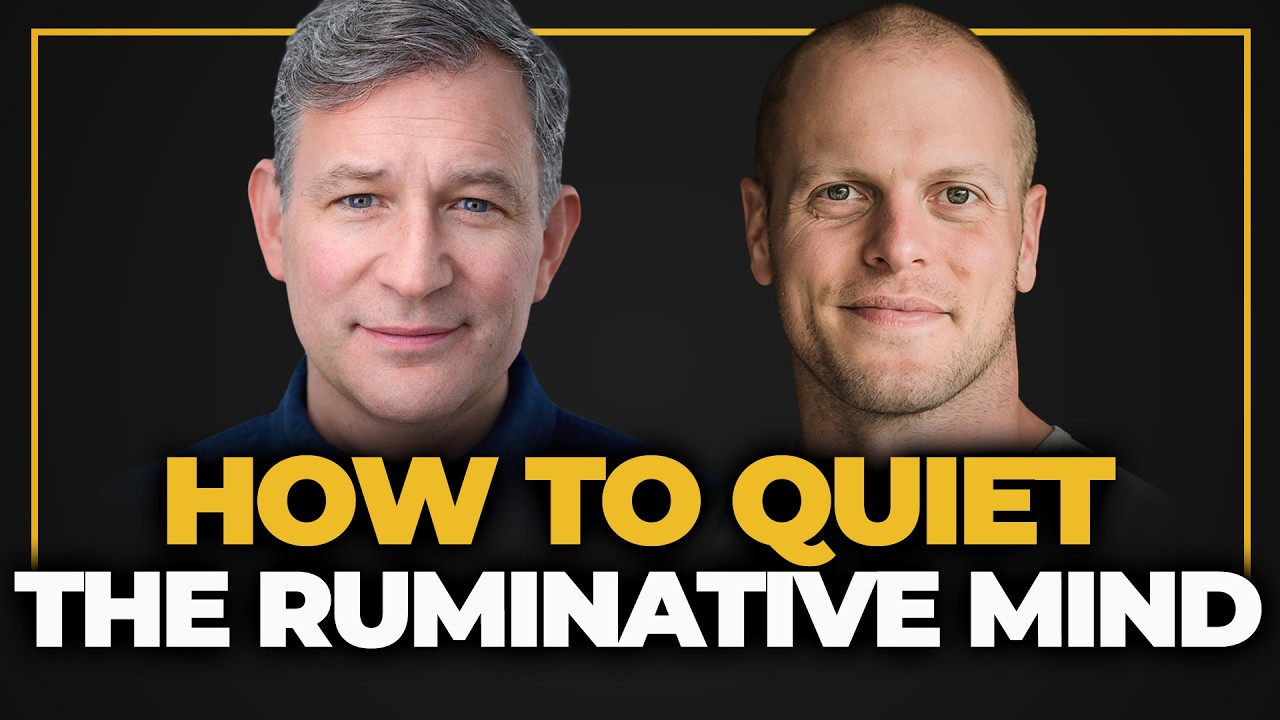
How to Quiet the Ruminative Mind and Avoid The Traps of Self-Help — Tim Ferriss
 86 min
NYT Bestselling Author on Writing 200+ Children's Books — Tish Rabe
Found this useful? Build your knowledge library
Get AI-powered summaries of any YouTube video, podcast, or article in seconds. Save them to your personal pods and access them anytime.
Get Started Free