Key Moments
Robert Breedlove: Philosophy of Bitcoin from First Principles | Lex Fridman Podcast #176
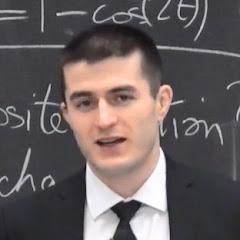 Lex Fridman
Key Moments
Robert Breedlove explores Bitcoin's philosophy, linking it to sovereignty, evolution, and a superior form of money.
Key Insights
Sovereignty is the authority to act as one sees fit, historically decentralizing and deeply rooted in a society's money.
Money is viewed as an extension of the mind, a tool for data compression that critically influences human thought and societal organization.
Property is defined as the socially acknowledged relationship between humans and assets, serving as a manifestation of the territorial imperative in human evolution.
Inflation is described as a legalized form of counterfeiting that distorts price signals, artificially increases perceived scarcity, and corrodes social morality.
Bitcoin is presented as the culmination of monetary technology, perfecting properties like scarcity, divisibility, durability, portability, and recognizability, serving as an antidote to inflationary corrosion.
The 'toxicity' in the Bitcoin community is framed as an immune response to widespread scams and bad ideas, albeit one that needs to be balanced with constructive dialogue.
THE ESSENCE OF SOVEREIGNTY AND ITS EVOLUTION
Sovereignty is defined as the authority to act as one sees fit, a concept intrinsically linked to power and freedom. Historically, sovereignty has gradually decentralized, moving from absolute monarchies to modern democracies. Breedlove argues that control over money fundamentally underpins sovereignty, as economic power allows individuals and entities to shape societal rules. This intrinsic link makes money an extension of the mind, deeply integrated into our thought processes and decision-making frameworks. From an evolutionary perspective, human dexterity and speech co-evolved, leading to tool-making, with money being the most tradable tool.
PROPERTY RIGHTS AS TERRITORIAL IMPERATIVE
Life's deepest impulse is the territorial imperative—the drive to expand dominion over space and time. For humans, this manifests as property rights, which are not the assets themselves but the socially acknowledged relationships granting exclusive rights and responsibilities. The transition from hunter-gatherer to agricultural societies created economic surpluses, giving rise to government as a protection-producing enterprise for this surplus. This protection, however, often led to monopolies, particularly over money, as controlling the monetary system grants the ability to obtain something for nothing, typically through inflation.
INFLATION: THEFT AND SOCIAL CORROSION
Inflation, often misunderstood as a sign of a healthy economy, is fundamentally presented as a form of theft—a technological backdoor that siphons value from the many to the few. While it offers immediate economic stimulation, it destroys feedback loops, dampens disincentives, and delays necessary market corrections, ultimately exacerbating long-term volatility. By artificially increasing prices, inflation creates perceived scarcity, which can amplify divisiveness in society and erode social cohesion. This continuous devaluation of money incentivizes short-term thinking and can corrupt producers into compromising their integrity by offering inferior goods.
VOLATILITY AS TRUTH AND THE ROLE OF ENTREPRENEURSHIP
Volatility, often feared as chaos, is reframed as a truth-telling mechanism that helps match ideas to reality. The universe's tendency towards entropy means life, especially through entrepreneurship, constantly converts chaos into order. Entrepreneurs confront uncertainty, risking their capital and energy to discover new ways of satisfying wants. Their failures, as much as their successes, contribute valuable information to society, guiding future endeavors. Suppressing volatility, as central banks attempt through inflation, only amplifies it in the long run, hindering the natural clearing of malinvestment and the discovery process of the free market.
CAPITALISM, COMMUNISM, AND THE LIMITATIONS OF GOVERNMENT
Capitalism, in its pure form, grants individuals exclusive rights to the fruits of their labor, fostering a positive-sum game through trade and the division of labor. Communism, by contrast, implies state control over created value. Breedlove argues that a truly free market, where government's role is limited to protecting life, liberty, and property, has never existed due to the historical monopolization of money. The US, despite its capitalist ideals, incorporated an anti-capitalistic institution in the form of the Federal Reserve. The collapse of the Soviet Union is attributed to its centralized planning's inability to generate wealth, contrasting with capitalism's distributed computing model that efficiently disseminates knowledge and fosters innovation.
MONEY AS THE FUNDAMENTAL SUBSTRATE OF REALITY
Money is more than just an economic tool; it's a fundamental aspect of human existence, akin to a meta-property of reality. Defined as a universal medium of exchange, money possesses five key properties: divisibility, durability, recognizability, portability, and scarcity. Historically, gold excelled in these properties, becoming the dominant form of 'hard money' due to its resistance to inflation. The shift to paper currency introduced counterparty risk and enabled centralized control, leading to the current fiat system. Money serves as an insurance policy against uncertainty, and its integrity directly impacts individuals' time preference and, consequently, their moral actions.
BITCOIN: THE APEX OF MONETARY TECHNOLOGY
Bitcoin is described as the most superior monetary technology ever created, perfecting the five properties of money beyond gold. Its divisibility allows for micro-transactions, its distributed information structure ensures infinite durability, and its speed enables near-instant global portability. Full nodes allow anyone to verify its authenticity and total supply with certainty, unlike any previous money. Most crucially, Bitcoin represents the discovery of absolute scarcity; its fixed and diminishing supply is mathematically enforced by the difficulty adjustment, making it immune to political manipulation or inflation, unlike gold. This absolute scarcity promises to usher in an era of perfect competition and unprecedented wealth generation.
BITCOIN'S UNYIELDING NATURE AND THE IMMUNE SYSTEM OF IDEAS
Bitcoin's strength lies not only in its technology but also in its social and political layers. Its network effects and deep liquidity make it a winner-take-all asset, similar to gold in the analog age. Attempts to fork Bitcoin (like Bitcoin Cash) have failed to replicate its success due to the established network effects and the inherent trade-offs in altering its core design for increased transaction throughput. Bitcoin's rigidity, particularly its emphasis on a fixed supply cap, is a feature optimized for survivability, pushing scaling solutions (like the Lightning Network) to higher layers without compromising its foundational store-of-value property. The 'toxicity' of the Bitcoin community is interpreted as an ideological immune system, defending against scams and unsound monetary theories to protect new entrants.
THE LIMITS OF CENTRALIZED POWER AND THE POWER OF IDEAS
Governments, excelling at fighting centralized threats, struggle against Bitcoin because it's an idea—information protected by free speech principles. A government ban akin to the PGP case, where software code was protected as speech, would likely be unenforceable for Bitcoin. Such a ban would only incentivize its adoption elsewhere and drive other nations to embrace it for tax revenue and innovation. Open-source networks, like Bitcoin, tend to outcompete closed-source ones due to lower enforcement and turf protection costs. The historical manipulation of gold by governments, leading to continuous warfare, highlights Bitcoin's potential to restore a free-market governor for governments, dismantling pathological hierarchies and decentralizing power to the individual.
MONEY, MORALITY, AND THE PURSUIT OF VIRTUE
In a truly free market, moral action is inherently free. While tools are often amoral, monopolized money (fiat currency) is inherently immoral, serving only as a tool for wealth reallocation and theft. It acts as an "infectious moral cancer," forcing individuals to weigh financial well-being against moral integrity. Inflation shortens time preferences, encouraging selfish and short-term behavior, which corrodes social morality. Bitcoin, with its zero unexpected inflation and reliance on effort (proof of work) for acquisition, serves as an antidote, incentivizing long-term planning, honest production, and competence rather than coercion, thereby restoring a balance of incentives and disincentives aligned with reality and virtue.
CHALLENGING WORLDVIEWS AND THE IMPERATIVE OF LEARNING
Breedlove challenges prevailing materialist worldviews, suggesting that science, like markets, evolves through the falsification of hypotheses. He champions books like Jordan Peterson's "Maps of Meaning," Mises's "Human Action," and Pirsig's "Lila," which explore the fundamental nature of value and moral action, aiming to diffuse the Newtonian model of reality. He advocates for active learning strategies such as speed reading, annotating, rereading, and synthesizing ideas through writing and discussion. Recognizing the constant battle for attention, he emphasizes the importance of solitude and boredom for deep thought and subconscious processing, countering the distractions of modern digital life.
Mentioned in This Episode
●Products
●Software & Apps
●Companies
●Organizations
●Books
●People Referenced
Common Questions
Sovereignty is defined as the authority to act as one sees fit. Historically, it has gradually decentralized, moving from monarchs to more democratic systems. Breedlove argues that sovereignty is rooted heavily in money, as those with money have the authority to act as they see fit, and even influence rules and laws. (Timestamp: 181)
Topics
Mentioned in this video
Host of the 'What is Money' podcast, known for his rigorous scholarship in decentralized finance and Bitcoin.
Neurologist, psychiatrist, philosopher, and Holocaust survivor, mentioned for his concept of 'the final human freedom.'
Author of 'Zen and the Art of Motorcycle Maintenance' and 'Lila,' who proposed a metaphysics of quality where value is fundamental.
Linguist, philosopher, and political activist, whose ideas on language as core to cognition are referenced.
Author and risk analyst, whose insights on volatility and anti-fragility are cited, also known for his controversial stance on Bitcoin.
An influential Austrian economist, quoted on the necessity of freedom for moral action.
Swiss psychiatrist and psychoanalyst, whose ideas on setting moral aims are mentioned as an alternative to psychoanalysis.
Entrepreneur and investor, mentioned as someone who recommended Readwise.
Russian novelist, historian, and short story writer, referenced for his quote about the battle line between good and evil.
Cognitive scientist, whose book 'The Case Against Reality' argues that space and time are not objective realities.
Historian and author, whose concept of 'imagined orders' is used to explain social cooperation through useful fictions.
Author of 'The Bitcoin Standard,' who had a public disagreement with Nassim Nicholas Taleb.
Marxist economist, mentioned by the host as an eloquent defender of communist ideas.
Austrian economist, whose book 'Honest Money' is cited for its parable of the winemaker illustrating inflation's moral hazards.
Figure in Christianity, seen as symbolic of the highest moral consciousness for meeting vitriol with love and compassion.
Chair of the Federal Reserve, mentioned in the context of central bank operations and the intention versus outcome of policies.
Austrian economist, whose book 'Human Action' is described as the 'Bible of Austrian economics' and essential reading for understanding Bitcoin.
American singer, songwriter, and musician, whose music the host listens to during solitary reflection.
Philosopher and novelist known for her philosophy of objectivism, where she claims direct access to reality is possible.
Philosopher and economist, whose 'Manifesto of the Communist Party' measure on centralized control over cash and credit is cited.
Conspiracy theorist and media personality, mentioned as an example of a controversial guest whose ideas require careful consideration.
Evolutionary biologist and author, whose concept of memetics is linked to universal Darwinism.
Mythologist, writer, and lecturer, quoted on religion using stories to point towards transcendental mystery.
Author, debater, and literary critic, described as an 'intellectual powerhouse who's also a troll' for his harsh but graceful criticism.
Philosopher and cognitive scientist, quoted on the power of universal Darwinism as a 'universal acid.'
Computer scientist and physicist, mentioned for his view of the world as hypergraphs and his creation of Wolfram Alpha.
Swiss philosopher whose book 'The Social Contract' is referenced for its opening statement on human freedom.
Mathematician and podcast host, whose 'portal podcast' hypothesis about institutional rot since the 1970s is discussed in relation to the gold standard.
CEO of Tesla and SpaceX, mentioned for his interest in Mars colonization and Tesla's investment in Bitcoin.
Clinical psychologist and author, influential on Breedlove's thinking, particularly on moral philosophy and the utility of mythology.
Austrian-British economist and philosopher, whose argument about the intoxicating nature of concentrated power is cited.
The pseudonymous creator of Bitcoin, whose disappearance is seen as crucial for Bitcoin's decentralization and integrity.
Co-founder of Microsoft, mentioned in the context of elites believing their knowledge is complete and wanting to 'save the world.'
Ancient Chinese general, strategist, and philosopher, author of 'The Art of War,' admired for his equanimity.
Seventh US President, noted for his opposition to central banking and efforts to disband the First and Second National Banks.
CEO of MicroStrategy, a key figure in institutional Bitcoin adoption, influential for his framework of money as energy.
Russian president, sarcastically mentioned by the host in the context of discussing the concept of 'murder'.
Author, podcaster, and investor, whose website is mentioned as a source for a speed-reading course.
Investor and businessman, referenced for his quote about understanding incentives to predict outcomes.
Online counseling service.
An electric vehicle and clean energy company, whose stock the host avoids investing in to maintain objectivity.
Advanced sleep technology.
A business intelligence company whose CEO, Michael Saylor, led significant corporate investment in Bitcoin as a treasury reserve asset.
A sponsor of the podcast.
A computational knowledge engine created by Stephen Wolfram.
A software that sends daily emails with highlights from Kindle and other sources, utilizing spaced repetition.
A spaced repetition flashcard program used by the host to memorize facts, terms, and paragraphs.
An audio-chat social networking app, which the host acknowledges using too much, leading to a lack of solitude.
A popular book by Robert Pirsig, mentioned as a precursor to 'Lila,' where Pirsig later said he was wrong about his first book's ideas.
A book on kenjutsu and the martial arts by Miyamoto Musashi, cited for its philosophy on the resolute acceptance of death.
A book by Victor Frankl, cited as one of the speaker's favorites, discussing the final human freedom.
A book by Robert Pirsig that argues against causality and posits value as fundamental to reality, highly recommended by Breedlove.
An ancient Chinese military treatise attributed to Sun Tzu, mentioned for its philosophical depth and lessons on strategy.
A book by Saifedean Ammous, for which Nassim Nicholas Taleb wrote the foreword, influential in the Bitcoin community.
A book by Karl Marx, cited for its measure number five which advocates for an exclusive state monopoly and centralized control over cash and credit.
A 1762 book by Rousseau, which opens with the statement: 'Man is born free, and everywhere he is in chains.'
A book by Donald Hoffman arguing that space and time are not fundamental realities but a biological interface.
A 1200-page book by Ludwig von Mises, described as the 'Bible of Austrian economics' and essential for understanding economic reality from first principles.
A book by Gary North featuring the 'parable of the winemaker' which illustrates the moral corrupting effects of inflation on producers and consumers.
An epic poem by John Milton, cited for its definition of evil as 'the force which believes its knowledge is complete.'
A book by Jordan Peterson, highly recommended for its deep dive into mythology and its reflection in social and psychological structures, and his book club discussed this book.
More from Lex Fridman
View all 547 summaries 146 min
Jensen Huang: NVIDIA - The $4 Trillion Company & the AI Revolution | Lex Fridman Podcast #494
 311 min
Jeff Kaplan: World of Warcraft, Overwatch, Blizzard, and Future of Gaming | Lex Fridman Podcast #493
 154 min
Rick Beato: Greatest Guitarists of All Time, History & Future of Music | Lex Fridman Podcast #492
 23 min
Khabib vs Lex: Training with Khabib | FULL EXCLUSIVE FOOTAGE
Found this useful? Build your knowledge library
Get AI-powered summaries of any YouTube video, podcast, or article in seconds. Save them to your personal pods and access them anytime.
Get Started Free