Key Moments
Regulating Artificial Intelligence: A Conversation with Yoshua Bengio and Scott Wiener(Episode #379)
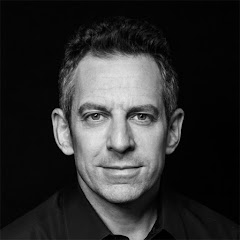 Sam Harris
Key Moments
California bill SB 1047 proposes AI safety regulations for frontier models, sparking debate on risk and oversight.
Key Insights
AI risk, particularly from advanced 'frontier models,' is a growing concern among experts, necessitating regulation.
SB 1047, introduced in California, aims to mandate safety evaluations and risk mitigation for the most powerful AI models.
There's a spectrum of opinions on AI risk, from outright dismissal to catastrophic concern, with experts like Yoshua Bengio advocating for the precautionary principle.
Arguments against regulation often cite economic burden and the speculative nature of AI risks, but proponents argue these risks are tangible and require proactive measures.
The bill targets large labs training models exceeding specific computational thresholds and financial investments, not typically startups or smaller open-source projects.
Proponents argue state-level regulation is necessary due to perceived inaction or slow progress at the federal level, despite potential for future federal law.
THE IMPETUS FOR AI SAFETY DISCUSSIONS
Senator Scott Wiener was prompted to focus on AI safety due to his representation of San Francisco, a hub for AI innovation. He observed growing concerns within the AI community regarding the safety of large language models and the potential risks associated with increasingly powerful AI systems. This led to his introduction of Senate Bill 1047, aiming to address these safety issues proactively.
YOSHUA BENGIO'S EVOLVING PERSPECTIVE ON AI RISK
Yoshua Bengio, a pioneer in deep learning, initially believed human-level AI was distant. However, the rapid advancements exemplified by ChatGPT shifted his perspective. He now recognizes the potential for AGI (Artificial General Intelligence) to emerge much sooner than anticipated, leading him to advocate for a precautionary principle approach to mitigate catastrophic risks, acknowledging uncertainty about timelines but emphasizing the need for present action.
DIVERGENT VIEWS ON AI RISK AND REGULATION
The discussion highlights a wide range of opinions on AI risk, from those who believe the dangers are immediate and severe (like Eliezer Yudkowsky) to those who dismiss concerns as premature or economically harmful (like Rodney Brooks and Marc Andreessen). Bengio positions himself as rationally agnostic, believing that given the potential for catastrophic outcomes and the current lack of definitive answers, proactive risk mitigation is the only sensible course of action.
CALIFORNIA'S SB 1047: MANDATING SAFETY MEASURES
Senate Bill 1047 proposes that entities training and releasing AI models exceeding a certain computational threshold (10^26 FLOPs) and with significant financial investment (over $100 million) must conduct reasonable safety evaluations. If these evaluations reveal a significant risk of catastrophic harm, the entity must take reasonable steps to mitigate it. This legislation seeks to move beyond voluntary commitments, which are seen as insufficient.
ADDRESSING CRITICISMS AND MISINFORMATION
Critics, particularly from venture capital firms like Andreessen Horowitz, argue SB 1047 imposes economic burdens and could lead to capital flight. However, proponents counter that the safety testing costs are relatively small (estimated 2-3% of budgets for large labs) and that liability protections exist for those who comply. They also accuse opponents of spreading misinformation, such as the claim that developers face imprisonment, which is not supported by the bill's text.
THE ROLE OF OPEN SOURCE AND REGULATORY APPROACH
The bill applies to both open-source and closed-source models, though amendments have clarified responsibilities for open-source models once they are no longer in the original developer's possession. The threshold for regulation is set high, focusing on the largest, most powerful 'frontier' models, ensuring that smaller-scale open-source projects and academic research are largely unaffected. The distinction is made between current, smaller models and future, potentially more dangerous ones.
THE NECESSITY OF STATE-LEVEL LEGISLATION
While acknowledging that federal regulation would be ideal, Senator Wiener points to Congress's historically slow pace in addressing technology legislation. California has often stepped in to fill this void, as with net neutrality and data privacy laws. He expresses skepticism about the current federal administration's executive orders on AI having the force of law, especially given potential future political shifts, underscoring the perceived need for state-level action.
POTENTIAL IMPACT AND LIABILITY UNDER SB 1047
The bill's liability provisions are designed to apply primarily when companies fail to comply with safety mandates and a significant harm occurs. If companies perform the required safety evaluations diligently, they are protected from specific liabilities under this bill. Existing tort liability laws already expose companies to lawsuits for harms caused by AI, and proponents argue SB 1047 clarifies and focuses this risk rather than creating entirely new burdens.
Mentioned in This Episode
●Software & Apps
●Companies
●Organizations
●Books
●Concepts
●People Referenced
AI Model Threshold for SB 1047
Data extracted from this episode
| Criterion | Value |
|---|---|
| Computational Power | Exceeding 10^26 FLOP |
| Training Investment | At least $100 million (adjusted for inflation) |
AI Safety Budget Allocation (Estimated)
Data extracted from this episode
| Category | Percentage of Budget (estimated) |
|---|---|
| AI Safety Spending | 2-3% for large labs |
Common Questions
Senator Wiener, whose district includes San Francisco, the heart of AI innovation, was approached by people in the AI community about the safety risks of large language models. He aims to establish reasonable safety evaluations for powerful AI models before they are released to mitigate catastrophic harm.
Topics
Mentioned in this video
Mentioned as a friend with whom Sam Harris did a short retreat and recorded conversations.
Pioneering AI researcher, described as having an 'epiphany' about AI risks after previously not expressing strong concerns.
Host of the Making Sense podcast, discussing AI risks and regulation.
California State Senator who introduced SB 1047, a bill to regulate AI frontier models.
Mentioned as someone on the 'far side of freaked out' regarding AI risk, having been on the podcast before.
Venture capitalist mentioned as being on the less concerned side regarding AI risk, and a previous podcast guest.
Mentioned in the context of the Republican platform potentially revoking the Biden administration's AI executive order.
Leading AI researcher, Turing Award winner, and professor at the University of Montreal, who discusses AI safety concerns.
Author of 'Superintelligence', influential in AI safety discussions, and mentioned as having a high level of concern about AI risk.
A roboticist cited as holding a view on the less concerned side regarding AI risk, who Sam Harris debated.
Co-founder of Coursera and prominent AI figure, whose past analogy comparing AI risk concerns to overpopulation on Mars is mentioned.
Mentioned as a friend with whom Sam Harris did a short retreat and recorded conversations.
Computer scientist at UC Berkeley, described as rational and worried about AI risk.
AI researcher and friend of Bengio and Hinton, who holds a less concerned view on AI risks compared to them.
An award described as the 'Nobel Prize for Computer Science' that Yoshua Bengio won in 2018.
A principle invoked by Yoshua Bengio, suggesting proactive action to mitigate potential severe risks even with scientific uncertainty.
A French national order of merit that Yoshua Bengio is a knight of.
A test of a machine's ability to exhibit intelligent behavior equivalent to, or indistinguishable from, that of a human, which modern LLMs are seen to be passing.
A subfield of machine learning that Yoshua Bengio is known for breakthroughs in, contributing to current AI advancements.
A hypothetical type of artificial intelligence that possesses human-level cognitive abilities, a prospect that concerns Yoshua Bengio.
The current best LLMs, mentioned as not yet meeting the threshold defined in SB 1047.
Mentioned as an open-source model that startups are concerned about having access to.
A large language model whose rapid advancement prompted Yoshua Bengio and others to re-evaluate AI timelines and risks.
More from Sam Harris
View all 292 summaries 34 min
Is Effective Altruism Blind to the Biggest Problems? – Sam Harris & Will MacAskill
 21 min
What Is Technology Doing to Us?
 42 min
Is the Iran War Already Failing?
 90 min
FULL EPISODE: The Politics of Pragmatism and the Future of California (Ep. 464)
Found this useful? Build your knowledge library
Get AI-powered summaries of any YouTube video, podcast, or article in seconds. Save them to your personal pods and access them anytime.
Get Started Free