Key Moments
Reality Check: A Conversation with David Wallace-Wells (Episode #365)
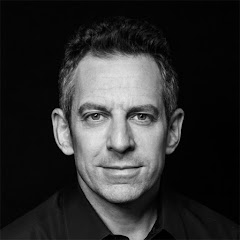 Sam Harris
Want to know something specific about what's covered?
We've already dissected every moment. Ask and we will deliver (with timestamps).
Key Moments
Discussion on information pollution, COVID-19 lessons, and climate change consensus.
Key Insights
The information landscape is severely polluted, making factual discourse challenging.
COVID-19 pandemic responses and vaccine debates highlight deep societal divisions and distorted memories.
Many perceive the pandemic response as more restrictive than it was, leading to a potentially harmful overcorrection.
The success of COVID-19 vaccines is undeniable, saving millions of lives despite widespread skepticism.
There's a global consensus on climate change, but understanding the severity and necessary actions remains difficult.
Normalizing danger and death, evident during the pandemic, poses risks for future crises.
THE EROSION OF SHARED REALITY
The conversation opens by mourning the loss of philosopher Dan Dennett and discussing the challenges in discussing complex issues today. Sam Harris highlights the pollution of the information landscape, where attempts to correct misinformation are often labeled as censorship. This makes fact-based discussions and problem-solving incredibly difficult, particularly in the current political climate, where trust in institutions has significantly eroded. This degradation impacts how we perceive and address critical issues, from pandemics to climate change.
LESSONS FROM THE COVID-19 PANDEMIC
The COVID-19 pandemic is examined as a transformative event that exposed societal vulnerabilities and distorted information. Many people, particularly those consuming alternative media, hold a vastly inverted view of reality, downplaying the virus's severity and condemning vaccines as harmful tools of social control. This distorted memory, fueled by fear and mistrust of institutions, risks repeating mistakes and hinders preparedness for future health crises.
THE MIRACLE OF VACCINES AND DISTORTED MEMORIES
Despite widespread skepticism and conspiracy theories, the COVID-19 vaccines are hailed as one of the greatest achievements in human history, saving tens of millions of lives globally. However, a significant portion of the population distrusts them, believing false narratives about their harm and suppression of data. This distrust, combined with a distorted collective memory of the pandemic, where individuals underestimate the actual restrictions and overestimate government control, poses a significant challenge.
RE-EVALUATING PANDEMIC RESPONSES: SWEDEN AND THE US
The discussion contrasts the experiences of Sweden and the U.S. during the pandemic. While Sweden's more hands-off approach initially drew criticism, its outcomes, especially before vaccines, were not as disastrous as predicted, though it performed worse than its neighbors. The U.S. narrative of authoritarian lockdowns is questioned, with Harris arguing that individual choices and fear played a larger role than enforced restrictions. The key takeaway is that the pre-vaccine and post-vaccine periods must be analyzed separately.
THE GLOBAL CONSENSUS ON CLIMATE CHANGE
Moving to climate change, the conversation acknowledges the broad global consensus on the issue. However, the challenge lies in translating this consensus into effective action. The sheer scale of warming, the consequences of inaction, and debates around growth versus degrowth, market forces, and carbon taxes highlight the complexity of the problem. Political stagnation exacerbates these difficulties, making it hard to implement necessary solutions despite widespread agreement on the existence of the threat.
NORMALIZING DANGER AND THE PATH FORWARD
A recurring theme is humanity's tendency to normalize danger and death, a trait evident during the pandemic and applicable to climate change. The difficulty in confronting inconvenient truths and the propensity to blame external authorities rather than acknowledging internal fears and decision-making processes are identified as hindrances. Learning genuine lessons from past crises and fostering a capacity for clear, fact-based discourse are crucial for navigating future challenges effectively.
Mentioned in This Episode
●Software & Apps
●Companies
●Organizations
●Books
●Concepts
●People Referenced
Common Questions
This Making Sense podcast episode features a conversation between Sam Harris and science writer David Wallace Wells, primarily discussing the current state of the information landscape, the societal impact of the COVID-19 pandemic, and comparisons of national pandemic responses.
Topics
Mentioned in this video
Location of a debate Sam Harris, Dan Dennett, and Christopher Hitchens participated in.
An organization where David Wallace Wells served as a national fellow.
A newspaper where David Wallace Wells is a regular columnist.
Conducted an international comparative study of COVID-19 mitigation measures.
A neighboring country to Sweden, used for comparison of COVID-19 mortality rates in 2020.
A country whose leader, Jacinda Ardern, faced political backlash despite initial success in pandemic containment.
A news network where Anthony Fauci was interviewed by Chris Cuomo in May 2020.
A neighboring country to Sweden, used for comparison of COVID-19 mortality rates.
A publication where David Wallace Wells worked as a columnist and deputy editor.
The Centers for Disease Control and Prevention, mentioned for stopping vaccine uptake counts at 95% for American seniors.
Location of the Blavatnik School of Government, which conducted a comparative study on COVID-19 mitigation measures.
Wrote the preface for the book 'The Four Horsemen'.
Author interviewed by David Wallace Wells for the Paris Review.
Collaborated with Sam Harris, Dan Dennett, and Christopher Hitchens on 'The Four Horsemen'.
Mentioned as part of Sam Harris's intellectual circle and collaborations.
Host of a major podcast whose audience is characterized as having a bewildering inversion of reality regarding COVID-19 and vaccines.
CNN interviewer who spoke with Anthony Fauci in May 2020 about public fatigue with pandemic restrictions.
Mentioned in the context of climate change discussions.
Leader of China, who faced backlash related to COVID-19 lockdowns despite the country's initial success in containing the virus.
Prime Minister of Canada, mentioned as a leader who faced criticism despite the country's relatively good performance during the pandemic.
Host of the Making Sense podcast, introducing the episode and discussing his relationships with Dan Dennett and David Wallace Wells.
Participated in debates and collaborations with Sam Harris and Dan Dennett, including 'The Four Horsemen' project.
His candidacy is discussed, and his potential role in vaccine rollout and its political implications are explored.
Key figure in the US COVID-19 response, whose early statements about voluntary measures are contrasted with later perceptions of 'authoritarian lockdowns'.
Mentioned in the context of discussing the length of lockdowns, contrasting his perception with the reality of pandemic measures.
Former Prime Minister of New Zealand, mentioned as an example of a leader who faced political backlash after initial pandemic success.
A philosopher whose critique of philosophy as merely a handmaiden to science is mentioned by Sam Harris.
Mentioned as the mutual agent for Sam Harris, Dan Dennett, Richard Dawkins, and Steven Pinker.
Author whose warnings about a totalitarian takeover during the pandemic are discussed and largely refuted as not having come to pass.
Referred to as someone who drives out 'money lenders', representing a type of figure considered necessary by those distrustful of institutions.
A literary magazine where David Wallace Wells served as a deputy editor.
Platform mentioned as having algorithmic problems within the information landscape.
Platform mentioned as having algorithmic problems within the information landscape.
Platform discussed in the context of increased intellectual discourse and alternative media.
A book by Dan Dennett that argues for the significance of Darwin's notion of natural selection, serving as a bridge between philosophy and science.
A book derived from a conversation between Sam Harris, Christopher Hitchens, Richard Dawkins, and Dan F. Fry wrote the preface which discusses their atheist perspective.
A celebrated book by David Wallace Wells about climate change.
A book by Dan Dennett that explores why people defend religious beliefs, even when seemingly indefensible.
A country mentioned as having done relatively well during the pandemic, though its leader Justin Trudeau faced criticism.
Mentioned as a place where nefarious plans to subvert democracies and control populations might originate.
Mentioned as a place where strict lockdowns, including 'nailing doors shut,' were implemented.
A neighboring country to Sweden, used for comparison of COVID-19 mortality rates.
Its pandemic response, particularly its less restrictive approach compared to the US, is analyzed and compared regarding mortality rates before and after vaccines.
A neighboring country to Sweden, used for comparison of COVID-19 mortality rates.
More from Sam Harris
View all 314 summaries 23 min
Why the AI Skeptics Keep Being Wrong
 25 min
Elon Musk Didn't Found Tesla
 98 min
Coin Toss for the Future: A Conversation with Ryan Greenblatt UNLOCKED (Ep. 494)
 29 min
It's a Coin Toss Whether AI Takes Over
Ask anything from this episode.
Save it, chat with it, and connect it to Claude or ChatGPT. Get cited answers from the actual content — and build your own knowledge base of every podcast and video you care about.
Get Started Free