Key Moments
Ray Dalio: Money, Power, and the Collapse of Empires | Lex Fridman Podcast #251
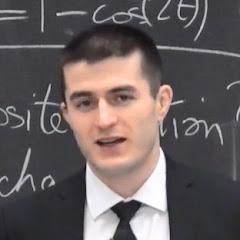 Lex Fridman
Key Moments
Ray Dalio discusses empires' rise/fall using historical cycles, US/China competition, and the importance of principles.
Key Insights
Empires rise and fall following archetypal cycles driven by debt, internal/external order, and capital market dynamics.
The competition between the US and China is a key geopolitical dynamic, influenced by historical patterns of dominant powers.
Education, civility, and innovation are crucial leading indicators for a nation's strength and its position in the global order.
Internal conflict and financial imbalances, such as high debt and money printing, are critical warning signs for any nation.
Understanding historical cycles and objective measures is key to navigating the present and future challenges faced by nations.
Democracies have vulnerabilities, particularly internal disorder and the adherence to rules; autocratic systems risk breaking when they lack flexibility.
THE SYNERGY OF MONEY AND POWER
Money and power are intrinsically linked, each supporting and competing with the other throughout history. Those with financial resources gain influence, often impacting political power structures. This symbiotic relationship can be observed in historical alliances, such as those between nobility and the church, and later between industrialists and political entities. The value of assets and the control over them shift with societal evolution, such as the Industrial Revolution, but the core dynamic of money influencing power remains constant.
THE ARCHETYPAL GRAND CYCLE OF EMPIRES
Ray Dalio outlines a grand cycle that governs the rise and fall of empires, comprising three key cycles: the long-term debt and capital market cycle, the internal order and disorder cycle, and the external order and disorder cycle. This cycle typically begins with a war that establishes a new world order, followed by a period of peace and prosperity. As dominant powers become more expensive and lose competitiveness, wealth and opportunity gaps widen, leading to debt accumulation and setting the stage for internal conflict and potential collapse.
MEASURING A NATION'S STRENGTH
Dalio emphasizes the importance of objective, measurable metrics to assess a nation's health and trajectory. He identifies 18 key indicators, including education levels, economic output, military strength, and internal conflict. These metrics can be tracked over time to understand the arcs of nations and predict future trends. For example, declining education levels and increasing debt are critical warning signs, while improvements in these indicators suggest a healthier nation. These objective measures serve as a crucial tool for policymakers and observers.
THE CONCERNING INDICATORS FOR THE UNITED STATES
Several indicators point to challenges for the United States. Financially, high levels of debt and money printing are concerning, risking inflation and economic slowdown. Internally, significant conflict exists, though China faces fewer internal political challenges due to its autocratic structure. Crucially, the U.S. is losing its educational advantage, with China rapidly improving its educational output and investing heavily in future-oriented fields. While technology remains an area of U.S. strength, China's rapid progress poses a competitive challenge.
THE DYNAMIC BETWEEN THE U.S. AND CHINA
The current geopolitical landscape is significantly shaped by the competition between the U.S. and China. China has surpassed the U.S. in global trade and maintains a better balance of payments, though it lacks the world's reserve currency status, which the U.S. risks losing due to its financial imbalances. This rivalry encompasses trade, technology, geopolitical influence, capital, and military power. The potential for conflict, particularly over Taiwan, remains a significant concern, highlighting the delicate balance of power and historical grievances.
LEADERSHIP AND NAVIGATING NATIONAL CHALLENGES
Effective leadership is crucial for countries facing complex challenges. Dalio suggests that bipartisan cooperation is paramount for the U.S. to overcome its internal divisions and focus on fundamental improvements, such as investing in education and technology. He also touches upon the leadership of Xi Jinping in China, noting the country's economic development driven by a more centralized decision-making process, despite concerns about political control and individual freedoms. The balance between collective good and individual liberty is a key philosophical difference.
THE VULNERABILITIES OF DEMOCRACIES AND AUTOCRACIES
Both democratic and autocratic systems possess inherent vulnerabilities. Democracies are susceptible to internal disorder, anarchy, and a disregard for rules and election results, which can erode the system. Autocratic systems, while potentially efficient in execution, risk breaking if they lack flexibility and fail to address underlying discontent. Historically, democracies have sometimes transitioned to autocracies during times of extreme disorder, seeking stability. The key lies in adherence to systems and the ability to adapt without widespread conflict.
THE ROLE OF HUMAN NATURE IN CYCLES
Human nature, with its capacity for adaptation and invention, is a constant driving force within historical cycles. While geopolitical and economic landscapes change, fundamental human desires and behaviors persist. Generations removed from conflict may be more prone to aggression, while those who have experienced war tend to prioritize peace and stability. This recurring pattern underscores the importance of understanding history to navigate present challenges and avoid repeating past mistakes, adapting to changing circumstances while recognizing enduring human traits.
PUTIN, RUSSIA, AND GEOPOLITICAL ALLIANCES
Vladimir Putin rose to power during a period of extreme instability in Russia following the collapse of the Soviet Union. His leadership has been characterized by bringing stability and strength to Russia, leveraging its significant military power despite its weaker economic standing. The strong alliance between Russia and China is a key geopolitical development. Sensitivities, such as the situation in Ukraine and NATO's presence on Russia's borders, remain significant factors in regional and global security dynamics, influencing potential conflicts.
UNDERSTANDING CULTURES AND INTERNATIONAL RELATIONS
Dalio stresses the importance of empathy and respect for different cultures in international relations, particularly when dealing with countries like China. He argues that a lack of understanding and an 'enemy mentality' can hinder constructive dialogue and increase the risk of conflict. While acknowledging that governments may have different values, he believes that economic engagement and mutual understanding are vital for reducing global tensions and fostering cooperation. Disconnecting economically would be disastrous and reduce opportunities for peace.
PRINCIPLES AS A FRAMEWORK FOR DECISION-MAKING
Dalio highlights the value of codifying principles, or 'recipes,' for decision-making. By writing down the lessons learned from past experiences, individuals and nations can develop a more effective framework for navigating future challenges. This process of pain plus reflection leading to progress is crucial for personal and societal growth. Understanding one's own strengths and weaknesses, and those of others, is key to effective collaboration and achieving desired outcomes, transforming life's complexities into a more manageable, evolutionary looping process.
ADVICE FOR THE NEXT GENERATION
For young people today, Dalio advises self-awareness, pursuing passions, and understanding the role of money in providing freedom and choice. He emphasizes the importance of a five-step process: knowing goals, identifying and diagnosing problems, designing solutions, and implementing them. This evolutionary looping process, combined with embracing weaknesses and seeking collaboration, is essential for a fulfilling life and career. He sees human civilization's greatest force in its capacity to adapt and invent, offering justifiable hope for continued progress and expansion.
THE EVOLUTION OF MONEY AND CRYPTOCURRENCIES
Dalio views the evolution of money, including cryptocurrencies like Bitcoin, as a significant development in an era of increasing fiat currency printing. He sees a future with a competition of monies, including central bank digital currencies. While Bitcoin has proven resilient, he considers gold a superior store of wealth due to its untraceable nature and long-standing universal recognition. He believes Bitcoin's potential price is limited in relation to gold, though it is a part of his investment mix. Dogecoin and meme coins are seen as symbolic and reflective of human nature's lighter side.
Mentioned in This Episode
●Products
●Software & Apps
●Companies
●Organizations
●Books
●Concepts
●People Referenced
Applying Principles for Success and Adaptability
Practical takeaways from this episode
Do This
Avoid This
Common Questions
Money and power have a symbiotic relationship, supporting and competing with each other. Those with money gain a certain type of power through their ability to buy things and influence political power, a dynamic seen throughout history, such as between royal families, nobility, and the church.
Topics
Mentioned in this video
International organization whose headquarters are in New York, established as part of the American world order.
International financial institution based in Washington, part of the post-WWII world order.
International financial institution based in Washington, part of the post-WWII world order.
The central bank of the United States, faced with choices of raising interest rates or debt monetization, impacting the economy and inflation.
Military alliance mentioned in the context of Russia's concerns about its presence on Ukraine's border.
An economic system that has effectively built wealth by allocating resources to inventive people but also creates wealth and opportunity gaps.
In Chinese dynasties, a meritocratic approach to education where a broad base of the population could sit for exams, fostering social stability.
The post-World War II international monetary management system established in 1944, which centered the US dollar.
Considered Ray Dalio's favorite alternative money due to its untraceability, universal historical recognition, and status as the third-largest central bank reserve asset.
Legendary investor and founder of Bridgewater Associates, author of 'Principles' and 'Principles for Dealing with a Changing World Order'.
Former leader of China, famously reconciled communism with market economy principles, stating 'it doesn't matter if it's a white cat or a black cat just as long as it catches mice'.
Former US President, whose election was seen as an emergence of populism, representing a battle of one group against another due to public dissatisfaction with the system.
President of Russia, came to power during a period of anarchy after the Soviet Union's collapse, viewed as a strong, popular, semi-autocratic leader who brought stability.
Former US Secretary of State and National Security Advisor, praised by Dalio for his unique ability to see geopolitics from multiple perspectives and his blend of historical knowledge and practical experience.
Entrepreneur and CEO, mentioned for his ambition to put Dogecoin on the moon, symbolizing an inspiring notion beyond literal financial analysis.
President of China, his leadership emerged from a period of cultural revolution, focused on reform and addressing corruption, now leading a 'core leadership' during difficult times.
Former President of Russia who appointed Vladimir Putin to power, described as an alcoholic with problems managing the country.
Mentioned as a sensitive issue due to the presence of many Russians and the proximity of NATO on its border, creating a tense situation.
Discussed as the dominant world power after WWII, forming the American world order, and currently facing financial imbalances and internal conflict.
Discussed as a rising empire, showing rapid improvement in education and technology, a leading trading country, and undergoing significant economic and political changes.
Discussed in the context of Vladimir Putin's rise to power after the failure of communism and the collapse of the Soviet Union, not a significant economic power but a military one.
A meme cryptocurrency, mentioned in the context of Elon Musk's symbolic goal to put it on the moon.
A cryptocurrency that has proven itself over 10-11 years, becoming a recognized alternative money, but less preferred than gold by Dalio due to traceability and lack of central bank adoption.
Non-fungible tokens, mentioned as a potential type of 'money' or investment, reflecting an evolving landscape of digital assets.
Ray Dalio's book on his life and work principles.
Ray Dalio's new book analyzing geopolitics, particularly US and China, through historical cycles of empires.
An ancient Greek work that discusses cycles of governance, including democracy and autocracy, and their vulnerabilities.
More from Lex Fridman
View all 547 summaries 146 min
Jensen Huang: NVIDIA - The $4 Trillion Company & the AI Revolution | Lex Fridman Podcast #494
 311 min
Jeff Kaplan: World of Warcraft, Overwatch, Blizzard, and Future of Gaming | Lex Fridman Podcast #493
 154 min
Rick Beato: Greatest Guitarists of All Time, History & Future of Music | Lex Fridman Podcast #492
 23 min
Khabib vs Lex: Training with Khabib | FULL EXCLUSIVE FOOTAGE
Found this useful? Build your knowledge library
Get AI-powered summaries of any YouTube video, podcast, or article in seconds. Save them to your personal pods and access them anytime.
Get Started Free