Key Moments
Rana el Kaliouby: Emotion AI, Social Robots, and Self-Driving Cars | Lex Fridman Podcast #322
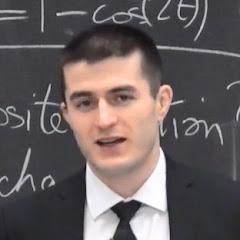 Lex Fridman
Key Moments
Rana el Kaliouby discusses emotion AI, human-centric tech, and the future of human-machine interaction.
Key Insights
Rana el Kaliouby's childhood memories in Egypt shaped her appreciation for human connection and community.
Her journey into computer science began with early experiences with computers and coding, emphasizing the empowering nature of technology.
She discusses the personal and cultural challenges of navigating identity, religion, and career aspirations as a woman from the Middle East.
El Kaliouby highlights the critical role of empathy and emotional intelligence in human interaction and its potential within AI.
The conversation explores the complexities of emotion detection from facial expressions, emphasizing context and multimodal approaches.
She reflects on the transformative potential of AI in various fields, from automotive safety to personal well-being and social robotics, while stressing the importance of trust and ethical considerations.
ROOTS AND EARLY INFLUENCES
Rana el Kaliouby's upbringing in Egypt, particularly memories of family gatherings around mango trees, instilled a deep appreciation for human connection, warmth, and shared experiences. These foundational memories, rich with sensory details like the color and sweetness of 'darwazi' mangoes, underscore the importance of community and joy. Her early exposure to computers through an Atari and her first coding experience creating a Christmas tree solidified a fascination with technology's magical and empowering potential, hinting at a future where code could bring joy to millions.
NAVIGATING IDENTITY AND CULTURAL NORMS
El Kaliouby's narrative is marked by a thoughtful navigation of her identity as an Egyptian, a Muslim, and a "new American." She recounts a pivotal moment of challenging cultural norms by pursuing a PhD at Cambridge while married, overcoming familial disapproval through her husband's support. Her experiences, including wearing the hijab voluntarily for 12 years and later choosing to remove it, highlight a personal journey of faith, self-expression, and evolving understanding of religious and cultural practices, emphasizing that faith can be a source of strength and conviction.
THE EMERGENCE OF EMOTION AI AND TECHNOLOGICAL PERSPECTIVES
Her career trajectory, leading to the founding of Affectiva, centers on building 'artificial emotional intelligence.' El Kaliouby sees technology, including computers and artificial intelligence, not as mere tools but as potential conduits for connection. She critiques the oversimplification of inferring emotions from facial expressions alone, advocating for contextual understanding and multimodal data, including voice and gestures. This approach is crucial for designing AI systems that genuinely comprehend and interact with human emotions, moving beyond superficial one-to-one mappings.
THE ROLE OF EMPATHY AND HUMAN CONNECTION
A recurring theme is the profound importance of empathy and emotional intelligence (EQ) in human interaction and its application to AI. El Kaliouby posits that empathy is fundamental to human connection, trust, and decision-making. She notes that while men and women can both be empathetic, societal roles and fields like computer science might see a disproportionate distribution. Her work aims to integrate this human-centric approach into technology, believing that AI, when designed thoughtfully, can enhance our lives and relationships, not just automate tasks.
TRANSFORMATIVE JOURNEYS AND LEADERSHIP ADVICE
Recounting her journey from Egypt to Cambridge and then to MIT, El Kaliouby emphasizes the liberating effect of environments that embrace risk-taking and innovation, contrasting it with the fear of failure she experienced earlier. As a leader and founder, she advises young women and aspiring leaders to combat the internal 'Debbie Downer' voice, focus on self-acceptance and self-love through practices like journaling and affirmations, and believe in themselves to overcome obstacles. She stresses that aligning with investors who share core values is as critical as the funding itself.
AI IN AUTONOMOUS SYSTEMS AND THE FUTURE OF HOMES
Now as Deputy CEO of Smart Eye, El Kaliouby is focused on driver monitoring systems and interior sensing in vehicles, aiming to enhance safety and enrich the in-car experience. She sees future cars as potential 'wellness centers.' She also believes in the potential of home robots, envisioning them becoming as ubiquitous as appliances. However, she consistently returns to the critical need for ethical AI development, transparency, and building trust, especially concerning data privacy, and advocates for diversity in the tech industry to ensure AI serves humanity broadly and equitably.
Mentioned in This Episode
●Products
●Software & Apps
●Companies
●Organizations
●Books
●Concepts
●People Referenced
Common Questions
Rana learned grit, hard work, and unconditional love from her parents. They supported her path despite cultural norms, notably when she pursued a PhD at Cambridge, demonstrating their strong love and belief in her choices.
Topics
Mentioned in this video
Center at Cambridge University run by Professor Simon Baron-Cohen, where the empathy scale theory was developed.
Where Rana el Kaliouby worked as a postdoc with Rosalind Picard, known for its openness to innovation and focus on working demos.
Political organization that ran Egypt during a time when Rana had political questions that contributed to her decision to remove her hijab.
Massachusetts Institute of Technology, where Rana worked as a postdoc and later conducted research collaborations on driver behavior data.
Government agency that rejected Rana and Rosalind Picard's initial grant application for autism research.
Where Rana el Kaliouby pursued her PhD, moving from Cairo, and subsequently met Rosalind Picard.
A podcast by Andrew Huberman, recommended for its science-backed health and wellness protocols.
The institution where Andrew Huberman is a neuroscientist.
Researcher whose criticism of oversimplified emotion inference from facial expressions is largely agreed with by Rana.
The main character in the movie 'Her,' who forms an intimate relationship with an AI operating system.
CEO of Smart Eye, with whom Rana el Kaliouby shared a common vision and whose company acquired Affectiva.
Pioneer in emotion recognition and human-centric AI, founder of Affectiva, Deputy CEO of Smart Eye, and author of 'Girl Decoded'.
Rana el Kaliouby's PhD advisor at Cambridge, who encouraged her to work with an Israeli office mate.
Actor mentioned by Lex Fridman as a humorous example of who Rana might be picturing as her ideal partner in her affirmations.
Man who drowned while teenagers watched and laughed, an incident used to illustrate the 'empathy crisis' in the world.
Runs the Affective Computing group at the MIT Media Lab; she became Rana's mentor and postdoc advisor, significantly changing her career path.
Professor at Cambridge and Sasha Baron Cohen's cousin, who runs the Autism Research Center and developed the empathy scale.
Neuroscientist from Stanford and host of the Huberman Lab podcast, recommended for his health-related wisdom and actionable protocols.
Former OpenAI researcher who wrote 'Why Greatness Cannot Be Planned,' advocating against over-optimization for true creativity.
Author and activist whose quote about beautiful things being 'felt with the heart' concludes the podcast.
iRobot's robot vacuum cleaner, discussed for its role in collecting home data, building emotional connections with users, and its 'poop detection' feature.
Rana's favorite video game on her Atari, which contributed to her early fascination with computers.
A legged robot from Boston Dynamics. Lex describes seeing one with a cowboy hat.
Humanoid robot being developed by Tesla, discussed for its focus on mass manufacture and cost-effectiveness for factory automation tasks.
Rana's first computer, sparking her early interest in technology and programming through video games.
A social robot that Rana had at home; her son became very emotionally attached to it before the company shut down.
Humanoid robot developed by Boston Dynamics, mentioned alongside Tesla Bot for its potential in robotics.
Company founded by Rana el Kaliouby focused on emotion recognition and human-centric AI, later acquired by Smart Eye.
Swedish company acquired Affectiva; focuses on driver monitoring systems and interior sensing for the automotive industry.
Dating app mentioned as an example of existing platforms that could potentially use data for better human connection.
Japanese conglomerate that created the humanoid robot Pepper.
AI research and deployment company where Kenneth Stanley previously worked.
Company famous for its legged robots like Spot and Atlas, visited by Lex Fridman who noted a Spot robot wearing a cowboy hat.
Video platform referenced for its recommendation algorithms and the data it collects on user engagement and drop-off rates.
Social network that tried to enter the dating app business, highlighted as an example of companies struggling to foster deep connections.
Streaming service mentioned as an example of content that people watch alone, with their emotions still measurable from facial expressions.
Car manufacturer admired for its software-driven architecture and over-the-air updates, setting a new standard for the automotive industry.
Autonomous driving company mentioned as one that should integrate driver sensing to enhance safety and user experience.
Company that acquired iRobot; discussed in context of trust regarding home robots and data privacy.
Company that created Roomba, acquired by Amazon; discussed as a platform for understanding home behaviors and robot-human connections.
A company spun out of MIT that builds robots to help with weight management, sleep, and eating habits.
Book authored by Rana el Kaliouby that discusses her life and work in emotion AI.
A book mentioned indirectly by Rana when discussing building healthy habits.
Book by Kenneth Stanley that argues over-optimization hinders creativity and true greatness, applicable to both AI and personal/organizational life.
Book social media site mentioned by Lex as a potential model for a dating app that matches people based on content consumption.
Operating system mentioned humorously by Lex to illustrate that an AI being used by many people shouldn't cause jealousy for a human user.
The AI operating system in the movie 'Her,' praised for her emotional intelligence and ability to motivate Theodore.
Programming language taught by Rana's father in the 1970s, where he met her mother.
A journaling app that Rana el Kaliouby uses for daily affirmations and to have a 'conversation' with her inner critic.
A dating app mentioned by Rana el Kaliouby that matches people based on their humor styles.
Dating app mentioned as an example of existing platforms that could potentially use data for better human connection.
Amazon's voice assistant, used to draw parallels with AI companionship and the issue of trust and privacy in home devices.
SoftBank's humanoid robot which Affectiva provided the emotion engine for, designed for customer service in public spaces.
More from Lex Fridman
View all 547 summaries 146 min
Jensen Huang: NVIDIA - The $4 Trillion Company & the AI Revolution | Lex Fridman Podcast #494
 311 min
Jeff Kaplan: World of Warcraft, Overwatch, Blizzard, and Future of Gaming | Lex Fridman Podcast #493
 154 min
Rick Beato: Greatest Guitarists of All Time, History & Future of Music | Lex Fridman Podcast #492
 23 min
Khabib vs Lex: Training with Khabib | FULL EXCLUSIVE FOOTAGE
Found this useful? Build your knowledge library
Get AI-powered summaries of any YouTube video, podcast, or article in seconds. Save them to your personal pods and access them anytime.
Get Started Free