Key Moments
Physics & Philosophy: A Conversation with Tim Maudlin (Episode #318)
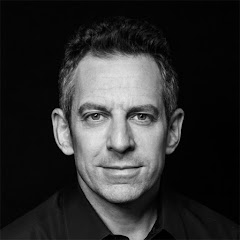 Sam Harris
Key Moments
Physics and philosophy intersect on reductionism, emergence, time, causality, and possibility with Tim Maudlin and Sam Harris.
Key Insights
Scientific reductionism, while stating everything is made of physical constituents, often overlooks the explanatory power of higher-level conceptual categories (e.g., computation, economics).
Emergent phenomena like consciousness are particularly perplexing, as current physics offers no clear path to explain subjective experience from microphysical interactions.
Relativity challenges the common-sense notion of universal simultaneity, suggesting that the 'present moment' is not a universal, objective slice of spacetime.
The block universe model, where past, present, and future are equally real, is discussed. Maudlin accepts past and future realities but rejects the idea of a fundamentally directionless time.
While macroscopic physical laws appear time-symmetric, deeper quantum field theory principles (CPT symmetry) and everyday observations suggest a fundamental directionality of time.
The concept of unrealized possibilities is metaphysically challenging; some philosophers, like Nelson Goodman, find it difficult to account for without thorough explanation, while others, like David Lewis, posit numerous existent possible worlds.
REDUCTIONISM, EMERGENCE, AND EXPLANATORY POWER
The conversation begins by distinguishing between scientific reductionism, the idea that all phenomena can ultimately be explained by fundamental physics, and emergence. While physics aims to get to the 'bottom' of things, philosophical inquiry reveals that higher-level conceptual frameworks, such as computation, economics, or even basic grammar, offer distinct and often more insightful explanations than microphysical descriptions. These higher-level categories capture functional relationships that remain valid even if the underlying physics were to change drastically, suggesting that reductionism in terms of explanation is not absolute.
THE HARD PROBLEM OF CONSCIOUSNESS AND EMERGENCE
While many phenomena can be understood at various levels, consciousness stands out as a profoundly emergent problem. Unlike, for instance, the functioning of a computer or a piano, which are complex arrangements of matter but ultimately understandable through their physical constituents, subjective experience—the 'feel' of pain or awareness—lacks any clear bridge from current physics. This gap, termed the 'hard problem of consciousness,' highlights a limitation in our scientific understanding, as no amount of physical description seems to predict or explain the qualitative, subjective character of mental states.
THE RELATIVITY OF TIME AND THE CHALLENGE TO THE PRESENT
Einstein's theory of relativity significantly altered our understanding of time by dismantling the Newtonian concept of universal simultaneity. According to relativity, there is no absolute, objective 'now' that applies across the entire universe. Events that are simultaneous in one reference frame may not be in another that is moving relative to the first. This implies that the naive, common-sense experience of a present moment extending universally is mistaken, though time itself, as a directed sequence of events, retains its fundamental nature.
ETERNALISM VERSUS PRESENTISM AND THE BLOCK UNIVERSE
The discussion addresses two main metaphysical views on time: presentism, where only the present moment is real, and eternalism, which posits that past, present, and future are equally real, often conceptualized as a 'block universe.' While Maudlin accepts an eternalist view in the sense that past and future events are as real as present ones, he strongly rejects the associated idea that time lacks a fundamental direction. He argues that physics does not eliminate the directionality of time, contrary to some interpretations.
THE DIRECTIONALITY OF TIME AND PHYSICAL LAWS
Skepticism about the directionality of time often arises from the perceived time-symmetry of fundamental physical equations. However, Maudlin contends that this view is incomplete. He points to principles like CPT symmetry in quantum field theory, which implies a temporal asymmetry, and argues that everyday phenomena that exhibit temporal asymmetry (like aging or cause-and-effect) demand an explanation. He suggests that our understanding of concepts like causality inherently relies on a pre-existing notion of temporal order, which entropy considerations help to elucidate but do not create.
THE METAPHYSICS OF POSSIBILITY AND ACTUALITY
The nature of possibility is a significant metaphysical puzzle. The intuition is that reality encompasses more than just what is actual, including what could have or might yet happen. This raises questions about the ontological status of these unrealized possibilities. Some perspectives, like David Lewis's modal realism, propose that all possible worlds are as real as our own. Conversely, thinkers like Nelson Goodman express philosophical reservations about 'unrealized possibles,' finding them conceptually problematic and requiring robust justification, hinting at a reality where perhaps only the actual exists, and possibility is a conceptual overlay.
Mentioned in This Episode
●Companies
●Organizations
●Books
●Concepts
●People Referenced
Common Questions
Sam Harris argued that Tucker Carlson's private texts revealing his dislike for Donald Trump, despite publicly stoking Trumpism, demonstrated a profound dishonesty, akin to a pharmaceutical executive knowingly selling a dangerous drug. Harris believes this level of deceit should end a public figure's career.
Topics
Mentioned in this video
A media personality discussed in relation to his firing from Fox News, his public support for Trumpism, and private texts revealing his negative opinions of Donald Trump.
The political figure whose base Tucker Carlson appeals to, and whose perceived 'demonic force' nature Carlson privately expressed in texts.
Author of a book arguing against a fundamental direction of time, whose views on the 'block universe' are discussed and debated.
Philosopher whose book 'Fact, Fiction, and Forecast' and concept of a 'philosophical conscience' are used to frame the discussion on possibility.
Professor of philosophy at NYU, expert in the philosophy of physics, metaphysics, and logic, and guest on the podcast.
Philosopher whose concept of possible worlds is mentioned in relation to the discussion on possibility and metaphysics.
A physicist whose idiosyncratic views on relationalism and doing away with spatiotemporal structure are mentioned as a contrast to mainstream physics.
A physicist whose views on the connection between entropy and time Maudlin finds difficult to fully grasp but acknowledges are part of the debate.
An institute founded and directed by Tim Maudlin, focusing on the foundations of physics.
The media company from which Tucker Carlson was fired. The Dominion lawsuit against Fox News revealed private communications from Carlson.
New York University, where Tim Maudlin is a professor of philosophy.
A topic extensively debated between Sam Harris and Tim Maudlin, exploring whether intuitions can be resolved through argument.
Mentioned in relation to rival interpretations and non-locality that are part of Tim Maudlin's area of expertise.
Special and general theories of relativity are discussed in their challenge to the notion of global simultaneity and the structure of spacetime.
More from Sam Harris
View all 292 summaries 34 min
Is Effective Altruism Blind to the Biggest Problems? – Sam Harris & Will MacAskill
 21 min
What Is Technology Doing to Us?
 42 min
Is the Iran War Already Failing?
 90 min
FULL EPISODE: The Politics of Pragmatism and the Future of California (Ep. 464)
Found this useful? Build your knowledge library
Get AI-powered summaries of any YouTube video, podcast, or article in seconds. Save them to your personal pods and access them anytime.
Get Started Free