Key Moments
Peter Thiel on How to Think for Yourself | Q&A on The Tim Ferriss Show
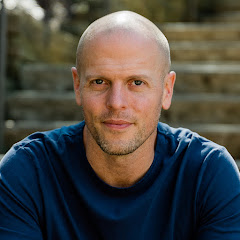 Tim Ferriss
Key Moments
Peter Thiel discusses technology vs. globalization, capitalism, critical thinking, and the pursuit of unique missions over trends.
Key Insights
Technology, not globalization, is the primary driver of progress in the 21st century.
Capitalism and competition are antonyms; true capitalism thrives on monopolies, not perfect competition.
Failure is overrated as an educational tool; it's often tragic and over-determined, leading to little learning.
Timeliness and uniqueness are crucial for innovation; trends lead to competition and should be avoided.
Concentrated investing with high conviction, rather than diversification, leads to better outcomes.
The fight against aging and death is a critical, under-addressed problem that requires an active approach.
Education should focus on learning and specific skills, rather than abstract credentialing and standardized paths.
TECHNOLOGY OVER GLOBALIZATION
Peter Thiel asserts that technology is a far more significant driver of progress than globalization. While the current global focus is on copying successful models, the true engine of advancement lies in technological innovation and creating something entirely new. He advocates for a shift in perspective, prioritizing technological development as the main force shaping the 21st century, rather than merely spreading existing ideas and practices across borders.
CAPITALISM AND MONOPOLY AS DRIVERS
Contrary to popular belief, Thiel argues that capitalism and competition are antonyms. In a perfectly competitive market, capital is depleted, leading to low profits. True capitalism flourishes in situations of monopoly, where a company can generate significant profits due to its unique offering and lack of direct competitors. He uses Google as an example of a highly capitalistic company that has consistently avoided significant competition.
THE MYTH OF FAILURE AS A TEACHER
Thiel challenges the notion that failure is a crucial learning experience in business. He posits that most businesses fail for multiple, over-determined reasons, making it difficult to pinpoint exact lessons. This multiplicity of causes not only obscures learning but also proves demoralizing and damaging. He contends that failure is a tragedy, not a necessary step for progress or education, and emphasizes that businesses should not be analyzed through a Darwinian or educational lens.
THE IMPORTANCE OF UNIQUE MISSIONS
Instead of chasing popular "trends," Thiel champions the pursuit of unique missions. Trends attract widespread attention, leading to intense competition and a lack of differentiation. He advises avoiding crowded or saturated markets, citing examples like the late '90s online pet food companies or recent solar companies. A unique mission, like Elon Musk's goal of reaching Mars with SpaceX, provides a clear, singular focus that motivates individuals and addresses problems others are not tackling.
CONCENTRATED INVESTING AND CONVICTION
Thiel criticizes the "spray and pray" investment approach, attributing it to a lack of conviction rather than diversified portfolio theory. He views treating companies and founders as lottery tickets as both morally questionable and a poor investment strategy. Instead, he advocates for a concentrated approach, which forces investors to develop strong conviction before committing capital. This method, he believes, leads to far better outcomes by focusing on genuine potential rather than random opportunity.
THE FIGHT AGAINST AGING AND DEATH
A core passion for Thiel is addressing the problem of aging and death, which incapacitates millions daily. He observes a societal tendency towards denial or passive acceptance of mortality, both of which hinder progress. Thiel advocates for a more active, engaged approach to fighting diseases associated with old age. He argues that, just as humans naturally fight threats, we should actively combat death, viewing it not as an immutable natural event to be accepted, but as a problem to be solved.
RETHINKING EDUCATION AND CREDENTIALING
Thiel distinguishes between "learning" and "education," favoring the former. He is skeptical of credentialing and the abstract concept of education, which often becomes a consumption decision, an investment, or a tournament. He critiques the current system where elite institutions track talented individuals into a narrow range of subjects and careers. Thiel suggests a future with less emphasis on standardized educational paths and more on acquiring specific, valuable skills, likening engineering's focus on tangible outcomes to a more effective paradigm.
THE POWER OF INDEPENDENT THINKING
A fundamental philosophical question, Thiel notes, is distinguishing between convention and truth. This is particularly critical in places like Silicon Valley, which can be prone to groupthink. When people rely on others' opinions about the future, it can lead to herd mentality or bubbles. Therefore, thinking for oneself and challenging conventional wisdom is essential, especially when navigating uncertain future-oriented markets and making significant decisions in business and investment.
ACCELERATING ECONOMIC GROWTH THROUGH TECHNOLOGY
Addressing unemployment, Thiel suggests a dual approach: micro-level tailored solutions and macro-level economic growth. He stresses that a significant part of solving unemployment lies in fostering greater overall economic expansion. He identifies technology as the key driver for such growth, especially in developed nations. By accelerating technological progress and innovation, the economy can expand more robustly, creating more opportunities and addressing structural challenges like unemployment.
REFLECTIONS ON COMPETITION AND SELF-AWARENESS
Looking back, Thiel reflects on his younger self's intense competitiveness, which, while yielding success in specific areas, came at the cost of broader development. He acknowledges that intense competition can narrow focus, making individuals prioritize beating rivals over pursuing intrinsically valuable goals. He emphasizes the ongoing need for self-awareness regarding the pitfalls of excessive competition and rivalry, striving to become less competitive to achieve greater overall success and fulfillment.
Mentioned in This Episode
●Companies
●Organizations
●Books
●Concepts
●People Referenced
Common Questions
Peter Thiel believes that technology is far more important than globalization for progress in the 21st century. While globalization focuses on copying existing ideas, technology drives innovation and the creation of new things.
Topics
Mentioned in this video
Used as an example of a highly competitive but not very capitalistic market, referring to its restaurant industry.
Described as a place prone to conventional thinking and susceptible to bubbles due to reliance on collective consensus about the future.
Mentioned as an example of a region where people may be long-term unemployed due to the decline of traditional industries like factories.
Used as an analogy for elite universities, likening them to exclusive nightclubs where acceptance/credentialing is prioritized over genuine learning.
The main guest of the episode, discussed as a serial tech founder, investor, and author of 'Zero to One', known for questioning assumptions.
Co-author of 'Zero to One' and the voice asking questions in this interview as Tim Ferriss was on sick leave.
Mentioned for his quote 'Freedom lies in being bold', which sets the tone for the episode about Peter Thiel's bold thinking.
Founder of LinkedIn and a member of the PayPal Mafia.
Co-founder of Tesla and SpaceX, and a successful serial entrepreneur highlighted as an example of relentless drive.
Cited as an example of a successful individual whose relentless drive and vision from the beginning make Facebook's success seem less like a fluke.
Mentioned alongside Zuckerberg and Musk as examples of successful individuals with a relentless drive.
Mentioned as an example of a notable figure interviewed on the Tim Ferriss Show.
The host of the show, unable to conduct the interview in person due to being on sick leave.
Mentioned as a member of Linkin Park and an example of a notable figure interviewed on the Tim Ferriss Show.
Mentioned as one of the companies co-founded by Elon Musk, originating from the PayPal Mafia network.
Mentioned as a company founded by members of the PayPal Mafia.
Co-founded by Peter Thiel in 1998, it was sold to eBay for $1.5 billion. It aimed to create a new currency and payment system.
Cited as an example of a highly capitalistic company that has made enormous profits due to a lack of significant competition.
Peter Thiel was the first outside investor in Facebook.
Mentioned as a company founded by members of the PayPal Mafia.
Mentioned as a competitor that Google definitively distanced itself from around 2002.
Mentioned as one of the companies co-founded by Elon Musk, originating from the PayPal Mafia network and having a mission to go to Mars.
Mentioned as a company founded by members of the PayPal Mafia.
Mentioned as a competitor that Google definitively distanced itself from around 2002.
Peter Thiel's investment fund, which he uses as an example of a concentrated approach to early-stage venture investing.
Acquired PayPal in 2002 for $1.5 billion.
Founded by Reed Hoffman, mentioned as a company launched by a member of the PayPal Mafia.
Co-founded by Peter Thiel in 2004, it is a data mining company that originated from the PayPal Mafia network.
The term used to refer to the individuals who were part of the early PayPal team, many of whom went on to found or lead major companies.
Thiel argues that technology is more important than globalization for progress in the 21st century.
Thiel contrasts globalization, which focuses on copying, with technology, which focuses on doing new things, arguing the latter is more crucial.
Thiel believes failure is overrated in business, often overdetermined and demoralizing, learning little from it.
Thiel believes capitalism and competition are antonyms, defining capitalism as accumulating capital, which perfect competition erodes.
Thiel argues that perfect competition leads to no one making money, contrasting it with companies like Google that thrive with little competition.
Thiel argues that fighting death is natural and a critical problem humanity should actively address, rather than accepting or denying it.
Thiel studied philosophy and discusses its relevance to business, focusing on the fundamental question of distinguishing convention from truth.
The primary problem Thiel is passionate about solving, highlighting the death rate linked to old age and advocating for active fighting against decline.
Thiel attended Stanford for both undergraduate and law school, which is brought up in a question about hypocrisy regarding his views on higher education.
Used as an analogy for the current state of higher education, comparing the corruption and reliance on 'indulgences' to the eve of the Reformation.
More from Tim Ferriss
View all 690 summaries 184 min
Daredevil Michelle Khare — How to Become a YouTube Superstar
 81 min
Q&A with Tim — The Upcoming AI Tsunami and Building Offline Advantage
 91 min
The Random Show, Couch Edition! — Supplements, Breathing and Balance Training, and Much More!
 76 min
How to Quiet the Ruminative Mind and Avoid The Traps of Self-Help — Tim Ferriss
Found this useful? Build your knowledge library
Get AI-powered summaries of any YouTube video, podcast, or article in seconds. Save them to your personal pods and access them anytime.
Get Started Free