Key Moments
Paul Conti: Narcissism, Sociopathy, Envy, and the Nature of Good and Evil | Lex Fridman Podcast #357
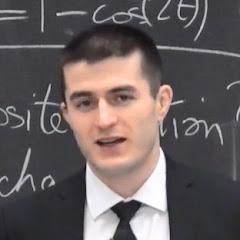 Lex Fridman
Key Moments
Paul Conti discusses narcissism rooted in envy, the human capacity for evil, and the power of empathy & humility.
Key Insights
Narcissism stems from deep inadequacy and insecurity, compensated by aggressive, rocket-fueled envy, not arrogance.
Envy is the underlying driver of orchestrated evil, where the goal is to tear down others to alleviate one's own sense of being lesser.
All humans possess the capacity for evil and envy, but free will allows us to choose whether to nurture or suppress these destructive inclinations.
Trauma, especially in childhood, disproportionately harms psychological and neurobiological development, fueling negative emotions and self-perception.
Overcoming trauma involves acknowledging its impact, verbalizing the experience, and separating feelings from truth, often with external support.
Emotion is the primary driver of human behavior and meaning, often overriding logic; cultivating gratitude, humility, and genuine connection fosters well-being and happiness.
PSYCHIATRY AS A LENS FOR HUMAN UNDERSTANDING
Psychiatry, as a discipline, extends beyond mere therapeutic tools; it offers a profound pathway to understanding human existence. It explores the intricate workings of the brain, its biology, chemistry, and how these foundational elements manifest in our thoughts, feelings, aspirations, and fears. Every patient interaction, every conversation, presents an opportunity to deepen our understanding of the human mind and, by extension, our own. This continuous learning, even from simple daily encounters, reinforces who we choose to be, fostering qualities like kindness and gratitude.
THE MYSTERY AND NOVELTY OF THE HUMAN MIND
Unlike machines, which are designed to be systematically understood, the human mind possesses an almost infinite complexity. It's characterized by levels of emergence, where novel phenomena — like consciousness arising from neurons, or culture from consciousness — cannot be fully predicted from their underlying components. This inherent novelty makes sentient beings infinitely fascinating and contributes to our unique perceptions of reality, including individual experiences of time. Acknowledging this profound mystery demands humility, preventing recklessness with ourselves, our resources, and human life.
CREATIVE IMPERATIVE AND THE ETHICS OF EXISTENCE
The universe, despite its vast emptiness and the pervasive rule of entropy, exhibits rare 'eddy pools' of counter-entropy where creation, growth, and greater complexity emerge. This suggests an underlying creative force that values building and preserving over destruction. From this perspective, goodness aligns with nurturing and collaboration, fostering novelty and new existence, while destruction leads towards entropy and nothingness. This profound improbability of existence should evoke a deep respect and appreciation for life, influencing our ethical considerations of good and evil, and urging us to marvel at the miracle of being.
ENVY: THE ENGINE OF ORCHESTRATED EVIL
While all humans are capable of perpetrating evil, highly orchestrated, large-scale evil is fundamentally driven by profound envy. This differs from benign jealousy, which might inspire self-improvement, by its destructive desire to tear others down to one's own perceived level of inadequacy. Leaders like Hitler, often masking their actions with superficial 'good' narratives, are in fact gratifying an intense, personal sense of inadequacy and rage by projecting blame onto specific groups. This destruction, fueled by envy, is never truly satisfying and ultimately spreads catastrophe, even inwards.
NARCISSISM AND ITS MALIGNANT SPECTRUM
Narcissism, rooted in a deep, unquestioned sense of inadequacy and incompetence, is not arrogance but its opposite. It manifests as a defensive structure dominated by aggressive, 'rocket-fueled' envy, driving individuals to enhance themselves at others' expense, often with a cavalier disregard for their feelings. While seemingly uncaring, narcissists are intently focused on others, viewing them as tools for alleviating their own insecurities or objects of envy. Benign narcissists seek greatness but can tolerate others' success, while malignant narcissists (akin to sociopaths) desire everything, never feeling satisfied, constantly seeking to destroy what others possess.
POWER, CORRUPTION, AND CULTURAL INFLUENCE
Power acts as an intensifier, accentuating existing tendencies towards either malignant narcissism or benevolent stewardship. It can corrupt individuals by providing an easy path to alleviate insecurity through dominance. Societal checks and balances are crucial because human minds are inscrutable. Culture also plays a significant role; a 'soup of hatred,' fueled by propaganda and devaluation, can catalyze individual jealousies into mass envy and destructive actions, as seen in historical events like Nazi Germany. Conversely, cultures that prioritize truth, kindness, and education can foster healthier individual development.
THE IMPACT OF CHILDHOOD TRAUMA
Childhood trauma has a disproportionately severe and pervasive impact on human development, more so than traumas experienced later in life. During formative years, both neurobiology and psychology are profoundly altered, leading to increased vigilance, fear, insecurity, and self-doubt. These 'evil lessons' told by trauma — that one is not good enough, unsafe, or undeserving — significantly change an individual's self-conception and ability to engage with the world. Society's negligence in protecting and educating children contributes to a widespread pool of suffering, which can, in turn, breed destructive traits like envy and narcissism.
OVERCOMING TRAUMA AND THE POWER OF VERBALIZATION
The first step in overcoming trauma is acknowledging it, both to oneself and to a trusted other. Trauma festers when its painful, often self-blaming, lessons are kept internal. Verbalizing the experience, bringing it to light, is a powerful act that can dismantle the false narratives trauma creates. This process helps individuals separate their intense feelings from what is objectively true, challenging the hijacked emotional systems that perpetuate lies. Whether it involves medication or reframing, externalizing and processing trauma is critical for recovery and re-engagement with life.
EMOTION AS THE KING OF HUMAN EXPERIENCE
Emotion is the primary driver of human action and the very meaning of life, often overriding logic. Its primacy is rooted in evolutionary survival mechanisms; intense negative emotions ensure we remember dangers, while deep positive emotions like love fuel generative and creative aspects of our being. While logic has its place in managing the world, it is emotion that pushes us towards connection, compassion, and the 'goodness' that constitutes meaning. It is the fuel for our creative imperative, driving us beyond transactional existence towards a shared humanness.
THE ART OF CONVERSATION AND COMMUNICATION
Language, while an amazing gift, is also a clunky route to misunderstanding. Effective communication, especially therapist-patient interactions, requires careful attention to not just words, but also body language, pauses, and the underlying emotional states. Careless language can cause deep hurt and animosity. A good conversation is a collaborative human endeavor, marked by empathy, trust, and a willingness to be vulnerable. It's an art that integrates understanding, challenges, and shared silences to transcend transactional exchanges and foster genuine connection, leading to shared effectiveness and deeper understanding.
WISDOM FOR NAVIGATING A COMPLEX WORLD
For young people navigating a world saturated with information and constant exposure to global problems, Paul Conti advises focusing on 'first principles' and local actions. Instead of being paralyzed by overwhelming global issues, individuals should concentrate on their values, how they want to behave in their immediate communities and households, starting with simple acts of kindness. These seemingly small actions build foundational strength, fostering a sense of purpose and combating feelings of helplessness. This approach helps ground individuals in their immediate reality, making their efforts feel more tangible and meaningful.
Mentioned in This Episode
●Organizations
●Books
●Concepts
●People Referenced
Common Questions
Dr. Conti defines narcissism as a deep, pervasive, and unquestioned sense of inadequacy and incompetence in the self, leading to a defensive structure dominated by 'rocket-fueled envy.' It is precisely the opposite of arrogance. (Timestamp: 3017)
Topics
Mentioned in this video
Friend of Lex Fridman and Paul Conti, who recommended their meeting to discuss topics like human nature, narcissism, sociopathy, psychopathy, and good and evil; known for his advice.
Science fiction author whose quote from 'Stranger in a Strange Land' regarding love being essential to another's happiness is cited by Lex Fridman as a good definition of empathy.
Philosopher mentioned as a starting point for the concepts of existentialism, absurdism, and nihilism.
Characters from the movie 'Strange Brew,' cited in an analogy about nihilism.
Spanish philosopher, author of the quote "I am myself and my circumstances," emphasizing human agency within given conditions.
Early pioneer of psychotherapy, whose concepts of the unconscious mind and 'Jungian shadow' are discussed in the context of what is hidden but accessible in our minds.
Physicist whose quote "God doesn't play dice with the universe" is referenced in the discussion of quantum indeterminacy and the opportunity for human assertion.
Existentialist philosopher known for clear academic writings but also short stories like 'The Wall' which contain absurd elements.
Psychologist and author of 'Man's Search for Meaning,' whose work on shared humanness and finding meaning even in profound tragedy is considered monumental for informing better human behavior and therapeutic activities.
British prime minister (mispronounced as 'Churchhill') whose quote about Russia being a "riddle wrapped in a mystery inside an enigma" is recalled by Lex Fridman.
Composer whose Ninth Symphony is mentioned as a work of beauty that even a nihilist would preserve.
Artist who wrote the forward to Paul Conti's book on trauma, stating that he saved her life and made it worth living, highlighting her profound creative force fueled, in part, by trauma.
Podcast host mentioned by Lex Fridman as an example of someone who celebrates the accomplishments of others, which helped Fridman channel jealousy into productivity and appreciation.
Philosopher and author, Lex Fridman quotes him on suicide as the fundamental philosophical problem. Paul Conti discusses his life (possibly by suicide) and the contrast between his early and later writings.
Philosopher whose definition of faith (believing without knowing) is mentioned by Paul Conti.
Comedian whose show 'Louie' and a specific scene about breaking up and cherishing the pain of loss is referenced by Lex Fridman.
Ultramarathon runner and speaker, mentioned by Lex Fridman as someone who exemplifies fighting trauma by asserting self-worth and striving for greatness.
Russian writer (mispronounced as 'Tchaikovsky') whose work is referenced for its intense and fearless exploration of the human condition and existential suffering.
British pediatrician and psychoanalyst who wrote about children and adults, and introduced the concept of 'good enough' in developmental psychology, which Paul Conti extrapolates to humans wanting to feel 'good enough' about themselves.
Musician whose song about jealousy is referenced by Lex Fridman to illustrate the thin line between healthy and unhealthy jealousy in relationships.
A Russian nihilist thinker (mispronounced as 'Koonin') who advocated for destroying everything except Beethoven's Ninth Symphony to start over.
Philosopher mentioned as a possible exception to the idea that trauma fuels creativity, as he reportedly knew a lot without much travel or trauma.
Philosopher (mispronounced as 'decar') associated with the idea that humans are rational creatures, a notion Paul Conti disputes.
Writer whose quote "Find what you love and let it kill you" is used to illustrate the intensity and turmoil of passionate pursuits.
Russian author mentioned for his willingness and ability to express and create powerful states of human experience, including the depths of suffering and the capacity for evil, through his writings.
A movie starring Bob and Doug McKenzie, used as an analogy to nihilism: if life has no meaning, why bother steering?
A classical musical piece mentioned by Paul Conti as an exception to Mikhail Bakunin's call to destroy everything.
TV show by comedian Louis C.K., from which Lex Fridman recalls a philosophically insightful moment about the experience of loss in relationships.
A collection of short stories by Jean-Paul Sartre, mentioned as an example of his work that includes absurd happenings.
Science fiction franchise that features the character Mr. Spock and the concept of the Vulcan mind meld, used as an analogy for ideal, direct communication.
Refers to the Veterans Affairs healthcare system, cited as an example where doctors face malpractice concerns even for cases where they committed no wrongdoing, due to systemic legal issues.
Mentioned in the context of the Cold War, and a story about Russian students being taught to think about Americans as enemies, highlighting the dangers of broad-brush painting and lack of communication.
A science fiction novel by Robert Heinlein, from which Lex Fridman quotes a definition of love, as one of his goals for the year is to catch up on science fiction.
A powerful book by Victor Frankl, reflecting on his experiences in a Nazi concentration camp and speaking anew about shared humanness, connection, meaning, and compassion.
The essay by Albert Camus is referenced by Lex Fridman when discussing the fundamental question of why live.
A posthumously published book by Albert Camus, which Paul Conti discusses as contrasting with his later nihilistic streak by depicting the beauty of life and living, even amidst sadness.
Discussed in relation to its culture, particularly intense and fearless expression in art, and its role during the Cold War and present conflicts.
Mentioned by Lex Fridman as a place where he observed people quickly getting comfortable in a peaceful environment, highlighting the contrast with conflict zones.
More from Lex Fridman
View all 548 summaries 124 min
Vikings, Ragnar, Berserkers, Valhalla & the Warriors of the Viking Age | Lex Fridman Podcast #495
 146 min
Jensen Huang: NVIDIA - The $4 Trillion Company & the AI Revolution | Lex Fridman Podcast #494
 311 min
Jeff Kaplan: World of Warcraft, Overwatch, Blizzard, and Future of Gaming | Lex Fridman Podcast #493
 154 min
Rick Beato: Greatest Guitarists of All Time, History & Future of Music | Lex Fridman Podcast #492
Found this useful? Build your knowledge library
Get AI-powered summaries of any YouTube video, podcast, or article in seconds. Save them to your personal pods and access them anytime.
Get Started Free